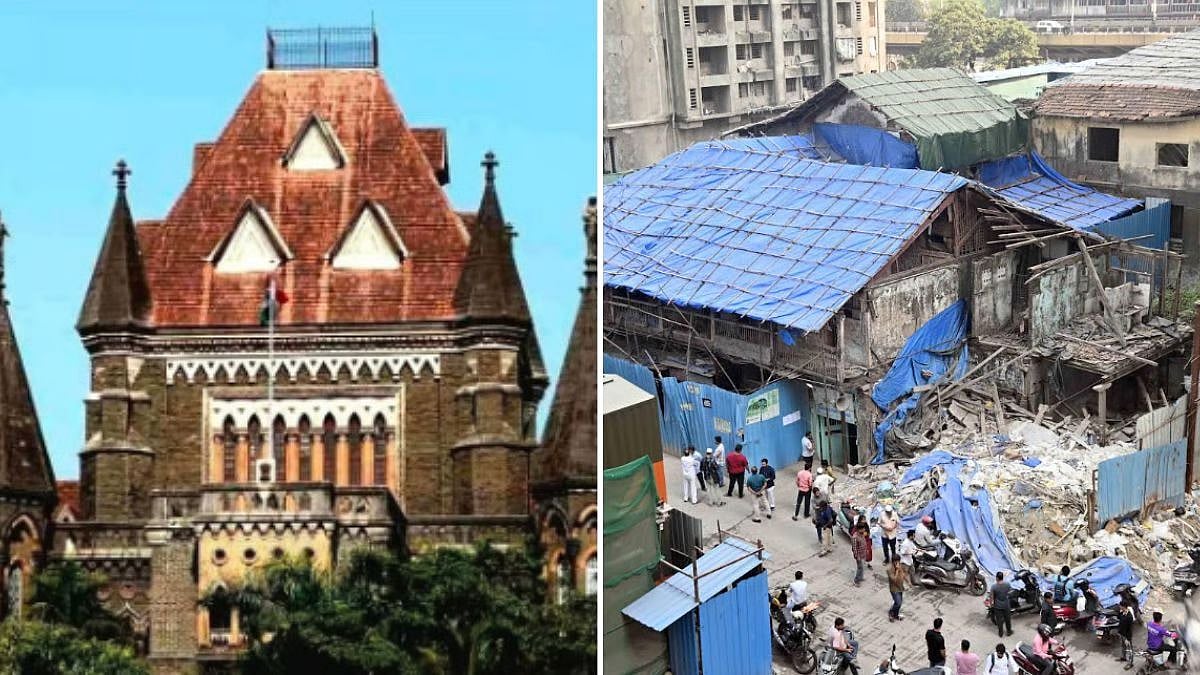
Mumbai: The Bombay High Court on Wednesday barred anyone from entering a dilapidated south Mumbai building housing a mosque and a historic rest house for Haj pilgrims, which is also known as the former residence of underworld don Dawood Ibrahim, citing concerns over public safety.
Demolition Stay Extended Till November 30
A bench of Chief Justice Mahesh Chandra Tripathi and Justice Advait Sethna continued its interim stay on the demolition of the two-storey Haji Ismail Haji Habib Musafirkhana building on Pakmodia Street in Bhendi Bazaar till November 30. The court directed that nobody should enter the premises until then.
“What if some untoward incident happens, who will take responsibility? No one shall enter the property as it is in a dilapidated condition,” the bench said.
BMC Classified Building As Dangerous
The BMC had begun demolishing the structure on November 19 after classifying it under the C-1 category, which covers dangerous and dilapidated buildings requiring demolition. However, two persons claiming to be interested parties approached the High Court the same day, following which the court ordered an immediate halt to the demolition.
On Wednesday, senior counsel Anil Sakhare, appearing for the BMC, told the court that the building was in a severely dilapidated condition and posed a threat to people in the vicinity.
Civic Body Disputes Mosque Claim
“It is a building structure and not a mosque as being claimed by the petitioners. Several small portions of the structure have been collapsing since 2007 and no one is occupying the same,” Sakhare submitted.
The bench also questioned the petitioners over their earlier claim that the structure housed a mosque. It warned them of contempt proceedings if it was found that they had misled the court to obtain the interim protection.
Bench Cautions Against Misleading Court
“If you have taken a status quo order by misleading us, then we will issue contempt of court. Be prepared. Don’t try to mislead the court. Today we are being told that it is not a mosque,” the bench remarked.
The petitioners’ lawyers, however, maintained that the building housed a mosque where five daily prayers were offered. They sought permission for people to enter the premises, at least to offer Friday prayers. The court declined the request.
The petition was filed by Shaikh Abdul Razak and Amirali Vazirali Panjwani, who claimed to be beneficiaries of the Waqf trust that owns the property. They contended that the mosque was part of the property permanently dedicated in 1864 as a rest house for Haj pilgrims.
The building is also associated with Dawood Ibrahim, who lived there with his family in the 1970s before fleeing India in 1986. It reportedly served as the base of his gang during its early years.
To get details on exclusive and budget-friendly property deals in Mumbai & surrounding regions, do visit: https://budgetproperties.in/

