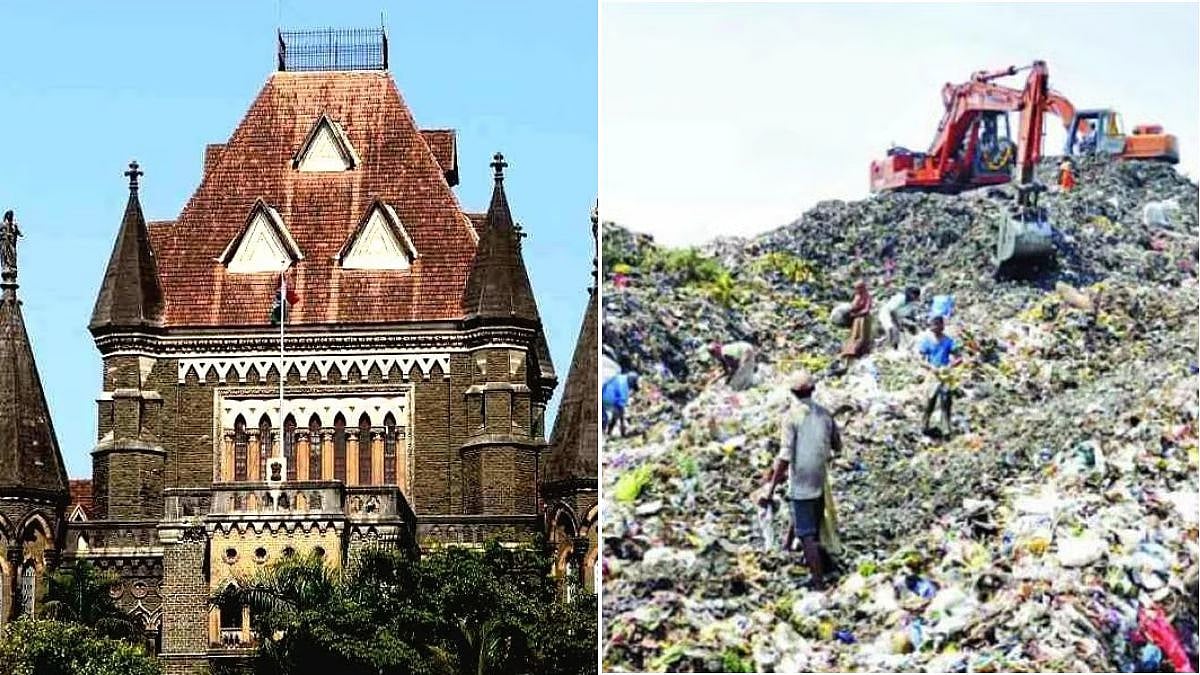
Mumbai, March 3: A high-level panel appointed by the Bombay High Court has flagged urgent odour-control and infrastructure upgrades at the Kanjur Marg dumping site, while pushing for modern waste-treatment technologies.
Residents, however, demand the site be permanently shifted at least 10 km away from homes, insisting that any new technology be installed only at the relocated location.
The committee, comprising experts from the Indian Institute of Technology (IIT) Bombay, officials from the Maharashtra Pollution Control Board, researchers from the National Environmental Engineering Research Institute (NEERI), senior IAS officers and a former head of Veermata Jijabai Technological Institute (VJTI), assessed the Kanjurmarg dumping ground and undertook a visit to the Shivri Waste Processing Facility in Lucknow on February 5–6.
Need for integrated waste-processing model
The Kanjurmarg facility handles 6,000 tonnes of waste per day, serving roughly 86% of Mumbai’s needs. While it has robust baseline systems, the city’s scale and urban sensitivity require an urgent, structured technological upgrade.
The proposed model includes waste-to-energy for dry waste, bio-methanation or compressed biogas for wet waste, controlled composting and landfills only for inert rejects. Before finalising Mumbai’s long-term strategy, it suggested studying global facilities handling 6,000–7,000 tonnes per day (Dubai, Shenzhen, Tokyo).
Integrated processing could cut landfill use by 80%, reduce odour and community impact, improve public health and support circular economy goals.
Members of Vikhroli Vikas Manch stated, "For 12 years, residents have suffered foul odours, breathing difficulties and mental stress due to the negligence of the contractor and the BMC. The real solution lies in relocating the dumping ground at least 10 km away from residential areas and ensuring that any future waste management technology is deployed there."
Also Watch:

Recommendations of high-level committee
● Short measures include odour mitigation through green buffers, bio-enzyme spraying, deodorant dosing, misting at MRFs, compost pads, bio-landfills, improved soil cover and wastewater removal.
● Medium-term steps involve studies on bio-filters and odour scrubbers and continuous air-quality monitoring.
● Long-term plans aim for an integrated waste-processing ecosystem under the concession’s “change of technology” clause.
To get details on exclusive and budget-friendly property deals in Mumbai & surrounding regions, do visit: https://budgetproperties.in/

