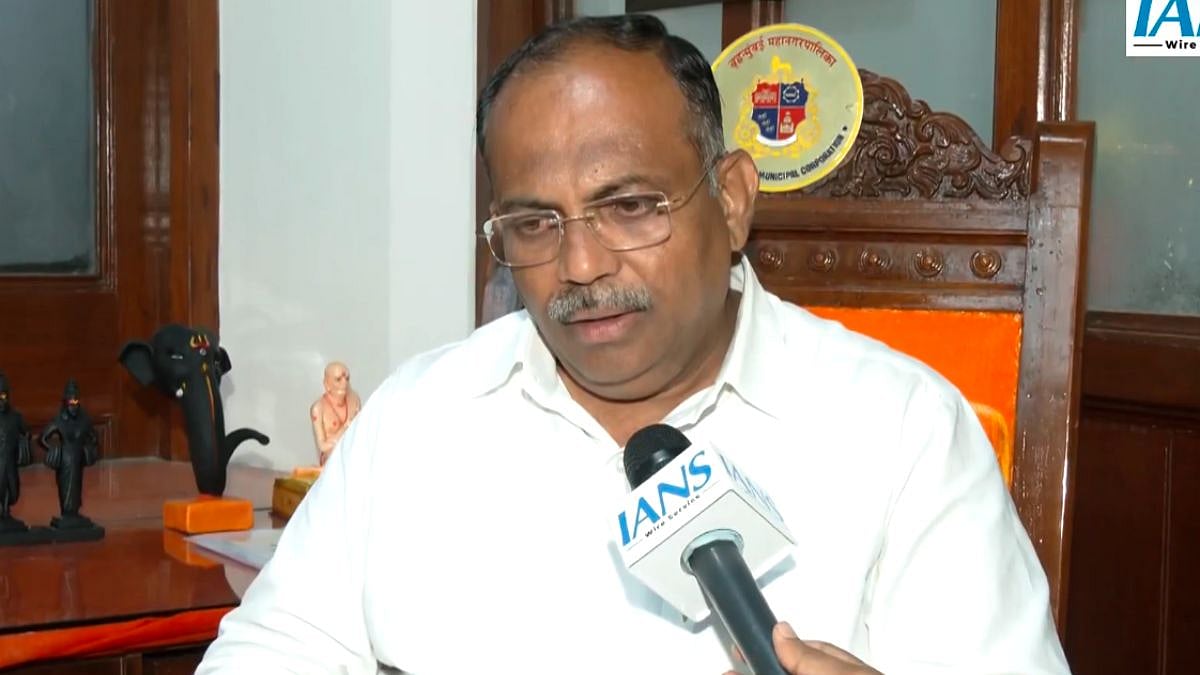
Mumbai: Amid depleting green cover and increased heatwaves, in a recent Tree Authority meeting, leader of the BMC house, BJP's Ganesh Khankar, proposed that if every housing society in Mumbai plants a tree, the city will compensate towards the loss of 45,000 trees and mangroves which will be impacted for the Versova Bhayandar Link Road (Coastal Road North). The leader said that all committee members welcomed his idea and it will be pushed forward to encourage Mumbaikars to plant trees inside society premises, increase city's green cover and thereby help beat the urban heat.
Shelar Directs Aarey Plantation Under 300 Crore Tree Drive
Recently, Mumbai Suburban Guardian minister Ashish Shelar also directed officials to draf a plan to plant trees at the 65 acres land in Aarey, as part of the chief minister Devendra Fadnavis's massive statewide drive to plant 300 crore trees by 2031.
Although the authorities are looking at options to compensate the depleting green cover for extensive infrastructure projects, studies show that the increased trees and greenary can cool cities, but only if they are of right type and planted in a right way. In some cases, the wrong kind of greening can even make streets feel less comfortable on a hot day.
Trees Planting Design Matters
While cities around the world are planting more trees to cope up with the rising urban heat, local climate and street design strongly shape whether greening works well. A recent research by University of Melbourne titled 'Nature in Cities, Nurturing Cities' cites, "Vegetation complexity achieved through combinations of trees, shrubs and grasses can be introduced in both urban greenspaces and streetscapes. While it is often assumed that such complexity improves urban microclimates and human thermal comfort, these effects are highly context-dependent, shaped by background climate, urban morphology, vegetation spatial structure, and plant traits."
The study adds that the future cooling strategies must consider not only vegetation presence but also its growth-form combinations and interaction with built environments. The findings matter because urban greening is no longer just about aesthetics. As crores of public money is spent in adapting to extreme heat, trees planting design may matter as much as planting quantity.
Experts Speak
"A single tree cannot give significant ecological service inside a heat island. A cluster of trees with good canopy cool a significant area and enhances the wind circulation thereby reducing the temperatures," said enviornment activist and director of NGO Vanashakti, Stalin D.
"It is downright unscientific, rudimentary and childish to suggest that one isolated tree in every housing society will help bring down the temperatures. In today's era of 100% concretisation, there is no heat exchange between the earth and the heat. All concrete surfaces act like hotpans that keep releasing the trapped heat back into the atmosphere at night. This is the reason why nights are also warmer than before."
"A significant area where the earth is exposed at the surface and covered by tree shade will help relieve the soaring heat in a locality. Forests and wooden areas are a must to survive the heat wave in Mumbai and urbanised areas," Stalin said.
While the Government's efforts of increasing tree cover is important, but for real cooling benefits, we need the appropriate species selections, adequate canopy cover, diversity and long-term maintenance, said Anil Pandit, Project Executive from the Bombay Environmental Action Group (BEAG). "We at BEAG think it's imperative to shift our thinking from only in terms of how many trees are planted, but toward creating well-planned urban forests. That means safeguarding existing mature trees and ensuring any new plantation drives are in alignment with scientifically sound practices to enhance urban resilience to climate change."
"Ultimately, we shouldn't judge success by how many saplings are planted, but rather by whether these trees actually help lower temperatures, improve air quality, and make our cities more climate resilient in the long term," Pandit added.
Dr Pradip Awate, public health specialist and former state health surveillance officer said seconded that trees are the important tools to minimise the adverse effects of climate change, but we need to be cautious while selecting the geography and species of the trees to be planted. Otherwise planting wrong trees or planting them at wrong places will definitely defeat the very purpose of tree plantation.
"First precaution that we should take is we need to prioritise indigenous trees. Native species support local biodiversity. Planting random trees in the wrong places like replacing diverse grasslands with monoculture plantations can harm the environment.
There are two important modes of tree plantation one is afforestation and another is reforestation. Afforestation means establishing forest on a land that has no plants or trees in recent past and reforestation is restablishing forest that have been degraded by deforestation."
"We are in tropics. In tropics, tree plantation is the best natural climate solution. Especially when we are urbanizing very rapidly strategic tree plantation in urban areas will definitely help in reducing urban heat Island effect," Dr Awate said.
To get details on exclusive and budget-friendly property deals in Mumbai & surrounding regions, do visit: https://budgetproperties.in/

