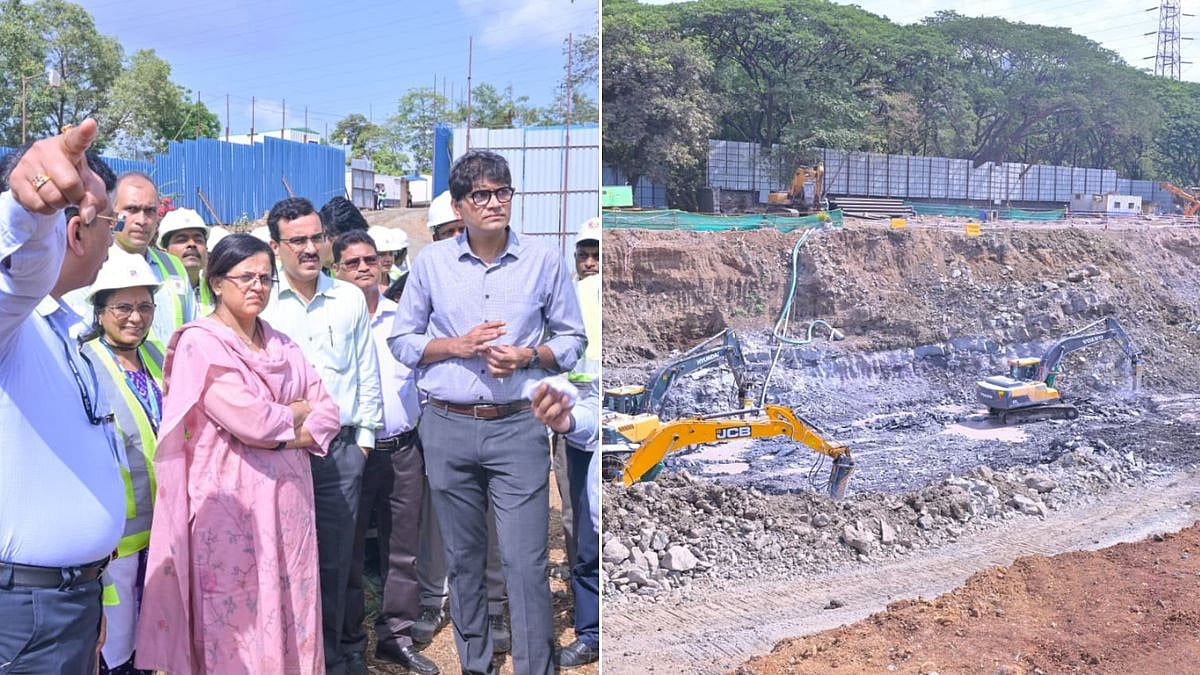
Mumbai’s seven sewage treatment plants (STPs), expected to be completed between 2026 and 2028, promise a major boost to the city’s alternative water supply. But with no dedicated citywide distribution network for recycled water, the BMC plans to rely on tanker-filling hydrants to supply treated wastewater to large establishments for non-potable use.
Projects To Reduce Reservoir Dependence
With erratic monsoons exposing the risks of depending on rainfall-fed reservoirs, the civic body is fast-tracking the projects under the Mumbai Sewage Disposal Project. While other alternative water sources could take another three to four years to materialise, the seven STPs are expected to provide a substantial source of recycled water.
The plants will use primary, secondary and tertiary treatment processes to treat 2,464 million litres (ML) of sewage daily, generating around 1,232 ML of non-potable water per day for establishments and other users. However, the lack of a dedicated distribution network remains a key challenge in ensuring that the recycled water reaches consumers at scale.
BMC Plans Tanker-Filling Facilities
A senior civic official said, "We have plans to install tanker-filling hydrants at all seven STPs to facilitate supplies for non-drinking purposes. A consultant will be appointed to develop the plan.” Separately, the civic body is constructing an underground tunnel with a designed capacity of 970 MLD, including a plan to convey 500 MLD of tertiary-treated water from Dharavi towards Ghatkopar and the Bhandup Complex.
As water demand continues to exceed supply, recycle wastewater could offer Mumbai a crucial buffer. The BMC supplies around 4,100 MLD against a daily demand of 4,600 MLD, leaving a shortfall of 500 MLD. According to BMC projections, if rainfall remains below normal, the available water stock could last until June 10, 2027, without water cuts or the retention of reserve storage. If the existing 10% water cut continues and approved reserves in the Upper Vaitarna and Bhatsa lakes are maintained, supplies could last until September 5, 2027.
The seven STPs are being developed at Worli (500 MLD), Bandra (360 MLD), Malad (454 MLD), Ghatkopar (337 MLD), Dharavi (418 MLD), Bhandup (215 MLD) and Versova (180 MLD). Along with the operational 37-MLD Colaba STP, will take Mumbai’s total sewage treatment capacity to 2,501 MLD once all seven projects become operational. The ambitious upgrade programme, which remained stalled for nearly two decades, was awarded in May 2022 at a cost of Rs 27,309.83 crore.
To get details on exclusive and budget-friendly property deals in Mumbai & surrounding regions, do visit: https://budgetproperties.in/

