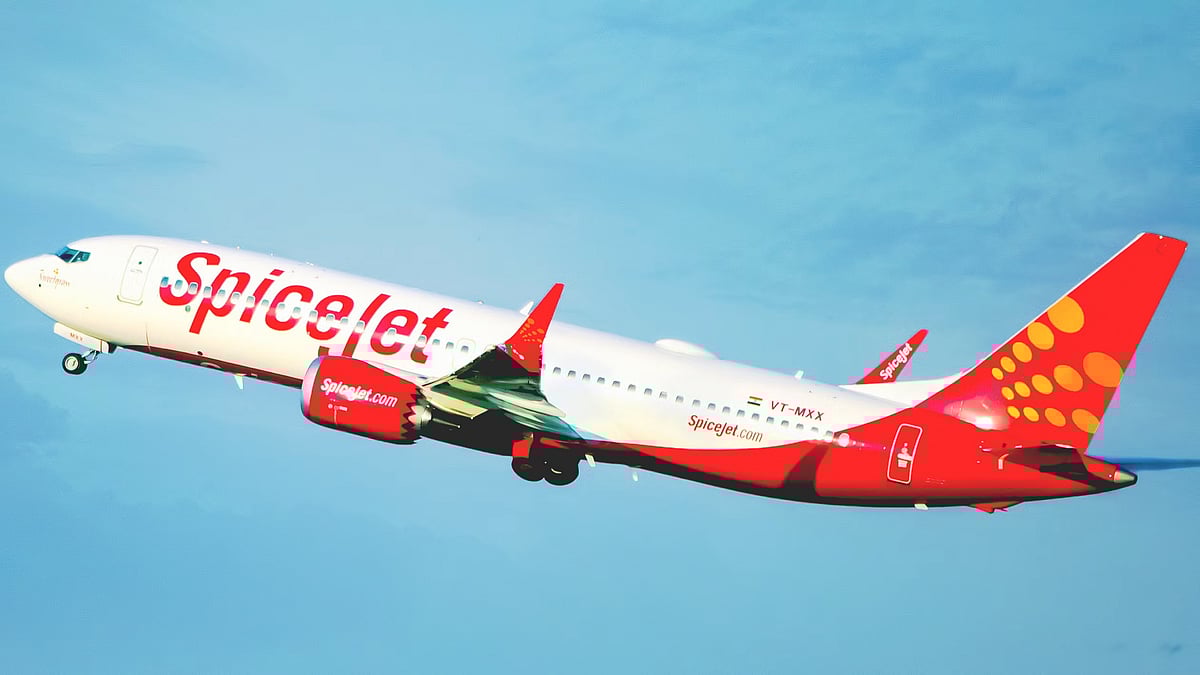
Mumbai: In yet another turbulent chapter for SpiceJet, Dublin-based aircraft lessors have approached India’s Directorate General of Civil Aviation (DGCA), seeking the urgent de-registration and repossession of four Boeing 737 MAX 8 aircraft leased to the financially constrained carrier.
DGCA Notices & Aircraft Details
Public notices released by the DGCA reveal that lessors, Sky High LXXX Leasing Company Ltd and Sky High LXXVII Leasing Company Ltd, have filed the requests under the Irrevocable Deregistration and Export Request Authorisation (IDERA) framework. The specific aircraft facing export are registered as VT-MXA, VT-MXC, VT-MAX, and VT-MXB, two of which are grounded on Hyderabad and one each in Delhi and Amritsar.
The IDERA mechanism, established under the international Cape Town Convention, allows lessors to bypass protracted legal battles and directly petition the national regulator to reclaim assets if an airline defaults on its contractual obligations.
SpiceJet's Official Response
Responding to the regulatory filing, the airline has downplayed the impact saying that all four aircraft have been grounded for a significant time, citing high pressure turbine manufacturing issues with its engines. A SpiceJet spokesperson argued that the loss of the aircraft would not disrupt its current flight schedule.
"The de-registration of these aircraft will eliminate lease rental costs on assets that have remained non-operational for a prolonged period. There is no impact on the airline’s operations, as these aircraft have been out of service for a considerable time," said the spokesperson, adding that the airline continues to remain in discussions with the lessor and original equipment manufacturer regarding return to service of these aircraft.
Analysts' Perspective
While shedding lease rental fees for non-performing assets may offer immediate financial relief, aviation analysts view the move as a significant psychological and strategic blow. The four planes — all delivered in 2018 — effectively clip SpiceJet’s wings for future growth, removing vital avenues for capacity expansion just as the airline tries to execute a broader operational recovery.
The lessor action underscores the severe fleet constraints that have plagued SpiceJet. According to data from Plame Spotters, the airline has been operating with a severely reduced active fleet, leaving dozens of planes parked due to maintenance issues, parts shortages, and cash flow constraints. According to sources within SpiceJet, the carrier currently operates a nominal fleet of 21 aircraft.

Market Share Collapse
This prolonged fleet grounding has directly translated into a dramatic slide in domestic competitiveness. While SpiceJet once held a dominant double-digit position in the Indian skies, its domestic market share has shrunk into the low single digits, fluctuating between 3.4% and 3.9% in the opening months of the year — falling well behind newer competitors like Akasa Air and trailing aggressively behind market leader IndiGo. The airline's domestic market share in May was reported at mere 2.5% whereas the international share for the first quarter of 2026 stood at only 1.42%.
Beyond losing ground to competitors, SpiceJet is battling chronic operational inefficiencies that are testing passenger patience. A severe deficit of operational aircraft and rolling maintenance backlogs have caused the airline’s on-time performance (OTP) to plummet sharply.
Data tracking domestic flight punctuation reveals that SpiceJet’s OTP has repeatedly dipped below the 50% threshold. According to data tracked by the Ministry of Civil Aviation, SpiceJet registered a dismal on-time performance rate of just 26.5% at ten major Indian airports for the month of May. In stark contrast, rivals like IndiGo and Akasa Air maintained healthy OTP markers comfortably above 75%.
To get details on exclusive and budget-friendly property deals in Mumbai & surrounding regions, do visit: https://budgetproperties.in/

