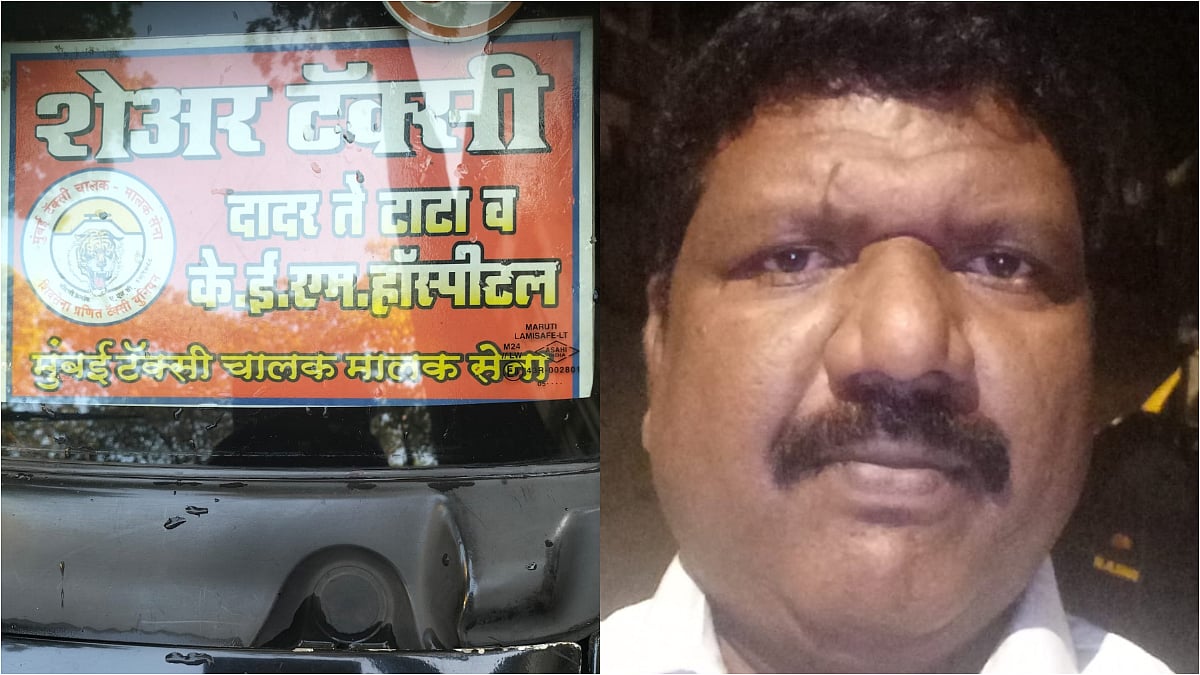
Mumbai: For thousands of cancer patients across India, Tata Memorial Hospital in Parel is more than a hospital — it is hope. Families travel from distant towns with faith in its doctors and treatment. But beyond the wards and operating theatres, another group quietly carries that hope forward every single day: a band of taxi drivers who have dedicated their lives to serving the hospital’s patients and nurses.
Among them is 50-year-old Sudarshan Bawaskar, fondly known as “Bawaskar Mama” by the nursing staff. A member of the Taxi Chalak-Malak Sanghatana, Parel, Bawaskar says their organisation has just one motto — to dedicate their services to Tata.
“We are not just drivers here. We are part of the system that keeps this hospital running on time,” he says with quiet pride.
For nurses rushing to report for duty or scrambling to catch their designated Mumbai local trains after exhausting shifts, Bawaskar Mama is often just a phone call away. Whether it is early morning or late at night, he reaches within minutes, ensuring they are dropped at their stations in time.
“It feels so good when a nurse calls to say she caught her train,” he smiles. “That means I did my job.”
His service is not limited to hospital staff. Along with nearly 40 taxi drivers in the association, Bawaskar ferries cancer patients from the hospital to railway stations and back, ensuring they do not miss appointments or trains after long treatment sessions.
The roots of this quiet dedication go back to the Covid-19 pandemic — a time Bawaskar describes as the toughest of his life.
“Covid made us realise that we were daily wage workers in the truest sense. There were no passengers, no new patients coming to hospitals, and the admitted patients were not allowed to step out. Our kitchens had no food,” he recalls.
With lockdowns shutting down the city, taxi drivers found themselves without income. It was the nurses who continued travelling to and from the hospital. Desperate, the drivers approached them and requested permission to ferry them to nearby railway stations.
“The nurses were kind enough to speak to the concerned authorities for us,” Bawaskar says. “Because of them, we could at least earn something.”
During those days, the drivers increased their per-seat fare from Rs 25-30 to higher rates to sustain their families. “Not a single nurse objected,” he remembers. “They understood our situation.”
That compassion left a permanent mark.
“We will never forget what they did for us,” Bawaskar says. “So in whatever way we can, we give back to society by serving them.”
Today, he knows the nurses’ regular train timings by heart. He ensures they reach the hospital before their shifts begin and that they never miss their trains home. The service is as much about punctuality as it is about gratitude.
Bawaskar, who lives in Parel, says witnessing cancer patients daily has also shaped his outlook on life. “When I see what they are going through, I understand how small our problems are,” he says. “Their pain inspired me to join this organisation.”
Also Watch:
The Taxi Chalak-Malak Sanghatana was started by late Maruti Patil and Dattatray Chavhan with the aim of serving patients visiting Tata. Today, around 40 taxi drivers are part of the group, primarily ferrying patients between the hospital and railway stations.
Service, it seems, runs in Bawaskar’s family. His elder son runs a business manufacturing hair wigs — many of which are used by patients who lose their hair during chemotherapy — while also pursuing a PhD. His younger son has completed an electrician’s course from ITI Mumbai and currently works with Wadia Hospital.
“I am satisfied with my life,” Bawaskar says simply. “We have dedicated our service to this noble hospital. I only hope the next generation continues this legacy of helping those in need.”
To get details on exclusive and budget-friendly property deals in Mumbai & surrounding regions, do visit: https://budgetproperties.in/

