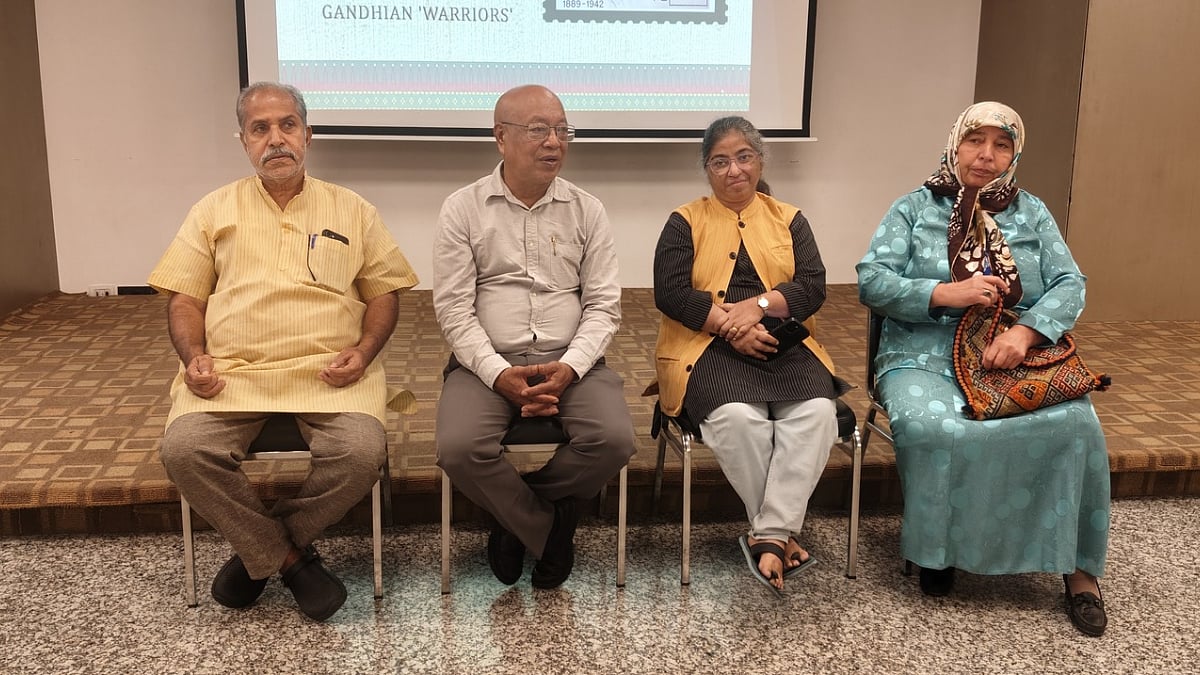
Mumbai, November 25, 2026: Her anger as a child survivor of sexual violence set Sunitha Krishnan on the path towards seeking justice for women and children trafficked for the sex trade, and fighting the social and governmental apathy towards the victims.
"My rage led me to this work. My anger is still my energy and strength because nothing has changed," said Krishnan, a Padma Shri awardee and the winner of this year's Jamnalal Bajaj Foundation Award for Development and Welfare of Women and Children.
Krishnan, who runs Prajwala, based in Mankhal village in Telangana's Ranga Reddy district, has worked with the police and other organisations to rescue nearly 33,000 victims of trafficking, helping them with rehabilitation, psychological support and education.
Prajwala's Work Beyond Rescue And Rehabilitation
Prajwala's work extends beyond the rescue and rehabilitation of victims. Aware that survivors often face apathy from law enforcement agencies and society, the organisation runs an advocacy programme to change the way survivors of sexual violence are treated by law enforcement agencies.
On May 29, 2026, following a two-decade-long legal intervention by Prajwala, the Supreme Court laid down the Victim Protection Plan, a binding nationwide framework for victims of human trafficking for commercial sexual exploitation.
A bench of Justices J B Pardiwala and R Mahadevan invoked its powers under Articles 32 and 142 to recognise rehabilitation as a fundamental right under Articles 21 and 23, marking a shift from a rescue-only model to a trauma-informed, rights-based approach.
The framework provides for comprehensive support to survivors at every stage, including prevention before rescue, rescue operations, immediate post-rescue care, rehabilitation, repatriation and reintegration, investigation and trial.
Krishnan said there was a wall of silence around sexual violence. "The world will become a safer place only if we break the silence against sexual violence," she said.
Awards Recognise Rural Self-Reliance And Innovation
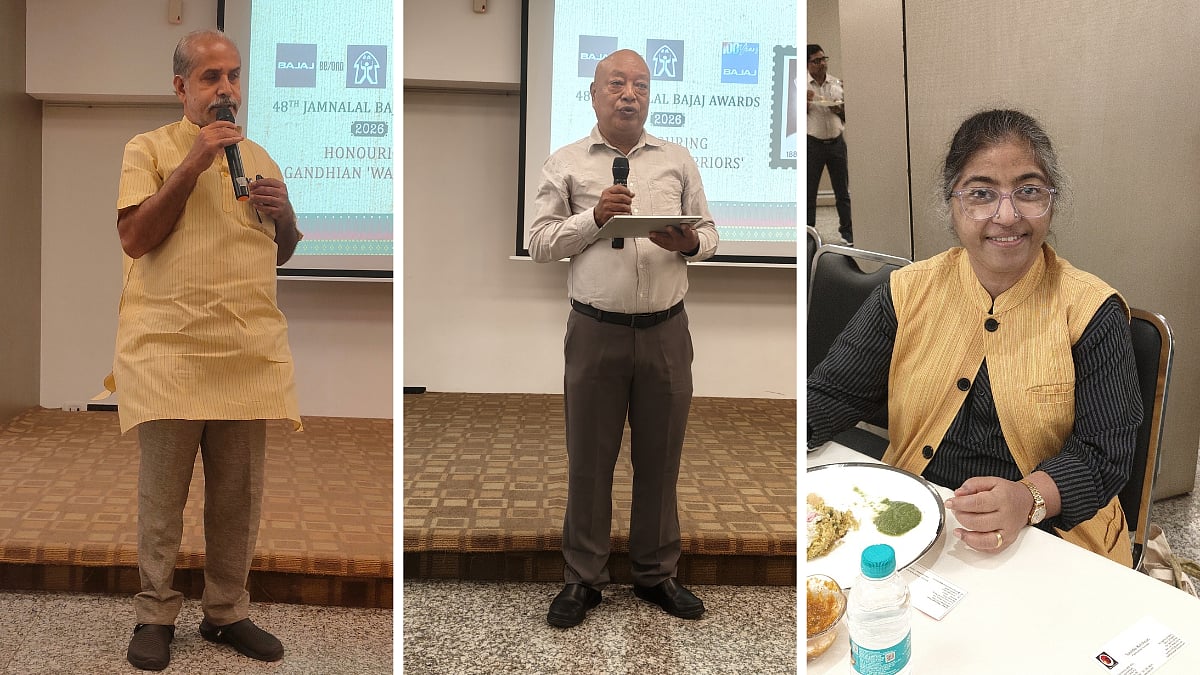
Dr Jacob Pulickan from Kerala received the Award for Constructive Work for advancing rural self-reliance, local production and Gandhian education through grassroots initiatives.
He does this through two programmes – the Swadeshi Movement, which creates small entrepreneurs through 25 training programmes for home-based industries, and the Gandhi Darshan project, which includes character-orientation studies for young students.
Pulickan's Swadeshi Movement and Gandhi Darshan programmes, which operate without grants or donations, have helped more than seven lakh small entrepreneurs and 80,000 students.
Lalbiakzuala Ralte from Mizoram received the Award for Application of Science and Technology for Rural Development for developing affordable, locally relevant technologies that support rural livelihoods, entrepreneurship and self-employment.
Ralte said he was distressed to see rural families struggling to earn a decent living through labour-intensive work. He began fabricating small implements and machinery to reduce manual labour. His first major invention was an arecanut dehusking machine.
"The traditional method was old, slow and unsafe," said Ralte, who is based in Aizawl. "Our long-term goal is to develop simple technologies that can help people in rural and urban areas. Mahatma Gandhi believed in self-reliance and swadeshi. My work follows this idea by developing technology locally."
Turkish Activist Honoured For Non-Violent Advocacy
Mahatma Gandhi's other principle – peaceful protest against injustice – influenced Pervin Savran from Turkey, who won the International Award for Promoting Gandhian Values Outside India for her non-violent advocacy to protect the rights of nomadic pastoralists.
She led a long march to the national capital, Ankara, to secure grazing rights for nomadic groups that had been barred from their traditional grazing lands in the Taurus Mountains. The peaceful protest led to the enactment of a law protecting the rights of nomadic pastoralist groups and preserving traditional ecological knowledge and biocultural heritage for future generations.
Jamnalal Bajaj Awards Mark Milestones
The 48th Jamnalal Bajaj Foundation Awards were presented to the winners at a ceremony at the Royal Opera House on Wednesday, November 25, with Bhutanese princess Gyalsem Sonam Yangden Wangchuck as the chief guest. This is a milestone year for the Bajaj business group, which has completed a century, and also marks the 50th year of the Jamnalal Bajaj Foundation Awards.
Also Watch:

Since their inception in 1977, the awards have received 7,229 nominations from India and 790 nominations from abroad for the international award. At the national level, 146 people from 22 states have been honoured with the three national awards, while 38 awardees from 21 countries have received international recognition.
Your voice matters. If you have a community story, issue, or inspiring local experience to share, send it to community@fpj.co.in and be a part of the conversation.
To get details on exclusive and budget-friendly property deals in Mumbai & surrounding regions, do visit: https://budgetproperties.in/

