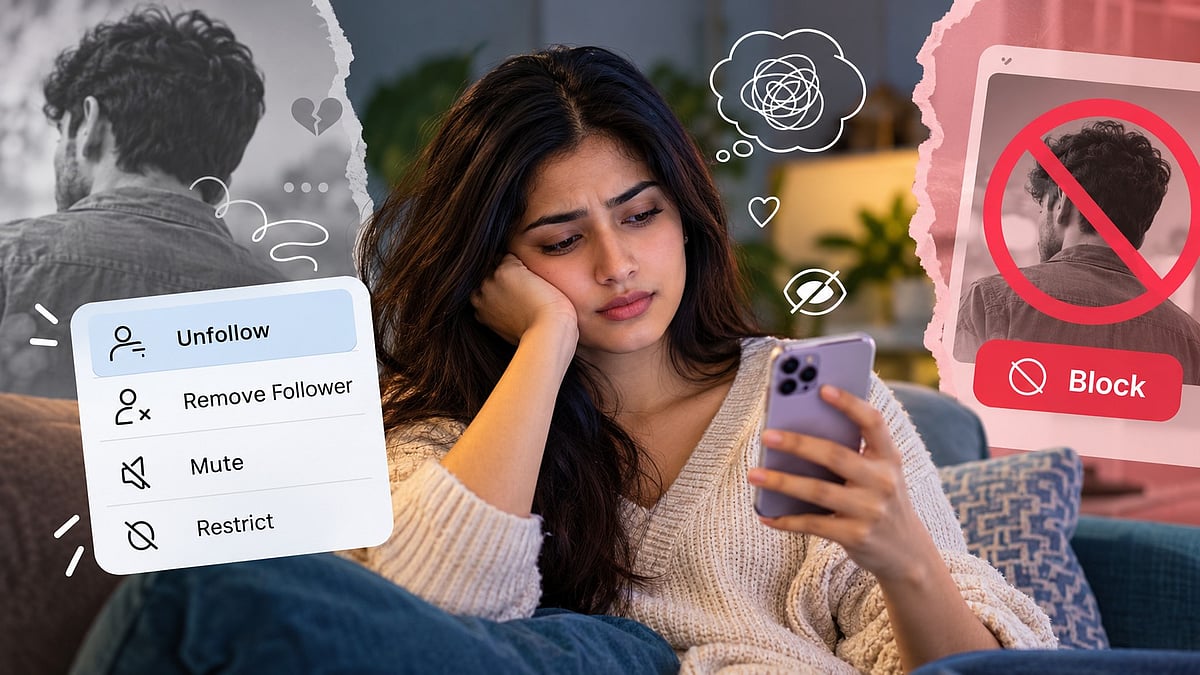
You no longer want someone in your life, but blocking them feels a little too dramatic. Maybe it is an ex, an old friend or someone you have quietly grown apart from. Instead of blocking them, you remove them from your followers, unfollow them or make your account less accessible to them. No announcement, no confrontation, no explanation.
Welcome to soft-blocking, the social media version of creating distance without making it obvious. It allows people to manage awkward connections without having a direct conversation. But why does quietly removing someone feel easier than hitting the block button?
Distance without the drama
Blocking someone can feel like making a statement. It may signal anger, resentment or a final end to the relationship. Soft-blocking, on the other hand, creates distance without making the decision feel so permanent or confrontational. You may not want someone to have access to your updates anymore, but you also may not want to deal with questions about why you blocked them. Removing them as a follower can feel like a quieter way to establish boundaries, especially when you share mutual friends or social circles.
“I think soft-blocking is a subtle way of creating distance without making things awkward or confrontational. It helps maintain boundaries, especially when you might cross paths with that person again. For me, cutting off digital contact makes sense when a connection starts affecting my peace of mind or leads to unnecessary overthinking. Not every connection needs a dramatic ending,” shares Jash Nankani, a 25-year-old Gen Z individual.
Avoiding awkward talks
Sometimes, explaining why you no longer want someone in your digital space feels harder than simply removing them. Perhaps the friendship has faded, the conversations have become uncomfortable or you no longer feel connected. Soft-blocking offers an easy way out when you do not know how to communicate that distance. You can change who sees your content without having to explain your feelings. However, avoiding the conversation does not always mean the other person will not notice or wonder what happened.
“Soft-blocking often reflects conflict avoidance and emotional self-protection. Unfollowing, muting or restricting someone allows people to create distance without direct confrontation. While it can offer relief from guilt and anxiety, soft-blocking isn’t always emotional immaturity; it can also protect your peace when a relationship feels draining or communication feels unsafe. The key lies in the intention: setting a boundary protects your peace, while avoidance helps you escape confrontation. Communicating boundaries clearly often reflects greater emotional awareness and healthier relationship skills,” explains Dipal Mehta, a Mumbai-based practicing counselor, psychotherapist, and psychologist.
Leaving the door open
Not every relationship ends with a major fallout. Sometimes, you simply need space. You may be upset with someone today but unsure how you will feel a few weeks later. Soft-blocking allows you to create some distance without making the separation feel final. Unlike blocking, which can feel like drawing a firm line, quietly removing someone leaves room for uncertainty. It can be especially appealing when you are still processing a breakup or a friendship that has changed.
Aili Seghetti, intimacy coach and founder of The Intimate Curator, explains, “Soft-blocking isn’t the cause of emotional attachment; it’s simply another expression of it. Completely blocking someone doesn’t automatically mean we stop feeling attached or that we’re ready to move on. Healing from heartbreak takes time, whether we choose to soft-block or block someone entirely. It is an internal process of grieving the loss of a person, or even the idea of what that relationship could have been. While creating distance online may help us protect our peace, letting go emotionally requires us to process those feelings rather than simply remove someone from our digital lives.”
You do not want them watching your life
Social media makes it easy for people to keep up with your life long after you have stopped talking. An ex can view your stories, an old friend can follow your updates, and someone you no longer trust can still see what you share. Soft-blocking gives you more control over who gets access to your online life. You may not want to know what someone is doing, and you may not want them keeping tabs on you either. Sometimes, creating distance means not having to think about who is watching your posts or how they might interpret them.
“Social media is a personal space where we end up sharing a lot about our lives, so I’m selective about who gets to see what. If I’m not on good terms with someone, blocking them is usually my choice. But when I’ve simply grown apart from someone or no longer want to exchange life updates, muting their stories, unfollowing or unfriending them feels fair. I see blocking as an extreme step for when I don’t want any association with a person. If there are no hard feelings and we’ve simply grown apart, I don’t think blocking is necessary,” shares Pranita Kharote, a graduate.
Blocking feels too harsh
Even when you know you need space, blocking someone can make you feel guilty. You might worry about hurting their feelings, appearing immature or making a situation bigger than it needs to be. Soft-blocking can feel like a gentler alternative because it does not always communicate such a strong message. It allows you to step back without feeling as though you are punishing the other person. However, choosing a quieter option does not automatically make it the healthier one. What matters is whether the boundary gives you the space you need.


Distance over dialogue
Earlier, distancing yourself from someone often meant reducing contact in person or having an uncomfortable conversation. Now, a few taps can change who sees your posts, follows your account or interacts with your content.Social media has created several ways to manage relationships without directly addressing them. Muting, unfollowing, restricting and soft-blocking let people control their digital spaces in different ways. While these tools can make boundaries easier to maintain, they can also encourage people to avoid conversations that might bring clarity.
Is it always a bad thing?
Soft-blocking can be a way to protect your peace when a relationship becomes uncomfortable. You are not obligated to give everyone access to your online life. However, using it to avoid every difficult conversation can leave feelings unresolved. Ask yourself whether you need space or simply want the other person to notice and react.
Ultimately, you can choose who sees your social media. Sometimes distance is necessary, but a direct conversation may offer the closure that a quiet unfollow cannot.

