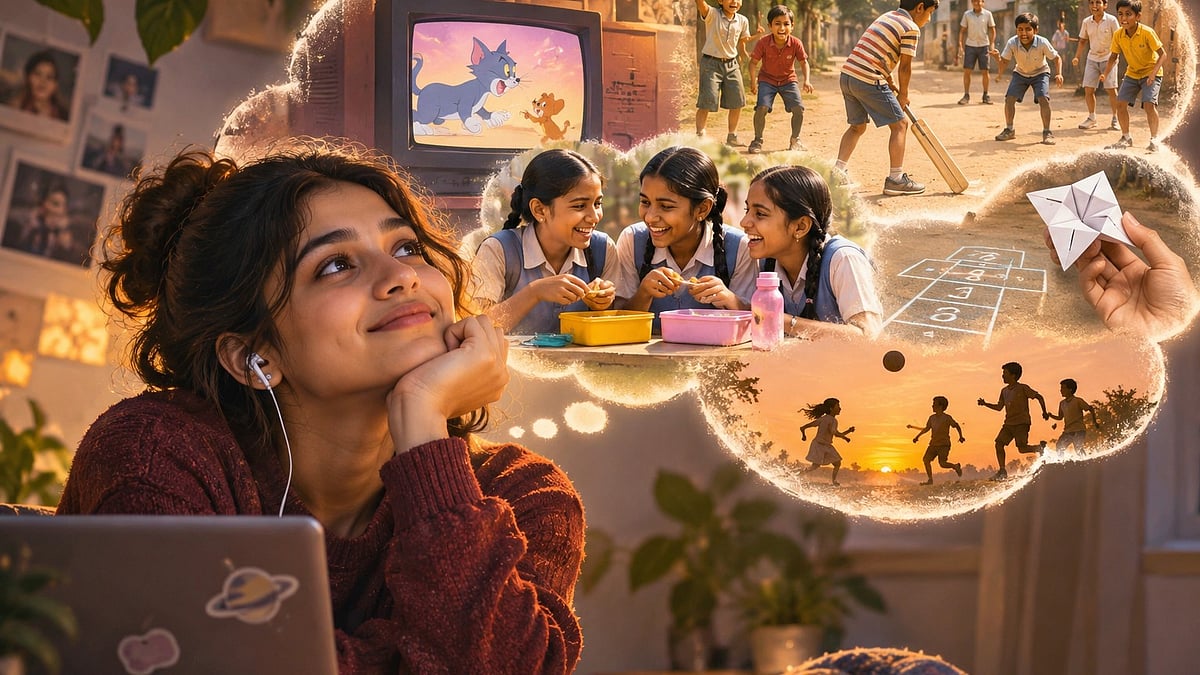
Remember when your biggest worry was whether you would get to watch your favourite cartoon before your mother switched off the television? When summer vacations felt endless, ₹10 could buy you happiness, and coming home before the streetlights came on was the only deadline that mattered? This November 14, as India celebrates Children’s Day, it seems fitting to ask why a generation that has grown up cannot stop looking back.
Open Instagram, and chances are you will come across a reel featuring old Cartoon Network shows, childhood photographs, school lunchboxes or familiar television theme songs. The comments are often filled with people saying: “I wish I could go back.”
For a generation that grew up with the internet, smartphones and social media, it is interesting how much of its online culture revolves around a time before constant connectivity. Gen Z has developed a strong attachment to its childhood, turning old memories into shared conversations and nostalgia into a digital comfort zone.
But is this simply missing the good old days, or is there something deeper behind a generation’s obsession with looking backwards?
According to a 2023 study by global consumer research company GWI, around 50% of Gen Z respondents reported feeling nostalgic about different types of media, compared with 47% of Millennials.
But perhaps the most interesting part of this trend is that Gen Z is not only romanticising its own childhood. It is also longing for a childhood it never entirely experienced. A March 2026 media report explored how young people who grew up alongside smartphones and social media are increasingly drawn to an offline childhood filled with outdoor games, handwritten notes, face-to-face friendships and fewer screens.
Psychology offers another explanation. In an article published on November 1, 2026, the American Psychological Association explored why Gen Z feels nostalgic for periods it never lived through. Citing survey findings, the article noted that two-thirds of Gen Z adults said historical nostalgia helped them manage anxiety about the future. Nostalgia can offer emotional comfort, strengthen identity and create a sense of belonging.
Social media has made this feeling collective. A school picnic photograph, an old Disney show or a familiar childhood television advertisement can transport thousands back to shared experiences. Personal memories have become internet-wide conversations.
Of course, every generation has its own version of nostalgia. Millennials look back at the 1990s and early 2000s, while older generations remember their formative years. The difference is perhaps how openly Gen Z expresses this longing and how social media gives it a platform.
November 14 marks Children’s Day in India, commemorating the birth anniversary of the country's first Prime Minister, Jawaharlal Nehru, fondly remembered as Chacha Nehru. While the day celebrates children and childhood, it also raises an interesting question: what happens when yesterday's children become adults who spend so much time reminiscing?

Maybe Gen Z does not actually want to be children again. Maybe it just misses the freedom of not having everything figured out, friendships that did not need constant communication and days that did not revolve around deadlines, notifications and responsibilities.
After all, growing up is inevitable. Missing the days when life revolved around homework, tiffin boxes and one last game before sunset? Apparently, that never really goes away.

