
Patanjali emphasises purity in its honey production. During the flowering season, thousands of honeycomb boxes are placed around trees such as neem, mango, and lychee. These varied sources contribute to the honey, which is then collected and brought to consumers. The process is organic in approach, using specially designed boxes fitted with containers that allow bees to enter through small openings and naturally create honey within.
At times, these boxes are positioned near neem trees, resulting in honey with a subtle neem-like aroma—distinctive in taste yet not bitter. Multi-flora variants are also produced, derived from the nectar of diverse flowers. In some cases, boxes are even placed near soap plants to yield unique varieties. There are also moringa and lychee honey options, which are traditionally considered beneficial for those dealing with brain and nervous system concerns.
Swamiji explains, “We cannot make these specific bottles available to the entire country. However, they are available at Patanjali Wellness, Patanjali Yog Gram, and Patanjali Niramayam. For regular honey, Patanjali products are easily available at pharmacies. If you visit Patanjali Yogpeeth or Yog Gram, you can also explore various treatments along with these special honey varieties available in hives.”
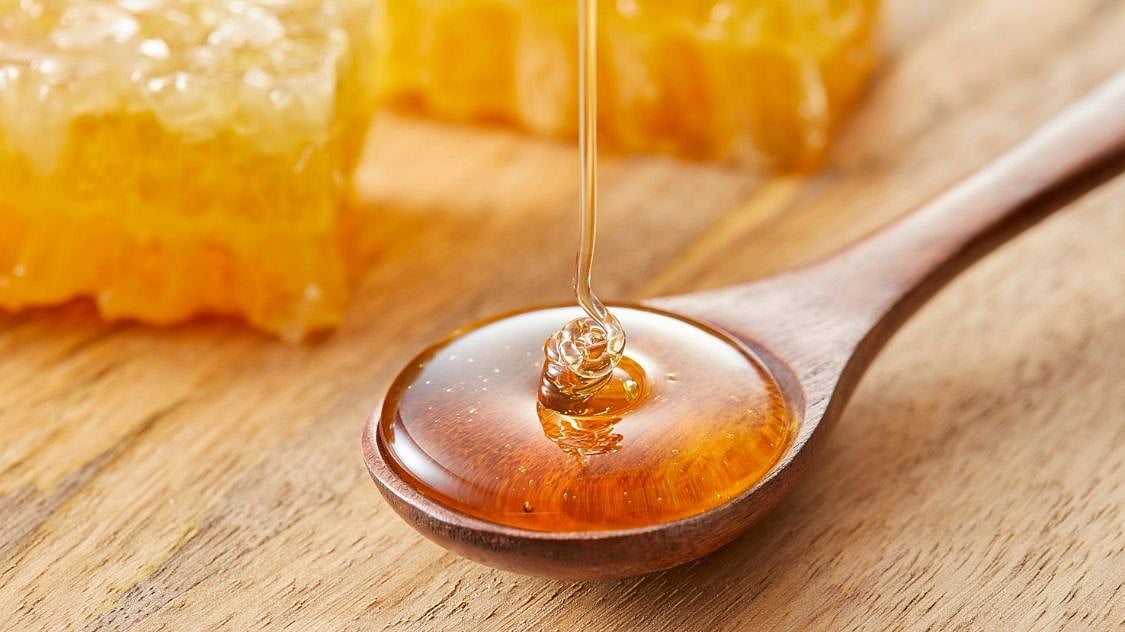
Patanjali Honey
Through Swamiji’s talks, one realises the immense effort behind bringing Patanjali Honey to consumers. “What you get is real honey that is 100% natural. Patanjali Ayurved ensures that the trust of millions is never compromised. This is our commitment. Our effort is to eliminate any scope for human error,” shares Swami Ramdev.
Patanjali Honey (50 Gms, 100 Gms, 250 Gms, 500 Gms and 1 Kg) and Aastha Honey (50 Gms and 100 Gms) are blends of honeydew and blossom honey. Rich in antioxidants, they are known to support immunity and act as a prebiotic for gut health. They may also aid in weight management, while their natural sugars provide quick, sustained energy. Traditionally, honey is used for wound care due to its antibacterial properties, and for soothing coughs, colds, and fevers when taken with warm water or ginger juice.
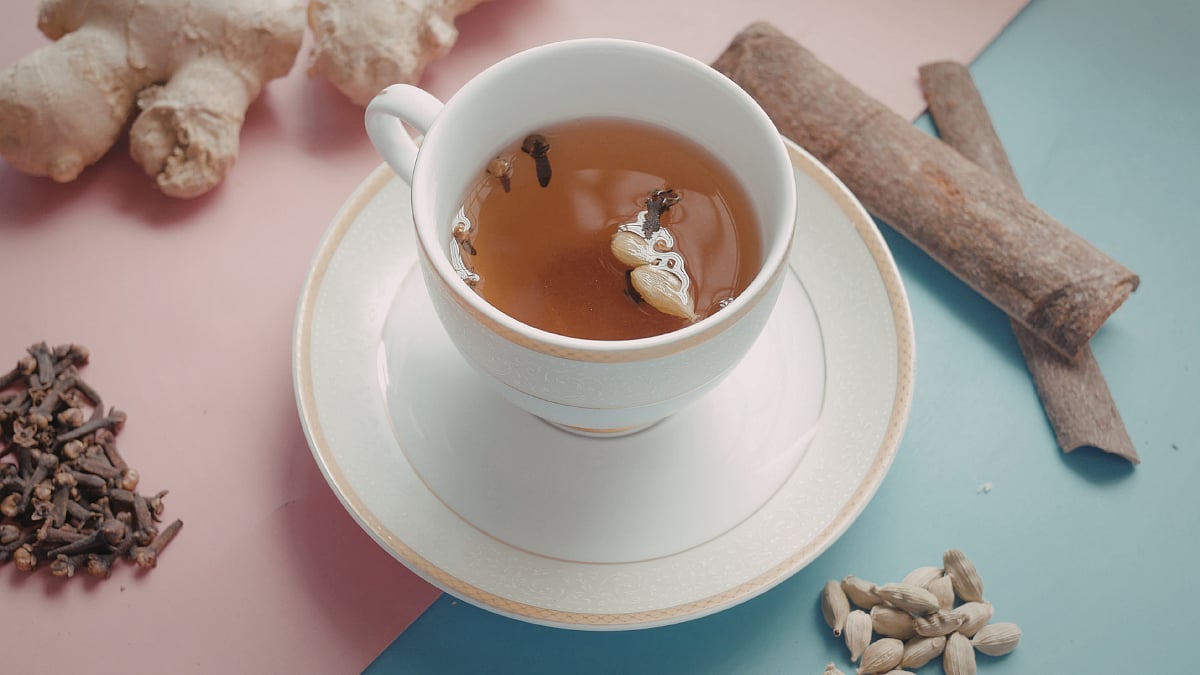
Tips to Follow While Using Honey
Consideration: Use honey in moderation, even though it is a natural sweetener. One to two teaspoons a day is sufficient; excess intake can increase sugar levels and calorie consumption. Those with diabetes should avoid honey or consume it only after consulting a doctor.
Usage: Always check labels before buying, especially for potential allergens. It is advisable to do a small skin patch test to rule out any sensitivity. Raw or organic honey is often preferred for its nutritional value. Avoid boiling honey at high temperatures; instead, add it once the dish has cooled slightly.
Maintenance: Store honey in glass or food-grade plastic containers, as its natural acidity can react with metal. Keep it in a cool, dry place at room temperature. If honey crystallises, there is no need for concern—it is a natural process. To restore its liquid form, place the container in a bowl of warm water.
Choosing Patanjali Ayurved honey can be a step towards a more natural and health-conscious lifestyle.
