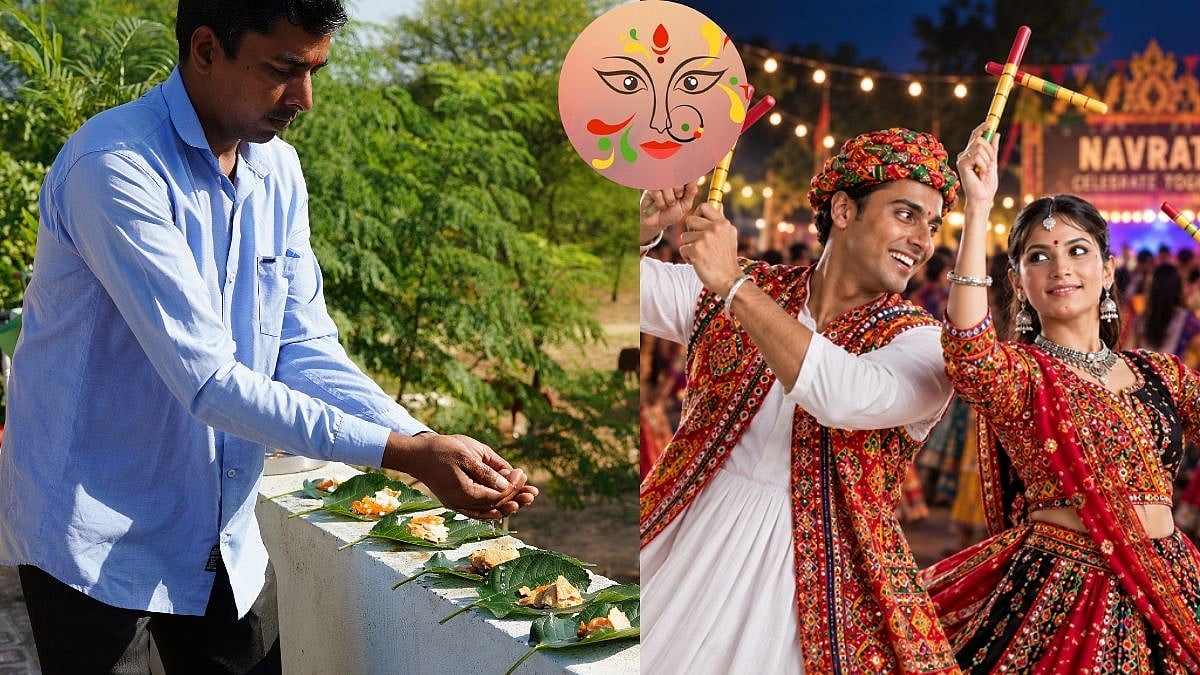
Hinduism celebrates numerous festivals throughout the year. In Sanatan Dharma, each festival has its own special significance and distinct religious traditions. Pitru Paksha is one of them. The sacred 15- or 16-day lunar period is dedicated to honouring ancestors. Pitru Paksha always precedes Sharadiya Navratri, and Navratri begins the following day.
The Hindu calendar marks a significant spiritual transition from Pitru Paksha to Shardiya Navratri, with the two observances occurring one after another during the lunar month of Ashwin. While Pitru Paksha is dedicated to remembering and honouring ancestors, Shardiya Navratri is celebrated as a period of devotion to Goddess Durga and her nine forms. Let's understand the transition, rituals, significance of the lunar period and more.
Why Shardiya Navratri follows Pitru Paksha?
Pitru Paksha begins with Purnima Shraddha and continues for 15-16 lunar days, concluding with Sarvapitru Amavasya, which is also known as Mahalaya Amavasya. During this period, devotees perform rituals such as shraddha, tarpana and pind daan to pay homage to their ancestors and seek their blessings.
The end of Pitru Paksha marks the beginning of a more celebratory phase. Shardiya Navratri begins on the Pratipada (first day) of the Shukla Paksha of Ashwin, immediately after the Amavasya that concludes Pitru Paksha. In 2026, Mahalaya Amavasya falls on October 10, while Shardiya Navratri begins on October 11.
Significance of the transition
According to Hindu traditions, Pitru Paksha is associated with remembrance, gratitude and rituals for departed ancestors. It is traditionally considered a period for introspection and paying one's debts to the ancestors.
Navratri, on the other hand, marks a shift towards worship, celebration and divine energy. Devotees worship Goddess Durga in her nine forms over nine nights and seek blessings for strength, prosperity, wisdom and well-being.

The transition is also connected with the broader spiritual idea of completing ancestral duties before beginning an auspicious period dedicated to divine worship. In several traditions, people begin Navratri by performing Ghatasthapana or Kalash Sthapana, symbolising the invocation of Goddess Durga.

