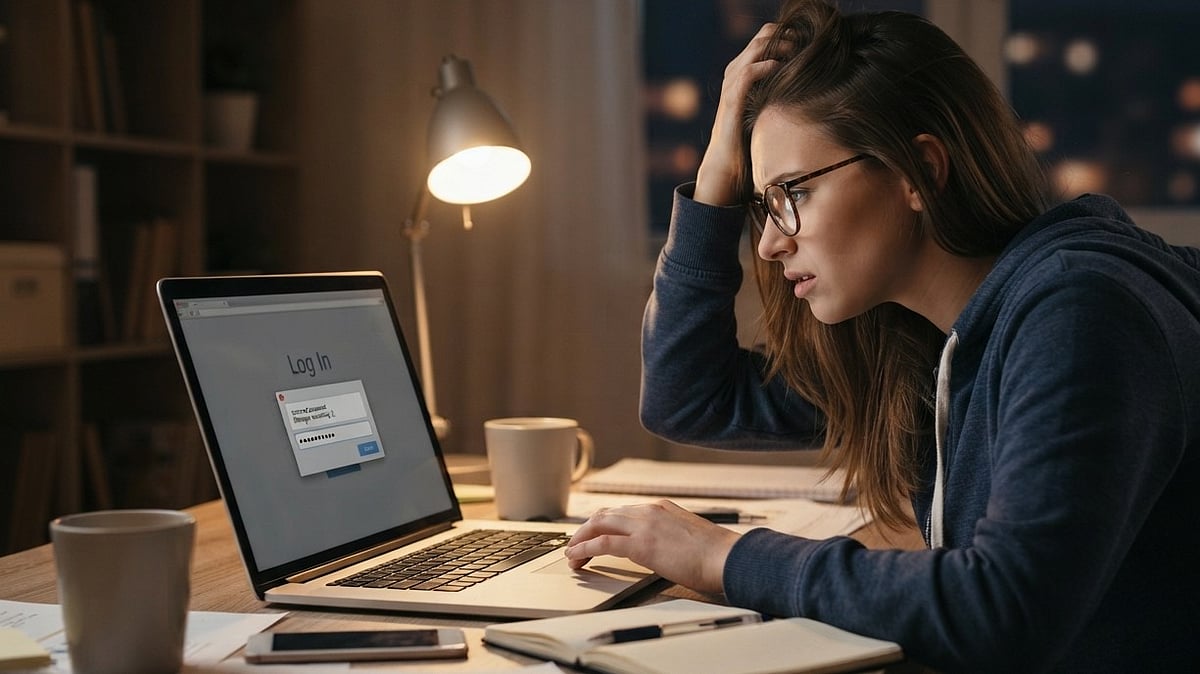
Somewhere between ‘add one capital letter’ and ‘must contain a special character,’ we all lost the plot.
Think about it. You remember your school roll number from twenty years ago. You remember the exact lyrics of a song you actively dislike. You remember what your neighbour said about you at a wedding in 2014. But the password you created last week, for an app you use daily? Gone. Vanished. Your brain has left the chat.
And so, at 11 pm, you sit there typing your dog's name with increasingly desperate punctuation. Sheru123. Sheru@123. SHERU@123!. Account locked. Try again in 30 minutes.
If this is you, relax. You're not careless, and your memory isn't broken. Science has a far kinder explanation, passwords are simply not the kind of thing human memory was ever built to hold.
Brain is a storyteller, not a locker
Here's the thing about memory. It runs on meaning. It loves faces, feelings, gossip, embarrassment, songs, smells. What it absolutely refuses to store is meaningless noise, and ‘Xk#9vBq2’ is precisely that.
“The brain is designed to remember information that is meaningful, emotionally relevant, or repeated regularly, not random combinations of letters, numbers, and symbols. Having to create multiple unique passwords for different accounts increases cognitive load, making it more likely that people will forget them or confuse one password with another,” says Dr. Bhushan Patil, Consultant Psychiatrist at AIMS Hospital, Dombivli.
That's the whole tragedy in two sentences. Every website wants a fresh, complex, never-used-before password. Your brain wants a story, an emotion, a pattern. The two are basically in a bad marriage, and you're the one paying for the counselling.
One password to rule them all
Which brings us to the guilty secret nobody admits at parties but everybody practises at home, the one true password.
"I have one main password, and everything else is just a remix. Sometimes I add my birth year, sometimes an exclamation mark, depending on my mood. I know it's unsafe. But making a new password for every app? I'd need a separate brain just for that," confesses Neetu Sugandh.
Before you judge, know that this is not laziness. It's biology taking the shortcut it was designed to take.
“People often reuse passwords because it reduces mental effort and makes them easier to remember. The brain naturally prefers familiar patterns over creating and recalling new, complex information. Even when people understand the security risks, convenience, habit, and the fear of forgetting passwords often outweigh concerns about online safety,” explains Dr. Bhushan.
The fear of forgetting, notice, beats the fear of hacking. Being locked out of your own account tonight feels scarier than a hypothetical hacker someday. Human beings are wonderfully bad at hypothetical danger.
The numbers make the reuse habit even more understandable. According to password manager NordPass, the average person now juggles around 120 personal passwords, with office logins adding another 67 on top. Nearly two hundred keys, one exhausted brain, and somewhere in between, a security question asking for your first pet's name, which, honestly, you're no longer sure of either.
No wonder the world's most common passwords, year after year, remain masterpieces like ‘qwerty’ and ‘123456789.’ Faced with an impossible memory test, humanity collectively decided to cheat.
The trick is to make it weird
The same brain that drops ‘Xk#9vBq2’ instantly can carry a ridiculous image for decades. So stop fighting your memory and start feeding it what it likes.
“Creating a passphrase using unrelated but meaningful words, a personal story, or a memorable phrase is often easier to remember than random characters. Associating the password with a mental image or pattern and using a trusted password manager can further improve both memory and online security,” suggests Dr. Bhushan.
This means: ‘AutoRickshawEatsPurpleMangoes’ is a better password than ‘P@s5w0rd’ in every way that matters. It's longer, which makes it harder to crack. And it's absurd, which makes it impossible to forget, because your brain adores absurd. You'll picture that rickshaw for the rest of your life whether you want to or not.

And for the other 199 passwords? Let a password manager carry them. You remember one strong phrase. The software remembers everything else. Your brain gets to go back to its actual full-time job: storing song lyrics and old wedding gossip.
Accept defeat
Forgetting your password isn't your memory failing. It's your memory politely declining to store unrelated passwords. So the next time that login screen defeats you, click ‘Forgot password?’ with your head held high. The system was rigged against your brain from the start. So, accept defeat, reset the password, and move on. Your brain simply has better things to remember.

