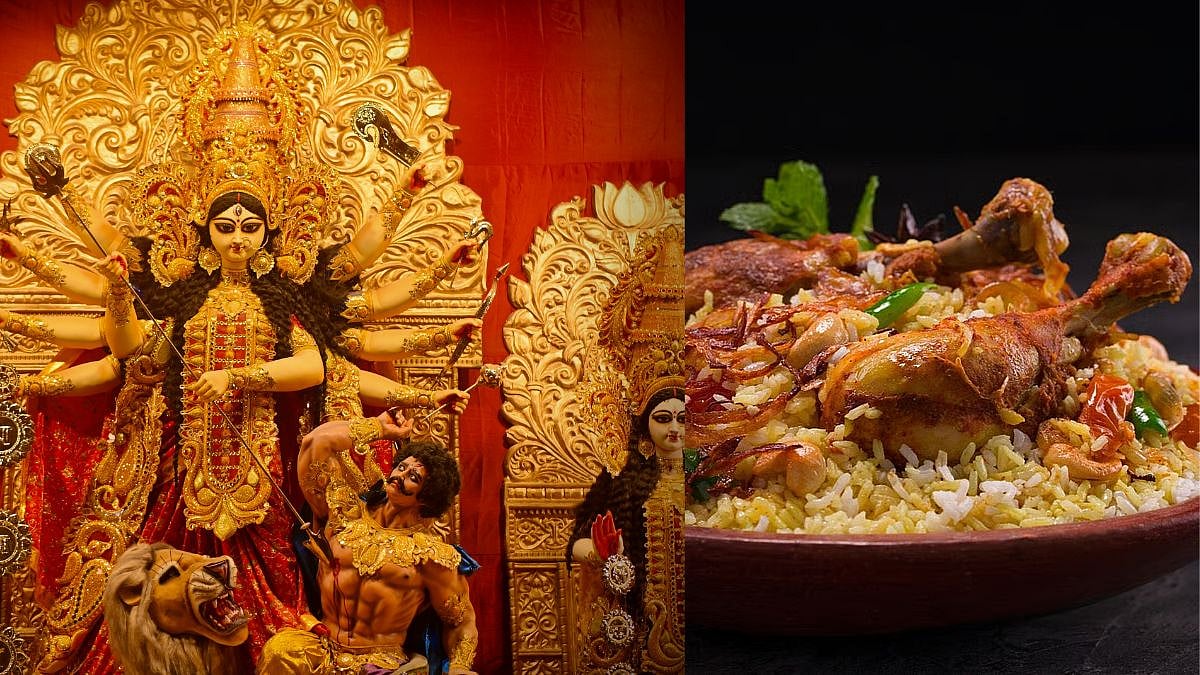
Durga Puja is one of the most significant and celebrated festivals, which is dedicated to Goddess Durga, and it is mostly celebrated in West Bengal, Assam, Odisha and other eastern parts of India. Navratri is also among the most significant Hindu festivals, which is dedicated to Goddess Durga. While both celebrate the victory of good over evil and the power of the divine feminine, their customs surrounding food often differ. In Bengal, Durga Puja is synonymous with festive feasts featuring fish, mutton and other non-vegetarian delicacies, whereas many devotees in other parts of India observe Navratri by fasting and avoiding meat, onion and garlic.
But why is there such a difference? Let's understand the difference.
Why do Bengalis eat non-veg during Durga Puja?
This year, Durga Puja has begun from October 16, and it will continue until Vijayadashami, October 21.
In Bengal, Durga Puja is not just a religious festival but also a major cultural celebration. Food plays an important role in the festivities, with traditional Bengali dishes bringing families and communities together.
Fish, particularly, holds a special place in Bengali cuisine and cultural traditions. Many Bengali households prepare fish and meat during the festive period, especially on days when they do not follow specific dietary restrictions.
Shakta traditions
The practice is also linked to the region's distinct Shakta traditions, which involve the worship of the Divine Mother as a powerful form of the goddess. In certain Shakta traditions, animal sacrifice has historically formed part of religious observances, although many devotees follow different customs today.
Why do many devotees fast during Navratri?
Across several parts of India, Navratri is observed through fasting, prayer and dietary discipline. Devotees may abstain from meat, grains, onion and garlic, depending on regional customs and personal beliefs.
Fasting is considered a way to practise self-discipline, devotion and spiritual purification while seeking Goddess Durga's blessings. Some devotees consume fruits, milk, potatoes and foods made with ingredients such as sabudana and kuttu flour.

Different traditions, shared devotion
Ultimately, both traditions honour Goddess Durga, expressing devotion through customs shaped by local history, family practices and faith. In Bengal, the deity is welcomed and worshipped as a daughter returning to her maternal home rather than a guest of austerity. While in the northern belt of India, people welcome the deity as Queen, calling her Mata Rani. In Bengal, since the deity is welcomed as a daughter, a daughter's homecoming is celebrated with joy, new clothes and grand family feasts rather than religious restrictions or fasting. The regional difference is also caused by Bengal's geography, which is defined by rivers like the Ganga and Padma, making fish (matsya) a staple part of daily life.

