Growing up in the 90s was its own kind of adventure. It was almost the turn of the century, and while I was lucky to have a colour TV at home, entertainment was still limited to a handful of channels and, of course, no OTT. I belong to that in-between generation that moved smoothly from Doordarshan reruns to the sudden explosion of private TV channels, and eventually YouTube clips and streaming platforms.
Somewhere in that changing media landscape, Dilip Prabhavalkar became more than just an actor I admired. He became a familiar presence. The kind that quietly settles into your memory without needing grand entry scenes or heroic background scores. His characters were never loud or larger-than-life. They were rooted, flawed, funny, awkward, and deeply human. And maybe that is why they stayed with me.
I didn’t grow up watching Chimanrao Gundyabhau when it first aired in 1977–79, like my parents. But I did catch a few episodes during Doordarshan reruns in the 90s. As a child, black-and-white television felt boring, but my parents insisted we watch ‘good old serials’ and classic movies. Back then, I didn’t fully get the magic. But something got etched in my memory.
What truly became my TV obsession, though, was the Marathi serial Shriyut Gangadhar Tipre in the early 2000s. And that says a lot, because this was also the time when Ekta Kapoor had taken over Indian television and young girls like me were busy swooning over her male leads. Yet, here I was, completely invested in a family sitcom powered by writing, timing, and Dilip Prabhavalkar’s understated, brilliant performance.
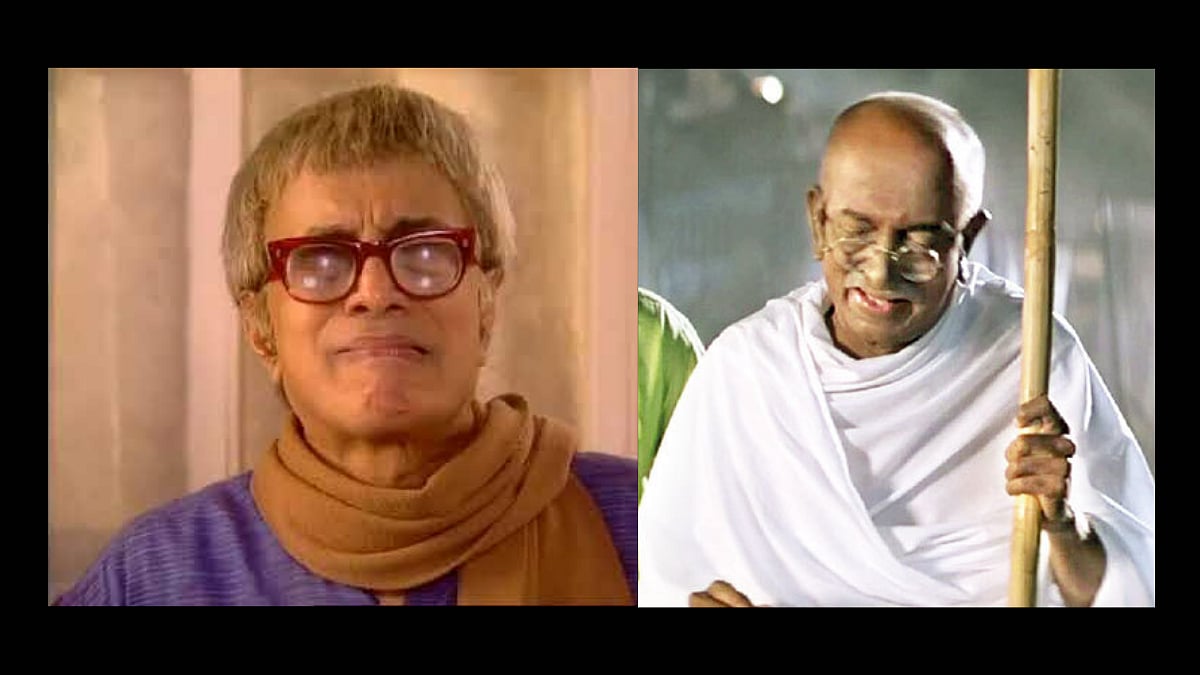
For many Gen Z viewers and probably for non-Marathi-speaking audiences, Dilip Prabhavalkar is primarily Gandhi from Lage Raho Munna Bhai. Or now, Babuli Mestri from Dashavatar. But for a Maharashtrian millennial like me, he is a whole universe of characters.
He is Tatya Vinchu from Zapatlela, the stuff of childhood nightmares.
He is Nandu from Chaukat Raja, tender and heartbreaking.
He is Master Sadashiv Sitaram Deshmukh from Ek Daav Bhutacha.
He is Inamdar Bhusnale from Pachadlela.
He is Rajabhau from Chuk Bhul Dyavi Ghyavi.
Each role so different from the other, yet each so unmistakably his.
Hindi cinema gave him national recognition, and rightly so. Lage Raho Munna Bhai introduced a whole new generation to his restrained, wise, and warm portrayal of Mahatma Gandhi. He didn’t play Gandhi like a statue or a history lesson. He played him like a living conscience, gentle yet firm. For millennials like me, who grew up with preachy versions of moral education, this Gandhi felt approachable, almost like a mentor you wish you had. Hindi cinema often uses him sparingly, but when it does, it uses him with respect. He becomes the emotional anchor without ever demanding the spotlight.
Beyond movies and television, Dilip Prabhavalkar made me fall in love with theatre. Though my parents were theatre lovers, my brother and I never went along with them. We were too impatient and too young to understand what was unfolding on stage. Theatre felt slow, complicated, and intimidating.
That changed when I started college in the early 2000s and began watching recorded plays on DVDs. My first Dilip Prabhavalkar play was Hasva Fasvi. My parents had watched it live and even had the honour of sitting next to Prabhavalkar during one of the acts.
In Hasva Fasvi, he slips into six completely different characters—a woman from Uganda, a Chinese prince, an octogenarian actor, and more. Watching him transform so seamlessly from one role to was an awe-inspiring moment.

Then it was Vasuchi Sasu, where he plays Anna and disguises himself as his own sister to help his young paying guest. It’s laugh-out-loud funny, the kind of comedy that makes your stomach hurt from laughing. Plays like these made theatre feel exciting and accessible.
Calling Dilip Prabhavalkar a ‘versatile actor’ feels like an understatement. Versatility is when an actor plays different roles. What he does is something more. He disappears into characters. His body language changes. His voice changes. His emotional rhythm changes. You don’t watch Dilip Prabhavalkar acting; you watch a person living on screen or on stage.
So yes, the world may celebrate him as ‘Gandhi’. And that is deserved. But for me, and for so many Maharashtrian millennials, he will always be much more. He is our Tatya Vinchu, our Tipre, our theatre hero, our quiet master of transformation.
Beyond ‘Gandhi’, he is a lifetime of characters, memories, and lessons in what real acting looks like.
Some of Prabhavalkar’s other notable works
Albatya Galbatya
Patra-Patri
Suryachi Pille
Poshter Boyz
Sarkarnama
Aranyak
Faster Fene

