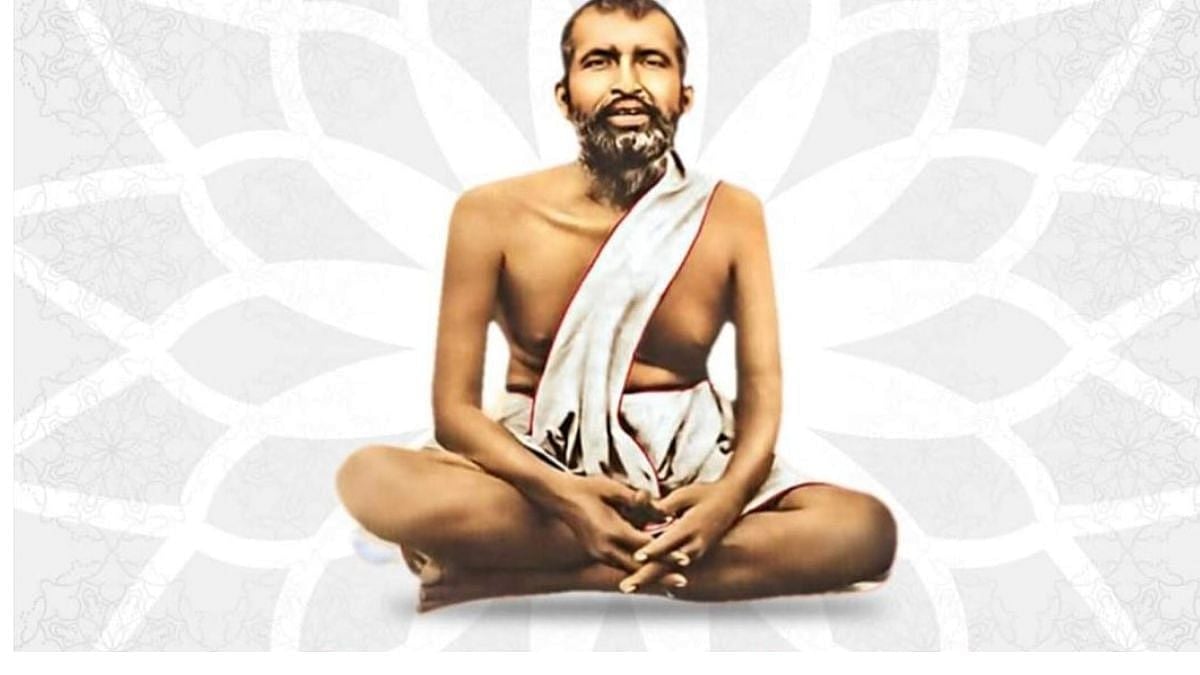
Sri Ramakrishna Paramhansa was a mystic and a yogi who translated complex spiritual concepts into simple and easily comprehensible language. He was a key figure in the revival of Hinduism in Bengal at a time when a severe spiritual crisis was gripping the province, leading several young Bengalis to embrace Brahmoism and Christianity. On his 190th birth anniversary, let's know about Sri Ramakrishna Paramhansa and his contributions.
About Sri Ramakrishna Paramhansa
Ramakrishna was born as Gadadhar Chattopadhyay on February 18, 1836, to a poor Brahmin family that hailed from the Kamarpukur village of the Hooghly district in Bengal Presidency.
Gadadhar was religiously motivated from an early age and would have moments of spiritual bliss as a result of commonplace events. While performing pujas or watching a religious play, he would enter trances.
He was a simple yogi who pursued the divine throughout his life in various forms and believed in the divine embodiment of the Supreme Being in every individual.
Swami Vivekananda continued to spread his teachings.
Even after his passing in 1886, his most well-known pupil, Swami Vivekananda, continued to spread his teachings and ideas around the world through the Ramakrishna Mission. In essence, his teachings were as conventional as those of the wise men and seers of long ago, yet he has always been current.
Devotee of goddess Kali
Ramakrishna was categorised as a "Shakto" because he worshipped the goddess Kali, but this did not prevent him from engaging in other forms of spiritual worship.
Ramakrishna was likely one of the few yogis who had explored a variety of spiritual paths in an effort to realise divinity rather than adhering to just one. He studied under a variety of different Gurus and eagerly assimilated their philosophical teachings. He passed away on August 16, 1886, after a long battle with throat cancer.
Want to take a break from the news? Play our games on game.freepressjournal.in
