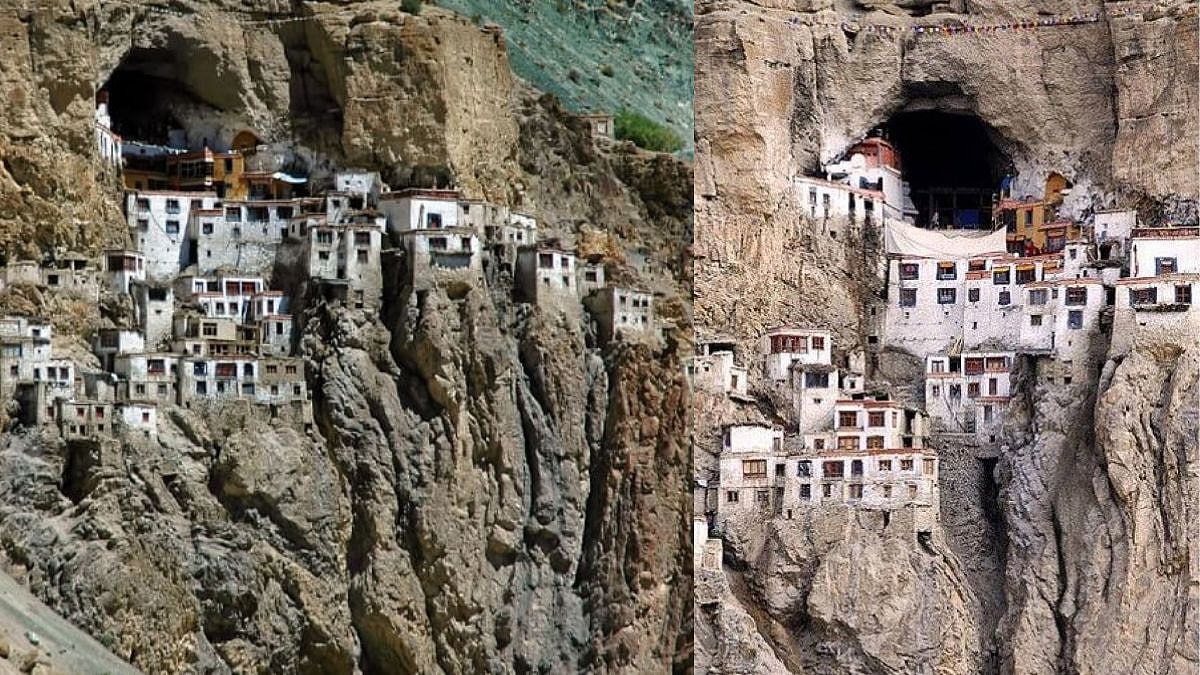
Tucked away in the remote corners of the Himalayas, Phugtal Monastery is one of India’s most isolated and fascinating spiritual sites. Phuktal Monastery, or Phuktal Gompa, is located in the Lungnak Valley of Ladakh’s south-eastern Zanskar region. The monastery is built into the side of a cliff, resembling a natural cave formation. It is 52 km southeast of Padum, on the Nimmu-Padum-Darcha road.
About Phuktal Gompa
Perched at an altitude of around 12,000 feet, Phuktal Monastery sits dramatically above the Tsarap River. The journey to reach it involves a challenging trek. Travellers usually begin their journey from Padum, the administrative centre of Zanskar, and navigate narrow mountain trails, suspension bridges, and rugged terrain to reach the monastery.
Until 2023, before the Nimmu-Padum-Darcha road was built, it could only be reached by foot. Supplies to the monastery were brought by horses, donkeys, and mules. Before the road was built, it was a day's walk from Village Chah or Village Khangsaar, the end of the road leading from Padum. Phuktal is derived from Phukthal, which is made up of Phuk, meaning cave, and Tal, meaning at leisure; it means the cave of leisure.
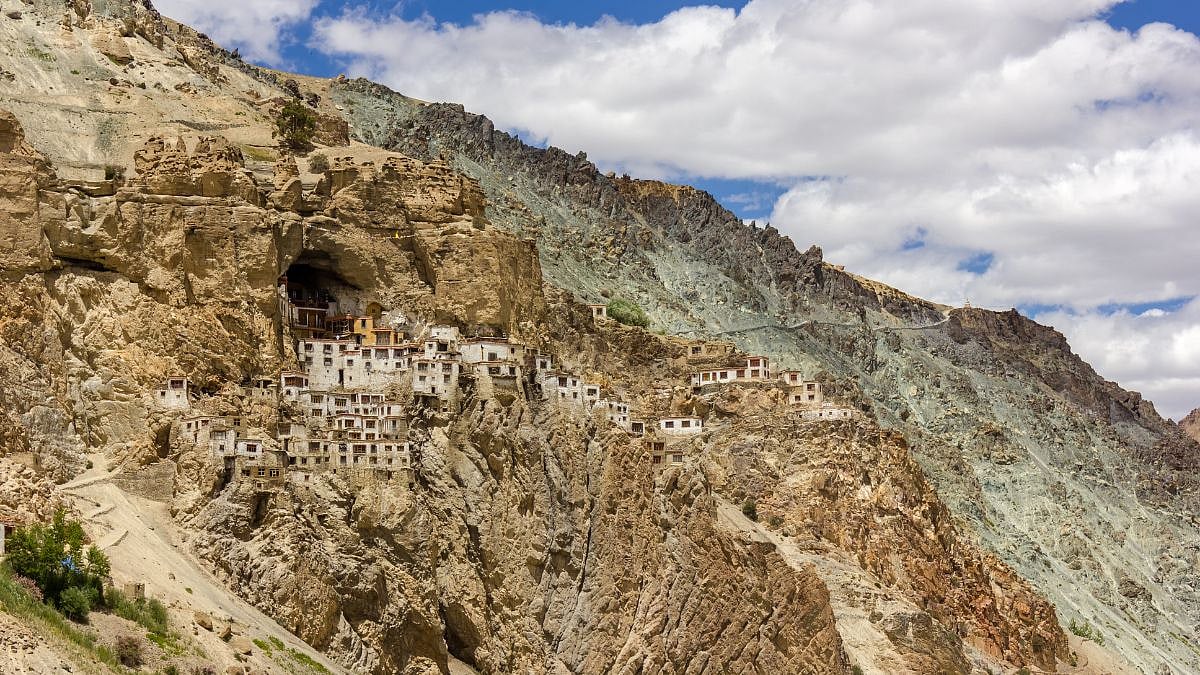
Phuktal Monastery: A 12th century gompa | Canva
Phuktal Monastery: A 12th century gompa
Phuktal Monastery was founded in the early 12th century. It remained largely unknown to visitors until it was visited by Hungarian scholar Alexander Csoma de Koros around 1827. The monastery was built around a natural cave that has been used for meditation for approximately 2,500 years. However, the present Phuktal Gompa, of the Gelug school of Tibetan Buddhism, was established in the early 15th century by Jangsem Sherap Zangpo, a disciple of Je Tsongkhapa.
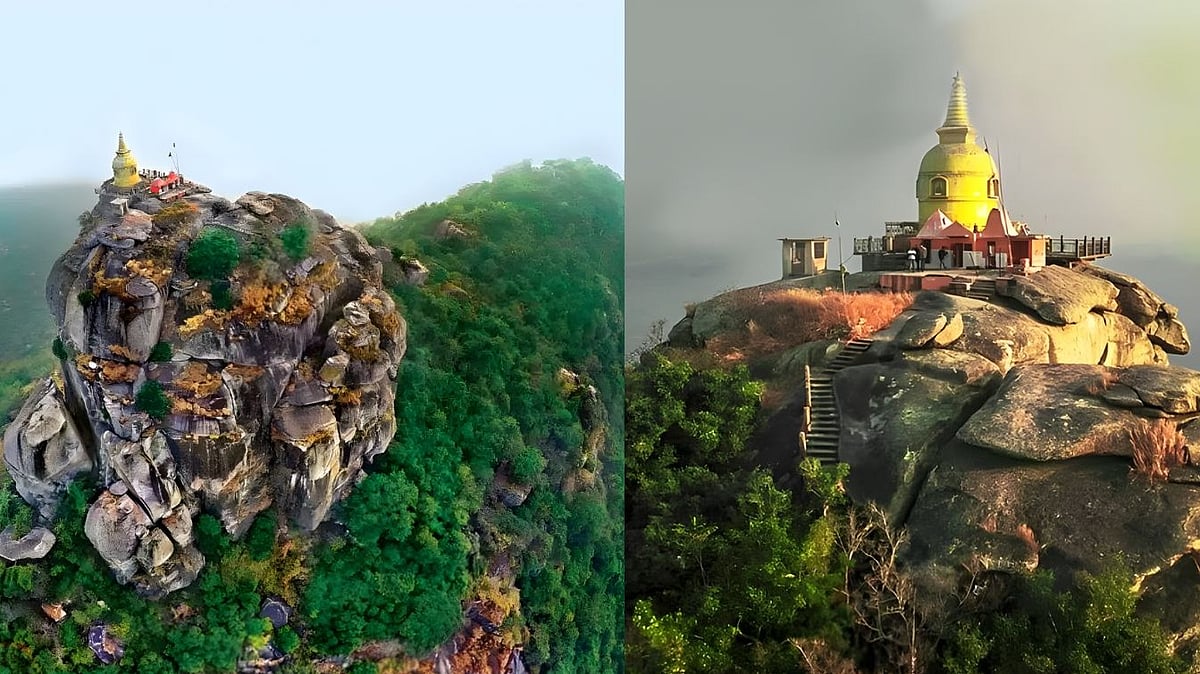
Phuktal monastic school was built in 1993
Phuktal Monastic School was established in 1993. It is an educational institution which is located within the 15th century Phuktal Gompa. The school offers a mix of traditional monastic education, which includes chanting and scripture study, and a modern secular curriculum.
