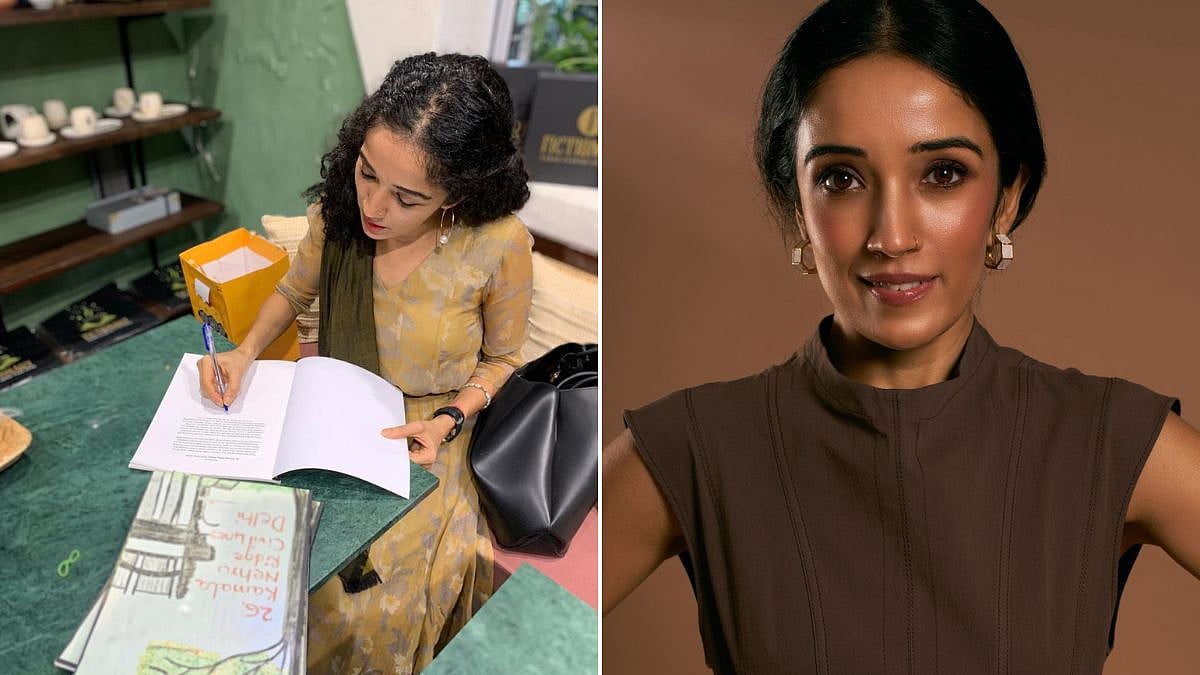
Creating change is a responsibility, and only some people are ready to take it on. Devangana Mishra is one of them. She is a writer and artist, and she founded Brain Bristle, a non-profit that supports autism education in Mumbai’s low-income schools.
She has over 15 years of experience working with autism and the arts globally. In recent years, she has focused on growing her non-profit and developing her arts career in India. She spoke with The Free Press Journal about Brain Bristle, her work with the NGO, her writing and art, and more.
Excerpts from the interview:
Please tell us about your background.
I wanted to be a writer when I was very little. Right after graduating from Lady Shri Ram College in Delhi, I met a boy on the autism spectrum with very high needs. That encounter pivoted my life. I went on to study autism, intellectual disabilities, and reading and writing at Teachers College, Columbia University.
For the last decade and a half, I’ve been working at the intersection of education, autism, inclusion, and the arts globally. A few years ago, I returned to India to join the Leadership Team at Teach for India, which brought my attention to the realities of low-income schools. It gave me the momentum to work at a larger scale than the earlier micro-interventions.
My family is from Jaipur, Rajasthan, though we now live across the world. My father runs a non-profit organisation, and my mother was the principal of the Amity Schools for many years. Perhaps because of them, even my creative work remains rooted in social impact. Much of my writing is simply activism in another language, stories shaped by political and economic turbulence, stories that may otherwise remain untold.
What is Brain Bristle all about?
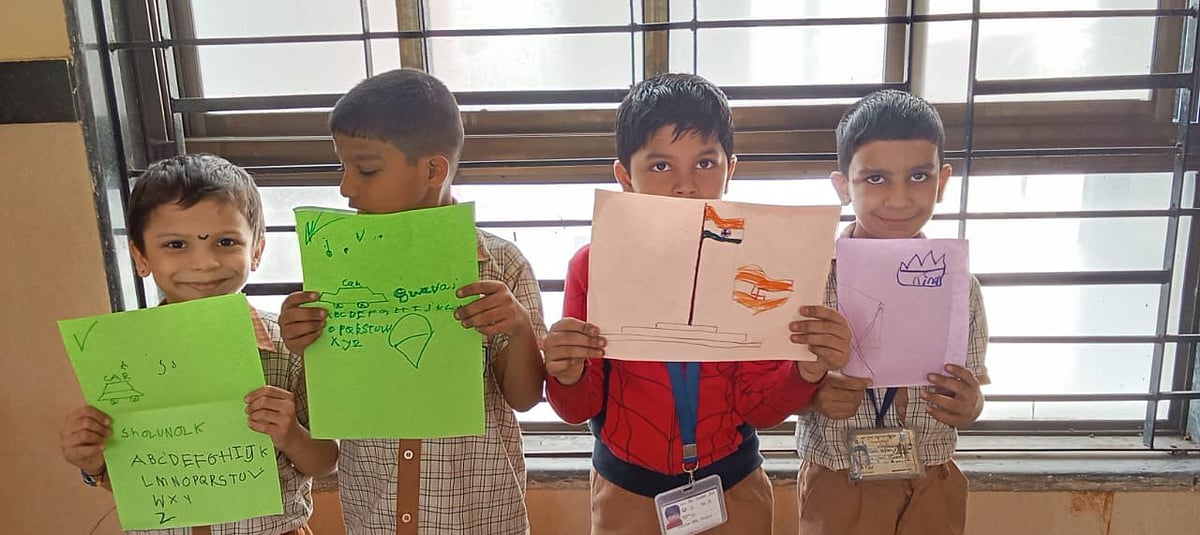
Today in India, one out of every 100 children under the age of 10 is on the autism spectrum. More than 70% of them study in low-income or public schools. Over 5,500 special schools house many, and countless children remain homeschooled.
Brain Bristle works inside Mumbai’s low-income schools by placing highly educated social workers who build autism education, intervention, and inclusion within the existing school system. We help autistic children stay in their classrooms, learn through their curriculum, and remain a part of their communities. Alongside this, we build advocacy and awareness for autism and inclusion at large.
What prompted you to start the NGO?
It’s easy to look away from inequity. However, if we choose to see it clearly and still do nothing, then we become complicit in it. I saw the state of our city’s school children on the autism spectrum left unattended to, not because people lacked compassion, but because we lacked trained support. That realisation shaped Brain Bristle. I wanted to hire, train, and place excellent social workers in low-income schools so that autistic children could inherit a different tomorrow than what might have been written for them.
Over the two years of existence, how has Brain Bristle made an impact on supporting autism education in low-income schools and through art?
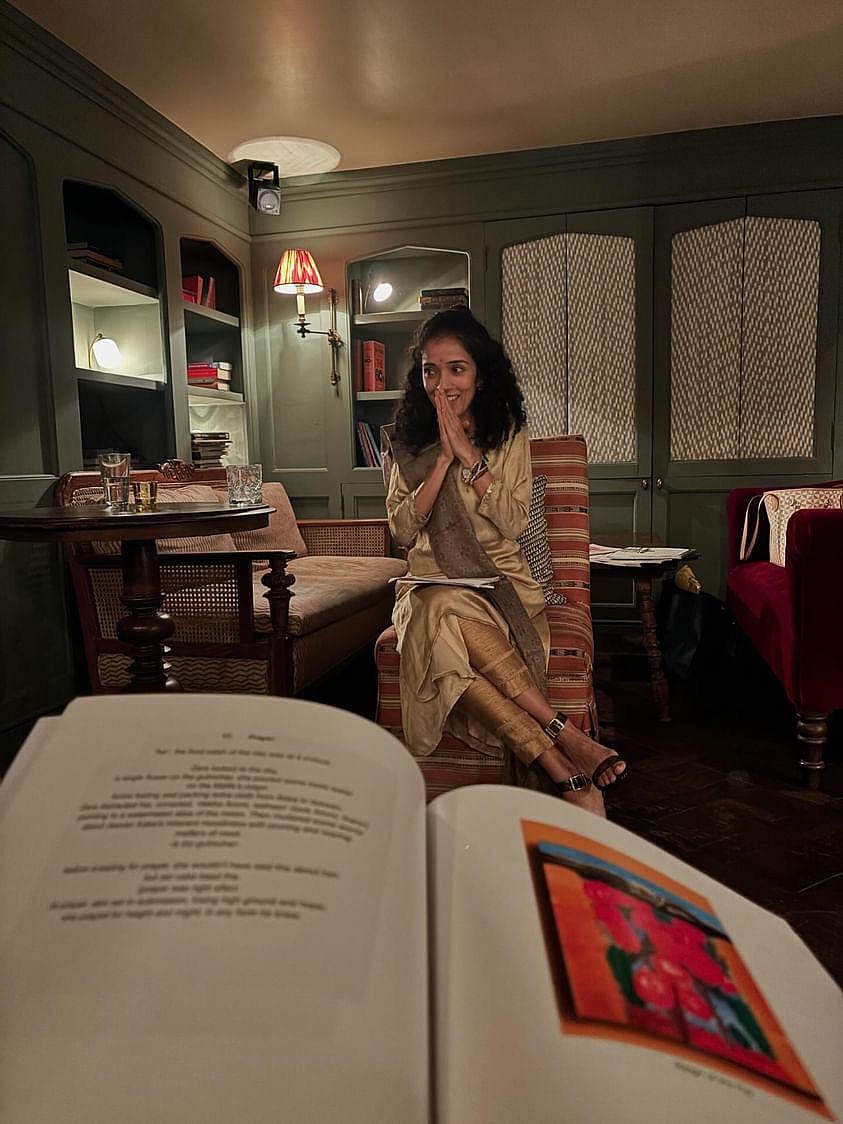
Brain Bristle is only two years old. Before this, I worked in private schools in New York, Indonesia, and Hong Kong. But in these two short years, we’ve scaled to 15 low-income schools in Mumbai, impacting thousands of students through inclusive education. We’ve organised hundreds of events, bringing together advocates, teachers, policy makers, speakers, artists, and young people. We’ve built training programs for youth interested in autism, held talent shows, charity galas, and fundraisers. I’ve spoken at many conferences and events, reaching thousands in person and virtually. As a writer, poet, and artist, I’ve also created spaces where art and advocacy co-exist through exhibits, gatherings, and collaborations with autistic individuals at some of Mumbai’s most valued cultural institutions.
You work as an artist, author, educator, and leader. How do you balance these? Do they influence one another?
They influence one another completely. Creativity is difficult to contain if you’re an artist at heart; it spills into everything. Teaching well requires constant learning. Leading teams demand imagination. Writing emerges from observing the world closely. So, I don’t overthink balance. I just allow my instincts to guide me.
Many people in high-needs social work feel guilty about pursuing art, leisure, or personal talent. But art itself is a form of social justice. It presses on systems, provokes empathy, and expands the world. Whether I’m teaching, creating, writing, meditating, managing teams, or growing Brain Bristle, I only keep what matters, I schedule it, and I give it the respect and diligence it deserves.
How do you see support for autism in India, especially in low-income communities?
We are a nation of a billion and a half. Children drop out after 5th or 7th grade, many families struggle with daily wages, literacy, employment, healthcare and within all these realities, autism has to fight for space. It’s not neglect; it’s systemic overload.
Often, in schools, a mother or a shadow teacher sits beside an autistic child without any training. A child capable of foundational academics may instead spend years doing beading or sorting grains, preparing not for education, but for a vocation. We derail autistic children not because of their limitations, but because we lack direction and trained resources. At Brain Bristle, we try to intervene at the root of this.
Are creative pursuits valued across social and economic strata? What needs to be done?
When survival is urgent, art can seem indulgent: writing fiction, rehearsing music, painting for days, training to act. But close your eyes for a moment, what stays? Colours, songs, scenes from films, fragments of poetry. Art outlives the mundane. We give beauty to the ordinary, rest to the restless, colour to the monochrome, rhythm to the monotone. Artists must remain, and we must create space for creativity across communities. Without art, there is no memory, no dream, no imagination to build a better world.
What’s next for you and Brain Bristle?
To grow—slowly, steadily, deeply. In impact and in scale. For both of us, together.

