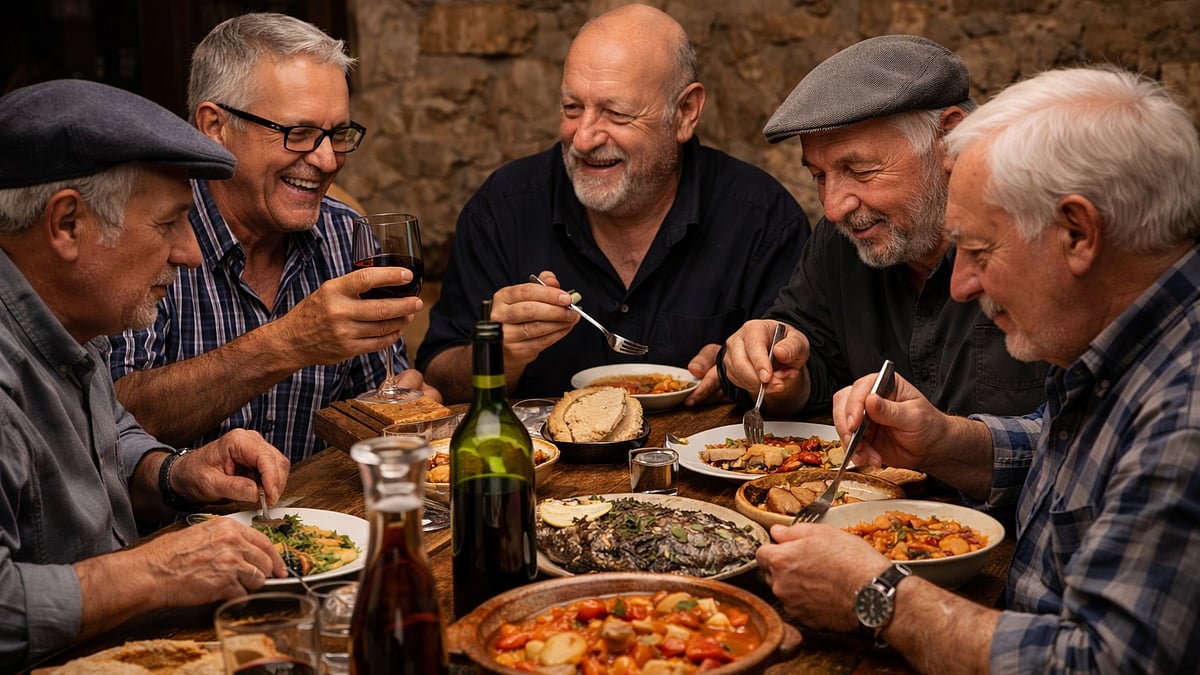
I had heard about Txokos long before I arrived in San Sebastián—the hallowed ‘Ground Zero’ of Spain’s autonomous Basque (‘Euskadi’ in the local Euskara language) region. These are places spoken of in lowered voices, as if they were both commonplace and faintly mythical. Everyone seemed to know someone who belonged to one, yet very few had ever crossed their threshold. When the invitation finally came, it felt less like securing a reservation and more like being admitted into a confidence. There was no signage, no suggestion that something significant was happening behind the door I pushed open. And yet, the moment I stepped inside, I sensed I had entered a space where food was not entertainment, but a form of belonging.
Txokos emerged in the 19th century, shaped by a particular moment in Basque social life. Men who spent long hours at sea or in workshops sought places where they could cook, eat, sing, and argue without the formalities of public dining. These were not restaurants and never pretended to be. They were private gastronomic societies, funded and run by their members, with rules that governed everything from behaviour to housekeeping. At their core lay a simple idea: everyone contributes, everyone eats, and no one is above the work.
Inherited institution
My host Andreas explained this history with an ease that suggested it had been absorbed rather than studied. He spoke of his father’s Txoko, and his grandfather’s before that, each generation inheriting not a seat at the table but a responsibility to it. Membership is often lifelong and sometimes passed down, reinforcing the sense that these societies are custodians of continuity. While women were long excluded, a reflection of the era in which Txokos were formed, change has come gradually. Many now admit female members, and most welcome women as guests, though the kitchen is still, more often than not, a male domain.
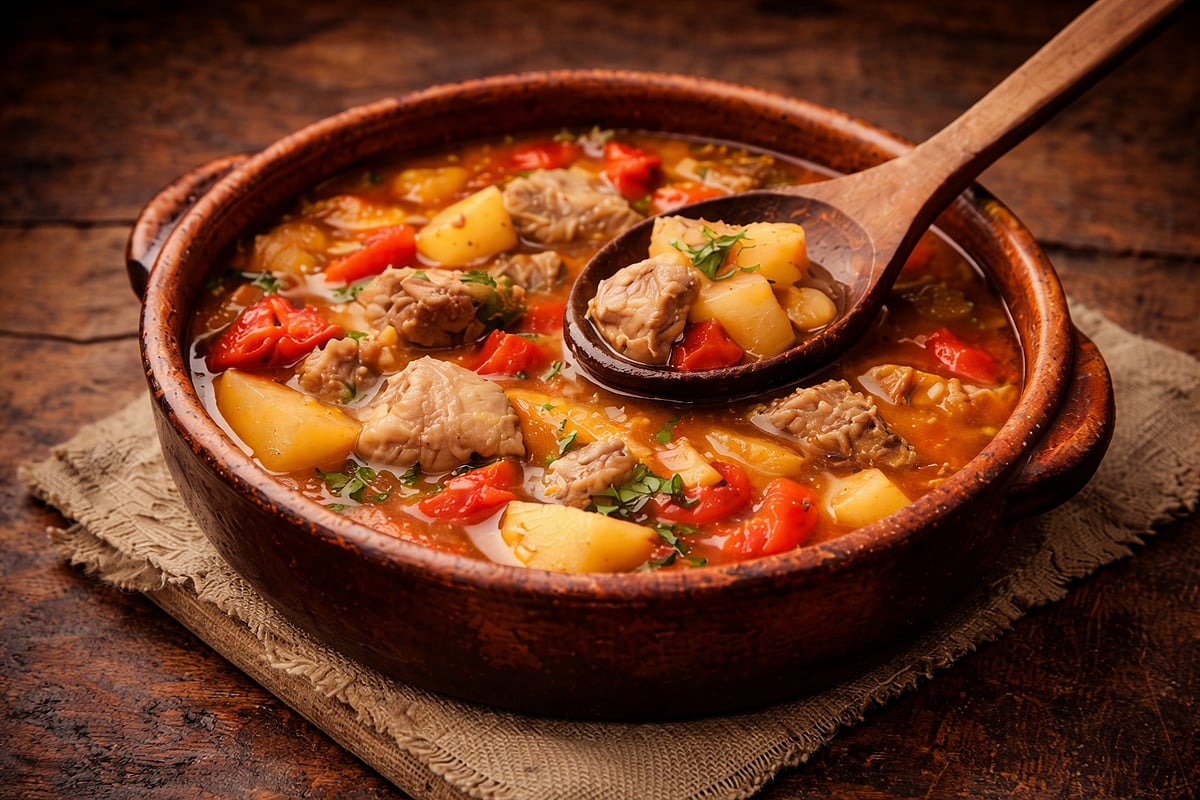
Basque marmitako stew |
What struck me was that the exclusivity was not about status. There were no outward markers of profession or wealth. The men around me ranged in age and background, united by familiarity rather than hierarchy. The rules existed not to elevate anyone, but to protect the collective rhythm of the place. Phones were put away. No one rushed. The evening unfolded at its own pace, indifferent to the outside world.
Cooking as obligation
The kitchen was large, functional, and faintly smoky, bearing the marks of decades of use. This was not a space for improvisation or ego. Whoever was cooking that night had planned carefully, shopping earlier in the day, knowing that the meal would be judged not with applause but with quiet expectation. The food was resolutely Basque, rooted in season and proximity. Anchovies from nearby Getaria were treated with restraint, their flavour left intact rather than dressed up. Marmitako followed, deeply familiar to everyone at the table, yet never diminished by repetition. Each spoonful of the rich, tomato-based tuna fish stew carried the memory of boats and weather, of meals eaten after long days on the water.
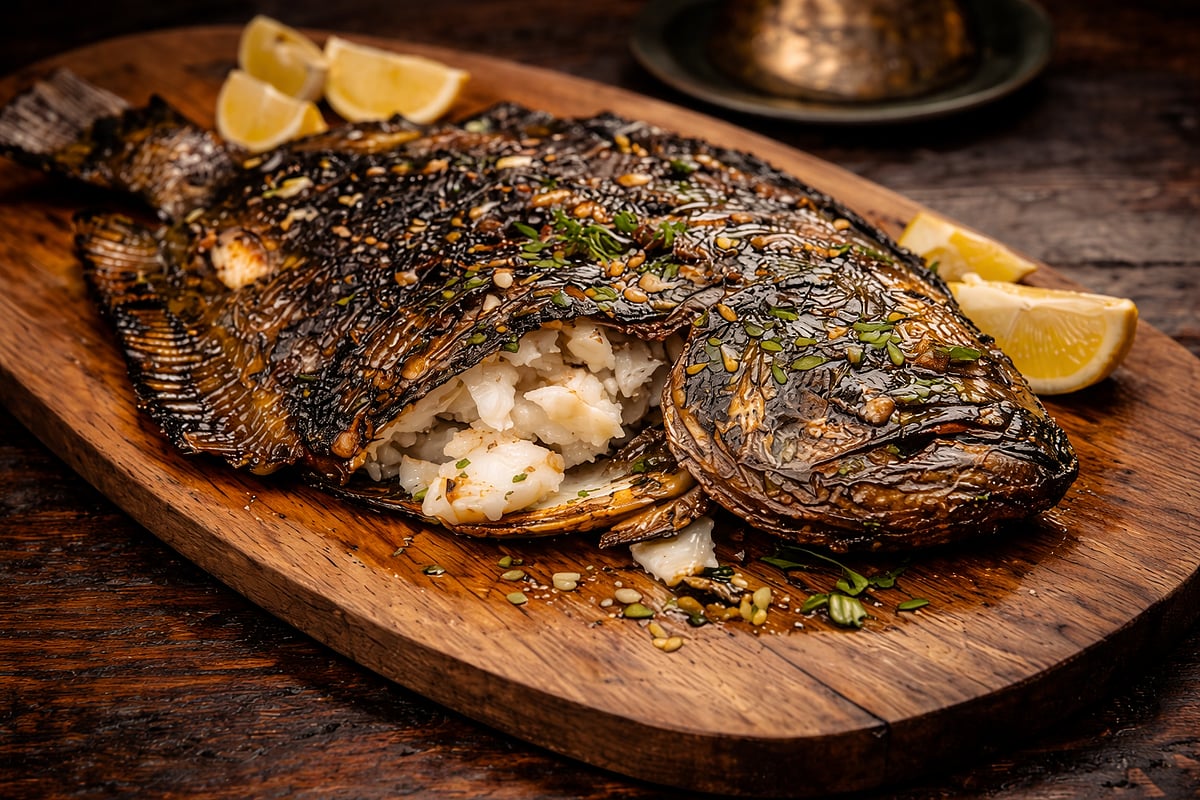
Grilled turbot with lemon and herbs |
The turbot arrived without ceremony, roasted whole and served simply. It was magnificent in its understatement, a reminder that excellence here comes from respect for ingredients rather than technique. No one explained the dish or photographed it (I was allowed that leeway as a food and travel writer!). Plates were filled, passed along, refilled. Conversation flowed around the food rather than stopping for it.
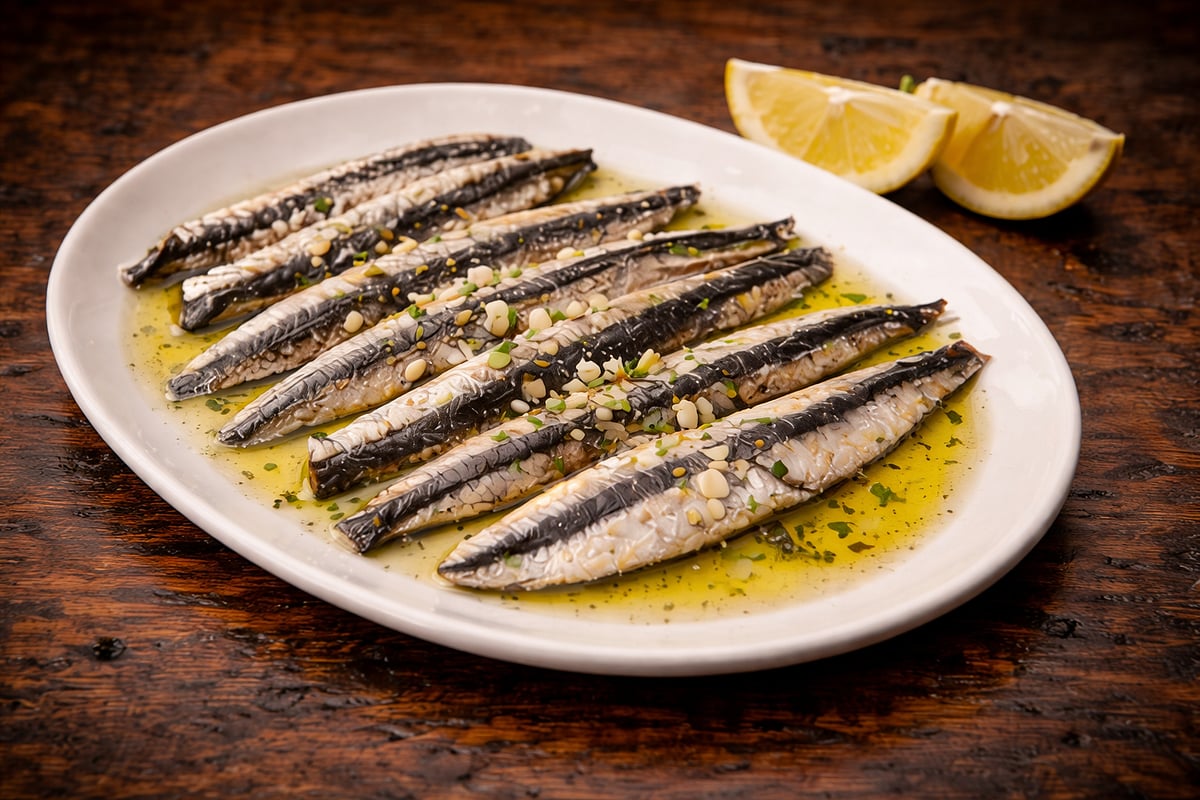
Marinated anchovies with garlic and parsley |
More than a meal
Between courses, someone began to sing. Others joined in, voices rising in Euskara, the Basque language threading itself through the room. I understood none of the words, yet the emotion was unmistakable. This was not performance, but habit. It was how these men had always eaten together. Food and song, like language itself, were carriers of identity, sustaining something that history had often tried to erode.
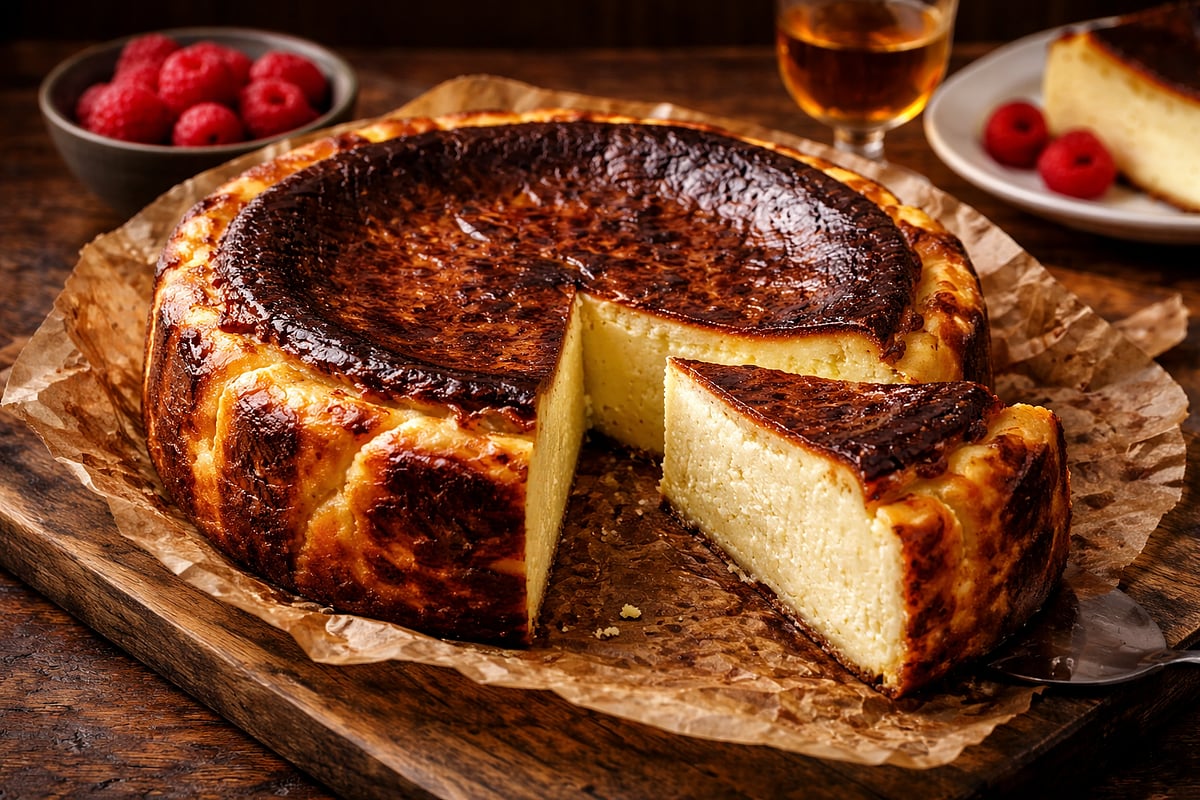
Basque Cheesecake |
Dessert was Basque cheesecake or “Euskal gazta-tarta” in Euskara, burnt on top and creamy within, served without comment. Coffee followed, then small glasses of something stronger. Eventually, a ledger appeared. Costs were calculated, names ticked off, and each person paid their share. There was no rounding down, no indulgence. Fairness, here, was another form of respect.
When I stepped back into the night, the air sharp with salt from the Cantabrian Sea, I felt a quiet gratitude. San Sebastián’s reputation rests on its restaurants and its innovation, but the soul of its food culture lives elsewhere. It lives in rooms like this, where cooking is an act of care, tradition is practised rather than displayed, and the table is a place of equality. I had not simply eaten well. I had witnessed a way of life, still intact, still fiercely protected, and all the more powerful for being shared only with those willing to carry it forward.

