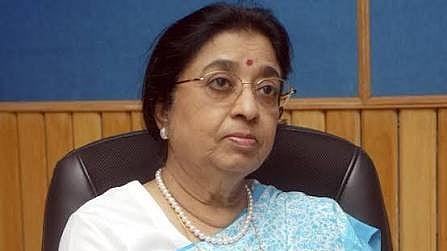
Veteran playback singer Usha Mangeshkar is set to receive the inaugural Bhupen Hazarika National Award, recognising her contribution to Indian music. The honour is named after legendary Assamese singer, composer, poet and filmmaker Bhupen Hazarika, whose work left a lasting impact on Indian music and culture. Prime Minister Narendra Modi will present the award at the concluding ceremony of the year-long birth centenary celebrations of the legendary singer at Bharat Mandapam in New Delhi on November 29, said Himanta Biswa Sarma at a press conference.
Usha Mangeshkar to receive Bhupen Hazarika National Award
The Assam government has declared that the first Bharat Ratna Dr Bhupen Hazarika National Award will be awarded to celebrated singer Usha Mangeshkar for her significant contributions to Indian music and her strong connection to the iconic maestro’s creations. On Friday, Chief Minister Himanta Biswa Sarma announced that the award signifies the state's dedication to honouring cultural figures and maintaining Hazarika’s legacy.
Prime Minister Narendra Modi will present the award at the concluding ceremony of the singer's year-long birth centenary celebrations at Bharat Mandapam in New Delhi on November 29, 2026.
Who is Usha Mangeshkar?
Usha Mangeshkar is an Indian playback singer and a member of the renowned Mangeshkar musical family. She is the younger sister of legendary playback singers Lata Mangeshkar and Asha Bhosle, both of whom made significant contributions to Indian cinema.
She was born on December 15, 1935 and grew up in a family deeply connected to music. Although she worked alongside her celebrated siblings, she established her own identity through her distinctive voice and performances in Hindi, Marathi and other regional-language films.

Career and popular songs
Usha Mangeshkar has sung for films across different Indian languages, including Hindi and Marathi. One of her most memorable performances was in the song Mungda, from the 1978 Hindi film Inkaar. Composed by Rajesh Roshan, the song became widely popular and remains associated with her musical legacy.
She also gained recognition for her contribution to Marathi music and devotional songs. Her versatility allowed her to explore different musical styles, from film soundtracks to traditional and religious compositions.
Over the decades, Usha has contributed to India's rich playback-singing tradition, working during a period when Hindi film music enjoyed immense popularity and regional cinema developed its own distinctive musical identities.

