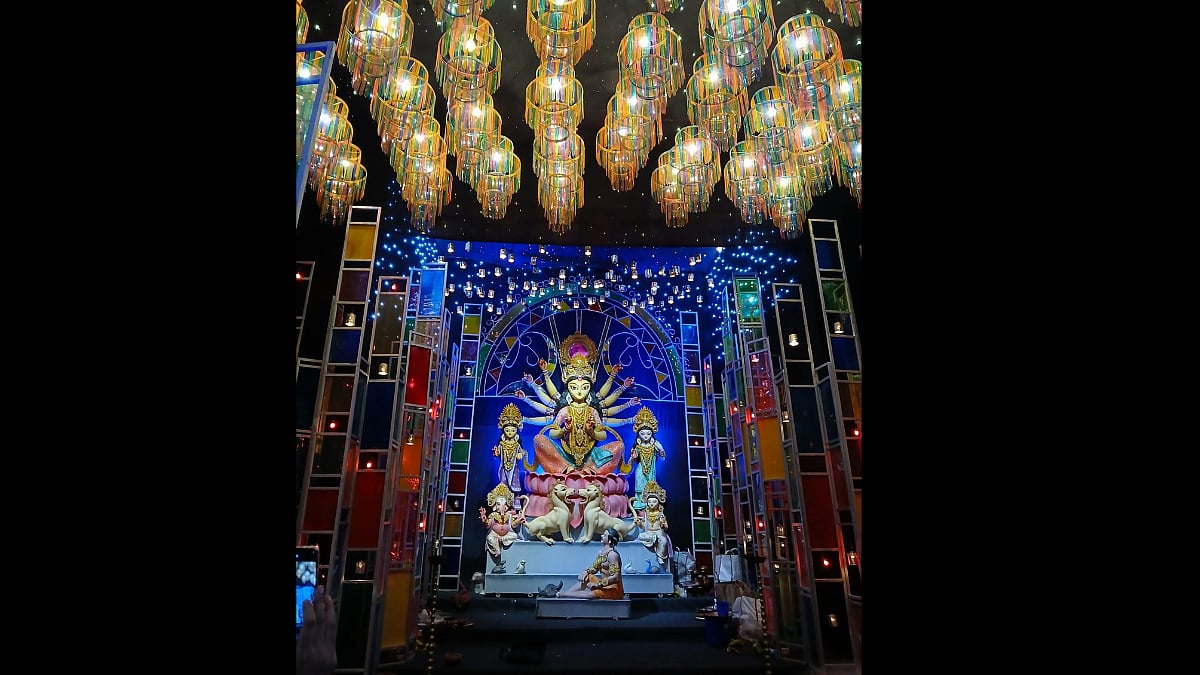
Kolkata’s Durga Puja was officially inscribed on the UNESCO Representative List of the Intangible Cultural Heritage of Humanity in December 2021. This brought the much-awaited international recognition to a festival that many consider one of the greatest art shows and cultural spectacles in the world. To put it in context, just as Glastonbury is widely associated with its music festival and Rio de Janeiro with its carnival, Kolkata is synonymous with its Durga Puja celebrations.
The UNESCO citation aptly describes the festival in these few lines: “Durga Puja is seen as the best instance of the public performance of religion and art, and as a thriving ground for collaborative artists and designers. The festival is characterized by large-scale installations and pavilions in urban areas, as well as by traditional Bengali drumming and veneration of the goddess. During the event, the divides of class, religion and ethnicities collapse as crowds of spectators walk around to admire the installations.” True to these words, this festival is more than just a religious event; it is a cultural phenomenon.
The euphoria
This recognition came at a time when the devastating COVID pandemic was slowly receding and the people were opening up to new vistas of hope. The resulting euphoria among the people was palpable as they celebrated this recognition with much fanfare. Even the existing state government of the day did not leave a stone unturned to celebrate the occasion. The matter also did not escape the notice of people beyond Bengal, who felt equally delighted at the development. NCR-based poet Rahul Gaur says, “I felt extremely happy when I found an international cultural organization of such importance had recognized our Durga Puja.”
Legacy of culture
Many Kolkata denizens saw the UNESCO recognition as a natural progression of their cultural legacy. The City of Joy was already internationally recognized for its colonial history, the Bengal renaissance, and its association with Nobel laureates, Oscar winners, and other cultural greats. Durga Puja is also deeply embedded in the collective consciousness of most Kolkatans as an intrinsic expression of their art, bonhomie, and culture. As a result, the UNESCO recognition felt like a vindication of the city’s rich artistic traditions. It also reinforced the stronger cultural identity of the residents and made them more responsible towards preserving the city’s unique festivals and customs.
The celebration
The following days saw the city living up to its true spirit. Call it the renewed vigour in the air or the impetus that they needed, the festival in the succeeding years saw unprecedented and ambitious experimentation with themes, decorations, artworks, lighting, and sculptures. The pandals were decked out ostentatiously, and the accompanying programmes like music shows, magic tricks, fashion shows, and other activities, became prolific. Durga Puja has always served as a melting pot for various people; the recognition only bolstered the ambitious organizers to beckon more international visitors. The inherent international standing now made them seek greater excellence in their art and celebration. The visitors on the ground increased, and people went out uninhibited. Raghav Mohata, a Gen Z finance professional, says, “Durga Puja pandals these days give us more options to gather in groups and enjoy together.”
Socio-economic impact
Although it is difficult to establish a correlation between UNESCO’s recognition and the growth of tourism business in Kolkata in the last few years, when we also have to take into account the pandemic’s cessation that made people go out more, certain businesses have reportedly improved in this period, according to various on-the-ground reports. Some operators have indicated increased tourism, especially during the Durga Puja season. The airport data may also indicate the number of visitors to the city in the last few years, although the correlation would again be hard to establish. The travel companies are increasingly using this recognition now to promote their tourism packages. UNESCO’s recognition has given them greater leverage to promote tourism around the festival to international travellers. This strengthened international standing has given everybody associated with the Durga Puja to strive for greater glory. As more international tourists visit Kolkata, the city’s potential as a great cultural melting pot increases with each passing day. Pranajit Bose, a GOI-approved tourist guide, explains, "We receive lots of international visitors during the four principal days of the Puja, when they come to witness this gigantic celebration."
The cascading effect
While there has been a considerable direct socio-economic impact that the UNESCO recognition brought, there have been other implications too. Nowadays, there are multiple awards given by various organizations to judge the best puja pandals. The best way for any organization, be it charitable or commercial, to get itself involved with this UNESCO event is to institute an award and be in the news for the same. As a result, the organizers today want to make their pandals extremely appealing to receive as many awards as possible. These awards in turn could bring more sponsorships and popularity. So, in a way, the UNESCO recognition has made people more eager to associate themselves with the festivities, in whatever way possible. Raj Burman, a committee member of a prominent South Kolkata puja, says, "Our neighborhood is our pride, and we want to see our pandal receive recognition from every quarter."
The final word
Durga Puja in Kolkata remains a unique fiesta in many ways, as it is not confined to liturgical observances alone, although these are observed too with much care. This festival is a celebration of humanity in itself, in all its splendor and artistic excellence. As it is a homecoming for many Bengalis residing outside Kolkata, the city turns into a melting pot of emotions during those days. Sanjukta Mukherjee, a Gurgaon-based classical vocalist, opines, “Durga Puja is not just a festival for me; it is my roots and my Kolkata.” UNESCO’s recognition has added a universal layer to its very spirit and has given it a distinct dimension.

