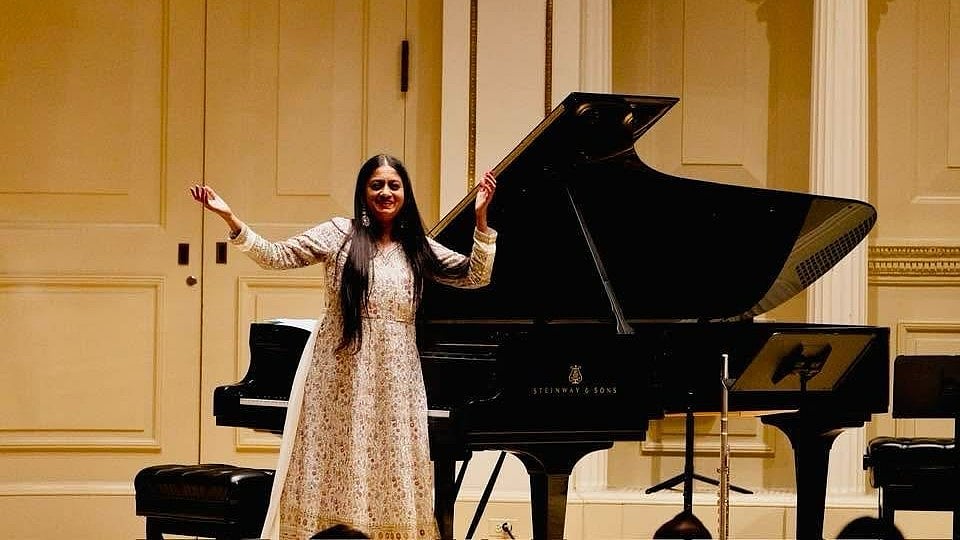
Indo-American pianist Charu Suri is known for her distinct style that blends Indian classical ragas with jazz. She says the process came about quite organically, as her exposure to both Indian music and jazz helped her experiment with sounds.
Based in Verona, New Jersey, Suri was in the news as her latest album Shayan was nominated in the Best Contemporary Instrumental Album category at this year’s Grammy awards. Though the award was won by American duo Arkai’s record Brightside, Charu has fond memories of her Grammy experience.
The pianist was in Mumbai to perform on April 11 at the concert A Sonic Journey Through Jazz and Ragas at The Cube theatre of the Nita Mukesh Ambani Cultural Centre (NMACC).
Excerpts from an interview.
How did the NMACC show materialise? How did you work on the set list?
NMACC has been a dream venue for me. I was so thrilled to share my raga jazz and songbook originals with the listeners there. The set list reflected my beginnings in jazz with the New Orleans repertoire, my early songbook works, and my work in ragas and jazz and beyond.
How did the album Shayan come about? What made it different from your previous raga-jazz recordings The Book Of Ragas, Ragas & Waltzes and Rags & Ragas?
Shayan was composed as a balm to help people sleep better during these turbulent times. I wrote it for my mother, who had a hard time sleeping after my father’s death. Eventually, I realised that we are all suffering from intense stress and sleeplessness, and I turned to the deeply healing and calming powers of evening ragas for the album.
You’ve used ragas like Kalyani, Mohanam, Jog and Durga. How do you approach your albums, right from choosing the ragas and composing to adding the right blends to the overall production?
I often live with a raga for a while before composing it. I’ve played and listened to Kalyani ever since I was a little girl, but Jog is relatively new to me. I choose ragas that speak to me for that moment and purpose. I do not force anything and dislike rigidity in creation. The ragas have to naturally unfold and lead you into their world. Composing usually flows easily after I internalise the raga. And then the post-production and mixing require repeated listens and fine-tuning, often for weeks after recording, to get the desired result.
Could you describe the Grammy experience – right from being nominated to the final result?
It was such a surreal experience to be nominated, and the result of a lot of years of work, and recognition for paving the sound I wanted to create. The nomination was a dream, and working with my designer to get the right look and feel for walking the red carpet representing the exquisite silks and textiles of India was a tall order. My designer, Shruti Sancheti, created several custom looks that showcased India’s regal textiles. It was disappointing not to win, after so many people wrote to tell me how much they loved Shayan and how it changed their world and view of ragas and jazz. But I wouldn’t change any bit of my experience and my journey as a first-time nominee, especially to be nominated alongside a master like Bela Fleck, whom I have admired for years.
You were also one of the producers on Sounds of Kumbha, which was nominated in the Global Music Album category. How was it working with Siddhant Bhatia, who created the album?
It was absolutely wonderful working with Siddhant and his team as producer. He owns his own studio, Soul Trax, in Delhi, and a number of us flew to India to help produce and record the album at the Maha Kumbh in the midst of millions of people. The sheer logistics of the experience was unreal and life-changing.
What was the experience of performing at Mumbai’s Royal Opera House last year? The Valentine’s Day show themed around New Orleans?
The Royal Opera House is honestly one of my most favourite places to perform in the world. The theme was Love Songs from New Orleans. Since my jazz journey started with the New Orleans sound, it was full circle to be there.
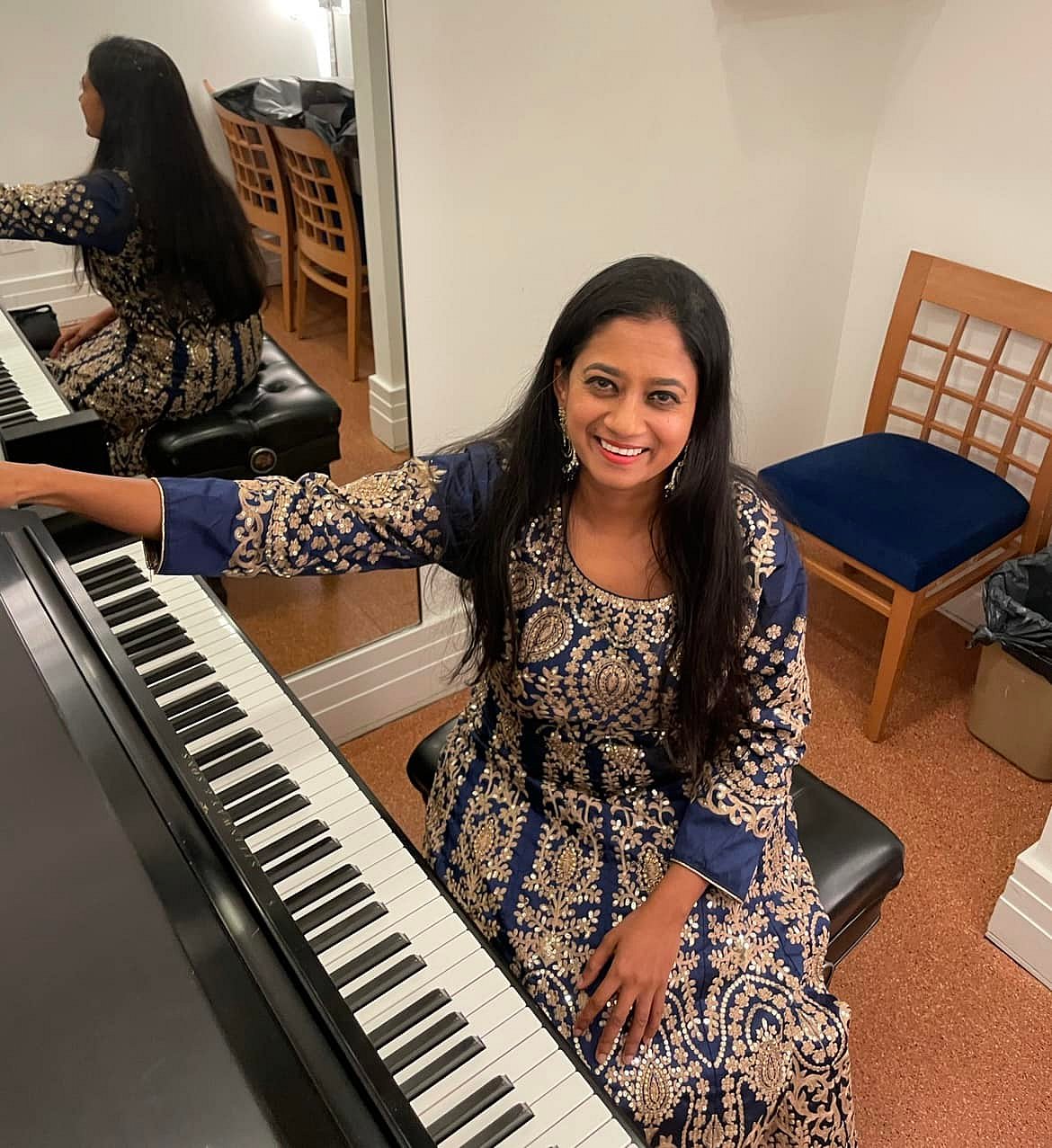
In the US, what are the challenges in attracting non-Indian audiences, and explaining features of Indian music to them?
It’s a bit different for me because I attract jazz audiences. So it has been amazing explaining my music to them. It’s a very different genre, rooted in chords, African music, Brazilian bossa nova, extended harmonies, bebop and beyond. And songbooks of course. I think it’s important to know the other genres you’re crossing over in and learn and respect those traditions. It’s been beyond wonderful sharing my raga and tala traditions with the jazz world and in turn, learning from them.

In India, do you get many classical purists or is it mainly a jazz/ crossover crowd?
Both! It’s been really amazing to see both at my shows.
What are you working on currently, in terms of new recordings?
I’m working on two new albums, One, called Raga Bossa, blends Brazilian music and jazz. It features the legendary bassist Ron Carter and percussionist Nanny Assis. The other album Raga Etudes, has piano in collaboration with legendary kanjira player V. Selvaganesh. I’m looking forward to these projects as they are challenging.

