
Are you an urban caveman? Well, the question is directed at those who are comfortably settled in their caves err homes ever since the Covid lockdown was imposed. Surprisingly, the hangover continues as they are habituated with their take-it-easy pace, domestic rhythm and a set lifestyle. Some others naturally cling to their caves for the fear of socialising and facing the unpredictable pragmatic world.
Many are thus fond of their personal caves and stay happy and relaxed in their painstakingly built personal zone.
Safe in ‘one’s cave’
You expectedly consider your habitat your sukoon ghar or a room for relaxation. It is like a haven far from the madding crowd, secluded in serenity.
But trouble starts when an individual gets so avidly accustomed to his/her abode’s internal atmosphere as well as his/her regular time-table that he/she seldom feels the zeal and the rush to move out. Ergo, many people remain firmly ensconced in their self-created cocoons for days on end and weeks or some even stretch it to longer periods like months and years.
In a world, which is so badly trapped inside a smartphone and other hi-tech widgets, immobility and detachment from the outdoor environment are hints of a common condition called cave syndrome.
Mental barriers
In a negative context, mental health experts suggest that this could also stem from a social anxiety like xenophobia and the reluctance to leave a familiar spot that makes one possessively territorial. Logically, one can’t be stuck in a ‘space warp’ wearing blinkers, can he? He/she has to rather widen their vision and welcome the outside breeze to blow in.
Although it’s called a syndrome but people latching onto their caves most of the time cannot be categorised under DSM (Diagnostic and Statistical Manual of Mental Disorders — the standard reference handbook published by the American Psychiatric Association (APA) — and used by healthcare providers to classify and detect mental health disorders in adults and children) as this is not an officially identified medical or psychiatric diagnosis but rather a behavioural trend recognised globally.
When staying indoors becomes a compulsive habit, the mind coheres with that behavioural pattern spontaneously. It remains lodged in on particular place with the same agenda. Going back to normal socialising ways and to the daily grind then becomes extremely difficult. Consequently, an undercurrent of fear swallows up the affected person.
One may oddly balk at the very thought of planning, fixing an appointment and dressing up to step out and travel. “This is way challenging and needs an undivided attention and plenty of effort,” he/she could helplessly think of. The tasks look demanding as they require cognitive skills and a fair dose of emotional investment.
Mind readers would interpret that to carry on with the everyday stuff on autopilot mode might ultimately leave an insipid taste in the mouth because that ‘zest for life’ gets lost, which is a matter of grave concern. After all, life begs for variety that adds spice to its spectrum.
Iglooing
Sometimes you need to be like the aboriginal Eskimo — the Inuit and the Yupik people of the Arctic region precisely — and shut the world out and hibernate to recalibrate the scheme of things in your life. This lets you the much-wanted repose and respite from the hustle culture and allows you to come back with a fresh mood after a hiatus to reboot.
Is this behavioural trend psychological?
Author, CXO coach and TedX speaker Parinita Kothari elucidates with reason that “when one has spent a considerable amount of time associating home with safety and the outside world with danger, then for him leaving the doorstep can really feel unsettling. This is embedded with an uncontrollable fear factor, which could vary in types from person to person. It could be the fear of falling ill, facing people or imagining everything that could go wrong.”
"Truth is, when phobia begins to shape major life choices, it deserves compassion and professional support,” she insists.
Reaching out
Communication is important for living happily and healthily in human society as man is a social animal and gregarious by nature. At times, people turn parochial — safeguarding the interests of their own group and locality. So, mixing with different cultures and embracing other customs might help expand one’s horizons and enrich his mind.
Psychologists worry over the possibility of stress and depression creeping in when things go awry and the mind and soul keep groping for an outlet to vent out the pent-up feelings. After all, as humans, we need emotional connect. We can’t live in a silo, can we? We must bond with likeminded fellow passengers on the journey of life instead of chatting with an AI-generated bot all day long.
“It’s no harm to be in a bubble if you wrap a shawl of positivity and happiness around you. Being comfortable in your own company can as a matter of fact be a beautiful engagement. And you don’t have to be a social butterfly constantly to live well. I would only become concerned if that peaceful hub begins to estrange you from people and experiences you actually yearn for,” notes Kothari.
“We may not always make a sense of it but we need people with whom we feel understood, unjudged, accepted and connected — even if it’s just a small circle. Some solitude and moments away from the urban chaos can help us rest, think clearly and return with a recharged energy battery. But when that withdrawal becomes prolonged, it’s worth gently asking: ‘Is this still nourishing me or have I become afraid of letting the world in?’ she argues her point.
FACTOID
Creative economy
With gig and orange economy giving rise to droves of freelancers and content creators in the job sector, self-made professionals with independent mindsets attach greater value to remote roles and autonomy.
Many singletons nowadays indulge in solomaxxing by chasing their hobbies and spending quality ‘me time’ in calm silence.
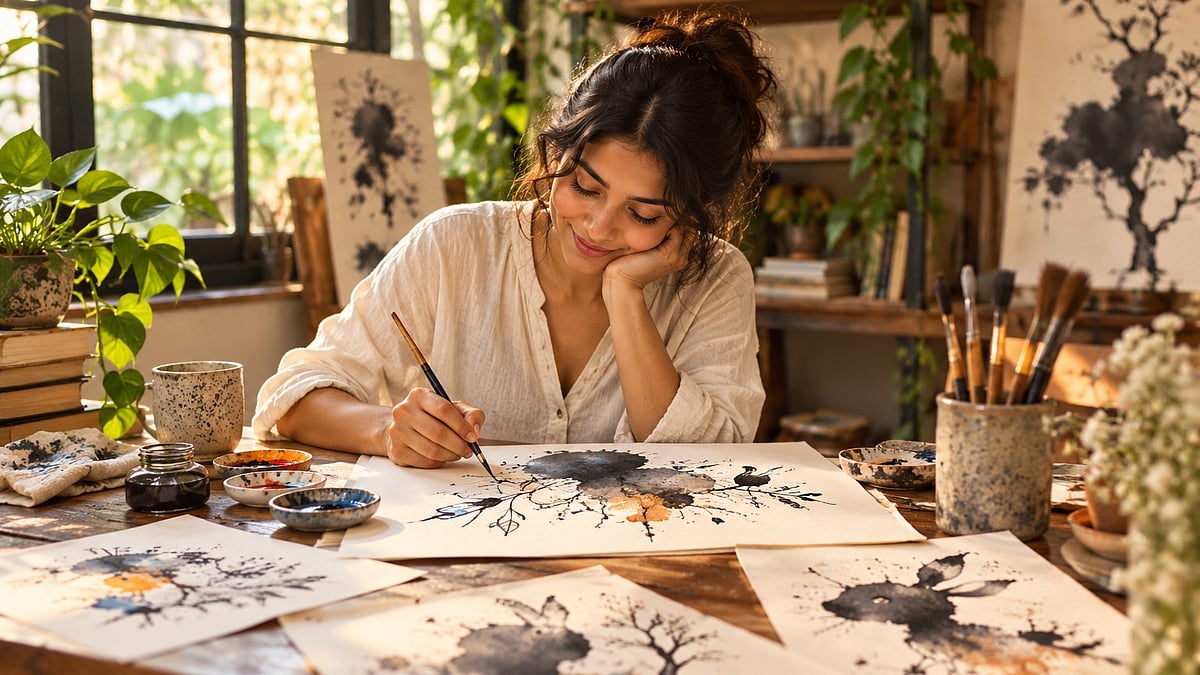
Artists vouch for the fact that art is a profession best pursued in solitude and mostly prefer unwinding themselves in their ateliers or rooftop painting studios or plush penthouses for their creative efflorescence.
Reclusiveness cuts the surrounding cacophony and environmental pollution, ideal for creative trysts.

