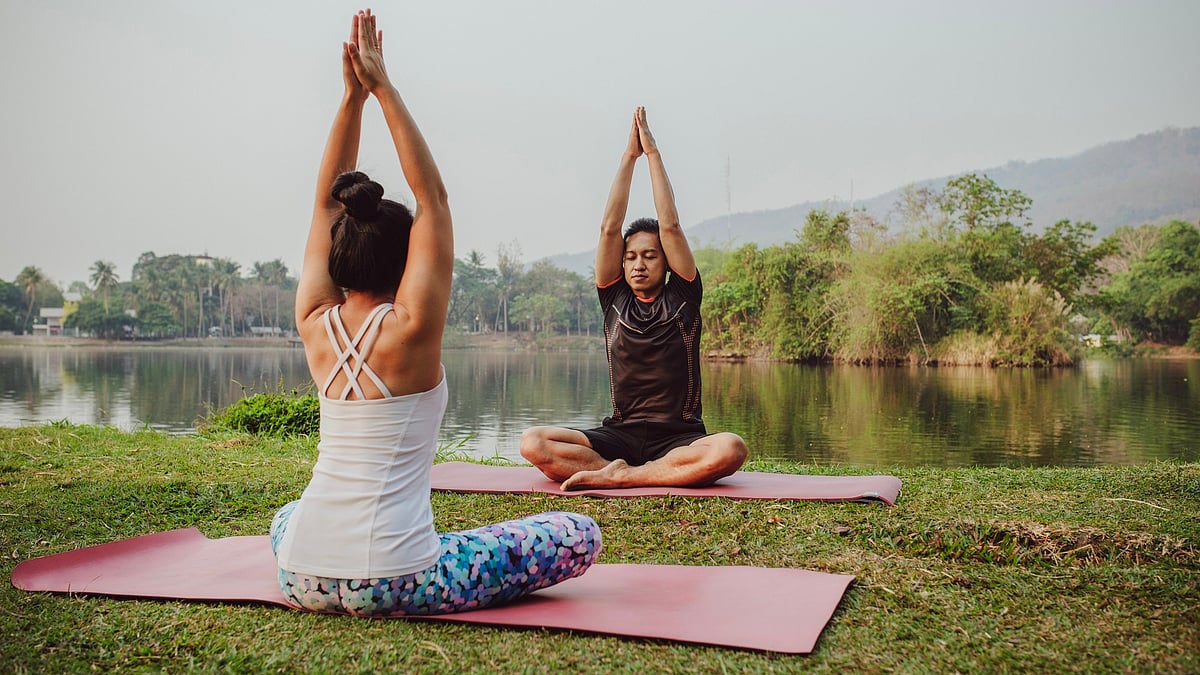
Stress today is no longer an occasional visitor—it has become background noise in our daily lives. Deadlines, digital overload, health concerns and emotional pressures keep the nervous system in a state of constant alert. While short bursts of stress can enhance performance, chronic stress gradually affects sleep, immunity, digestion and emotional stability.
The good news? If you have 15 minutes, you have enough time to transform your biology from a state of survival to a state of celebration.
Yogic philosophy behind stress
According to yogic philosophy, breath serves as a conduit between the body and the mind. When the balance between the body, breath and mind is disturbed, stress arises. This imbalance is referred to in ancient writings as chitta vritti, or mental oscillations.
The body becomes tense and the breath turns shallow and erratic when the mind is constantly torn between regrets of the past and worries about the future. As mentioned earlier, breath serves as a bridge between the conscious and subconscious minds (chitta). When breathing becomes slower and deeper, the neurological system shifts from a ‘fight-or-flight’ mode to a ‘rest-and-restore’ state.
Gentle postures and mindful breathing help release stored muscular tension and calm mental agitation, restoring inner balance.
Science behind stress
From a medical perspective, stress is the activation of the Sympathetic Nervous System, commonly known as the ‘fight-or-flight’ response.
The trigger: When your brain perceives a deadline as a ‘tiger’, the hypothalamus signals the adrenal glands to release hormones—primarily Adrenaline (which spikes your heart rate) and Cortisol (the stress hormone).
The physical impact: Adrenaline increases heart rate and elevates blood pressure. Cortisol, the primary stress hormone, is a double-edged sword. In short bursts it helps you respond to danger or survive a situation, but chronically elevated cortisol increases inflammation, raises blood sugar (glucose) levels and contributes to high blood pressure.
The mental impact: Chronic high cortisol levels can ‘hijack’ the prefrontal cortex—the part of the brain responsible for logic—leaving the amygdala (the fear centre) in charge. This can make you feel anxious, irritable, reactive and sometimes mentally foggy.
To counter this, we need to shift from the ‘Sympathetic’ (stress) mode to the ‘Parasympathetic’ (rest and digest) mode. Here is your 15-minute reset button.
Reset with yoga
Balasana (Child’s Pose): Kneel, sit on your heels and fold forward until your forehead touches the earth. Reach your arms forward or keep them by your sides.
Outcome: Stretches the lower back and sends a signal to your brain that ‘I am safe’. It is the ultimate ego-dissolver—a gentle, grounding hug from Mother Earth.
Bitilasana–Marjarasana (Cat–Cow): On all fours, inhale as you arch your back and look up (Cow); exhale as you round your spine like a mountain (Cat).
Outcome: Lubricates the spine and synchronises breath with movement. It’s like clearing a traffic jam in your nervous system.
Uttanasana (Forward Fold): Stand tall, then slowly fold forward from your hips while keeping the back straight. Let your head and arms hang down.
Outcome: Reverses blood flow and sends fresh oxygen to the brain. It quite literally turns your perspective upside down, making big problems feel smaller.
Viparita Karani Mudra (Legs Up the Wall): Lie on your back and place your legs up against a wall, keeping your hips close to the baseboard or skirting of the wall.
Outcome: Reverses blood flow to relieve tired legs, reduce swelling and calm the nervous system. It also helps lower blood pressure and encourages deep relaxation.
Shavasana / Anandasana: Lie flat on your back with palms facing up. Close your eyes. Do nothing. Just breathe.
Outcome: This is where the magic happens. It allows the body to ‘download’ the benefits of movement and helps recharge both mind and body.
Yoga works by influencing breath, muscles, hormones and the nervous system simultaneously. In just 15 minutes, these simple practices can interrupt the stress cycle and restore clarity and steadiness. Practised regularly, yoga doesn’t just reduce stress—it builds resilience, helping us respond to life with balance rather than reaction.

