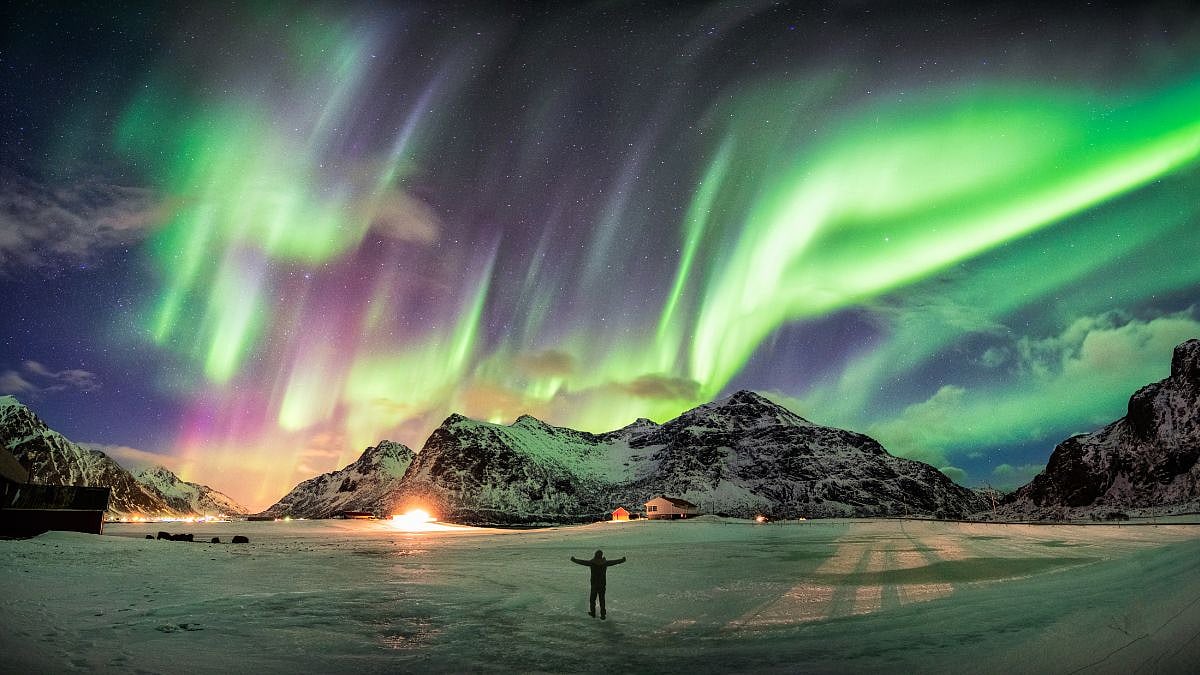
Auroras, also known as the Northern Lights and Southern Lights, are natural and colourful displays in the night sky. According to scientists, the geomagnetic storm occurs when energised particles from Coronal Mass Ejections (CMEs), a vast eruption of plasma and magnetic fields from the Sun's outer atmosphere, are directed towards the Earth.
The Sun has been sending a series of eruptions, but one particular blast from the yellow star (Sun) caught the attention of space weather experts around the world. A massive solar explosion racing towards the blue planet could trigger a geomagnetic storm on June 9, 2026, and because of that, there is a possibility of rare aurora borealis sightings from some parts of northern India. Keep on reading to know more.
Auroras to hit the Earth
According to scientists, the Sun erupted on June 6, 2026, exploding a billion-tonne cloud of magnetised plasma into space at 1,400 kilometres per second. The cloud has been travelling for two days. NASA has issued an alert for a strong G-3 class geomagnetic storm. The eruption has originated from a highly active region on the Sun known as Active Region 4461, which produced an M1.8-class solar flare on Saturday. This particular flare was accompanied by a dense, fast-moving magnetic filament and a coronal mass ejection (CME) directed towards Earth.
Will it be visible in India?
The Coronal Mass Ejection, a massive burst of plasma and magnetic fields from the Sun, is directed towards Earth and could cause a geomagnetic storm between June 8 and June 9. These events create favourable conditions for auroral displays. While most of these events were not Earth-directed, some, including the recent CME, are expected to interact with Earth's magnetic field, which may produce auroral lights in the sky. According to NASA, auroras could light up the skies over parts of India, especially northern regions. It will also be visible in Europe and Australia.
About Aurora Borealis
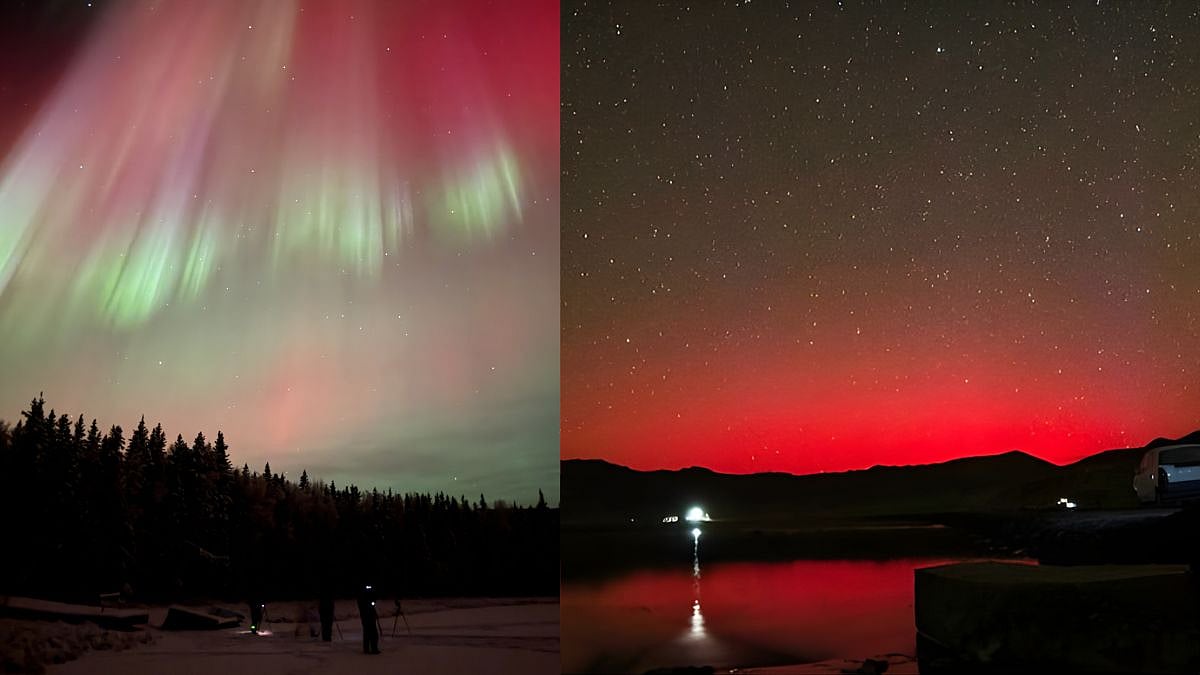
Aurora Borealis is a rare celestial spectacle that is often seen in high-latitude regions around the Arctic and Antarctic, specifically within the "auroral oval," a band that typically lies between 60° and 75° north and south of the equator. These lights form when the Sun constantly emits a stream of charged particles known as solar wind, and when these particles reach Earth, the planet's magnetic field deflects most of them but funnels some towards the polar regions. When these energetic particles collide with oxygen and nitrogen atoms in the upper atmosphere, the transferred energy causes the gases to emit colours.

