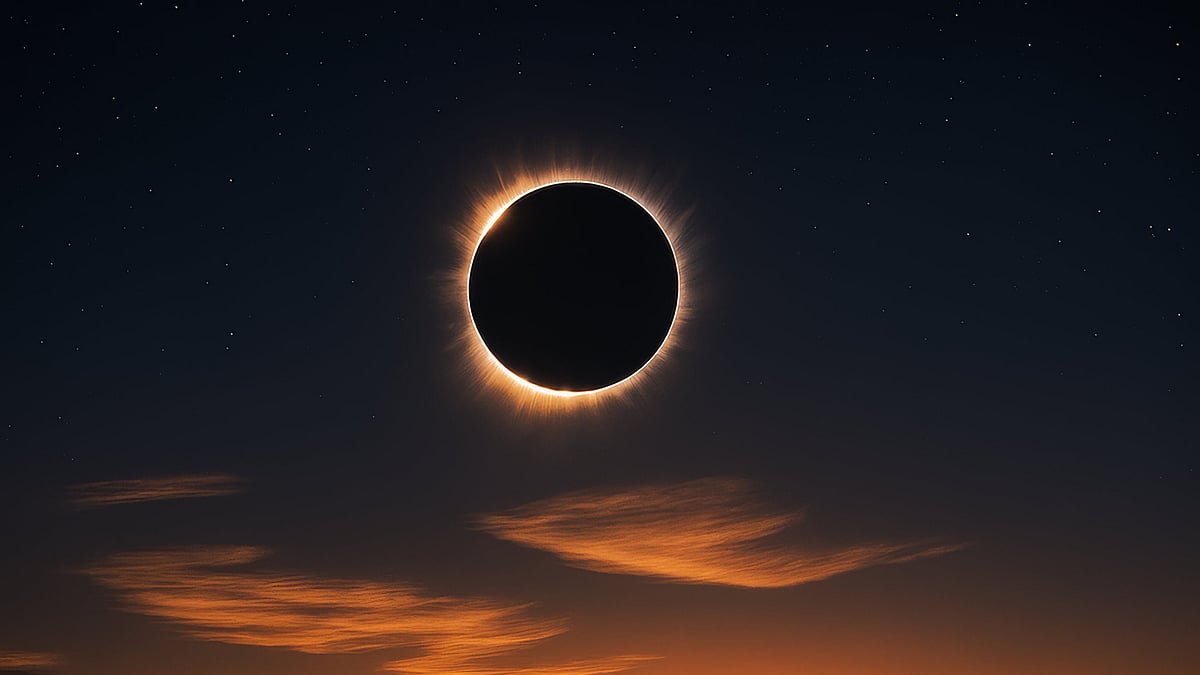
Solar Eclipse, also known as Surya Grahan, is one of the most significant celestial events that take place every year. The second solar eclipse of 2026 is set to occur on August 12, 2026. After the solar and lunar eclipses in February and March, this solar eclipse will be seen in the month of August. The sky lovers, astrologers, and those interested in astronomy have good news, as this solar eclipse will be of longer duration. While the normal solar eclipse lasts for three minutes, this eclipse is said to last for six minutes and 23 seconds. Let's take a look at the time, where it will be visible, and more about the celestial event.
About Surya Grahan 2026
The second solar eclipse is set to occur on Wednesday, August 12, 2026. According to the official timeline, the eclipse will unfold over several hours globally, and it is going to be a late-night event. The eclipse is likely to begin from 09:04 PM, and it is likely to continue till August 13, 2026.
Will it be visible in India?
The second Solar Eclipse of 2026 will not be visible in India. But, if you still want to watch the celestial event, you can watch it online via NASA's official website or other live streaming platforms. Meanwhile, the Surya Grahan will be visible in Greenland, Iceland, and northern Spain. A partial eclipse will be visible from Europe, North Africa, and northern America.
No Sutak period in India
Since the celestial event will not occur in India, there will be no Sutak kaal (period) this time. That means that auspicious activities can be conducted throughout the day. Temple gates will remain open, and you can also resume your pilgrimage activities.
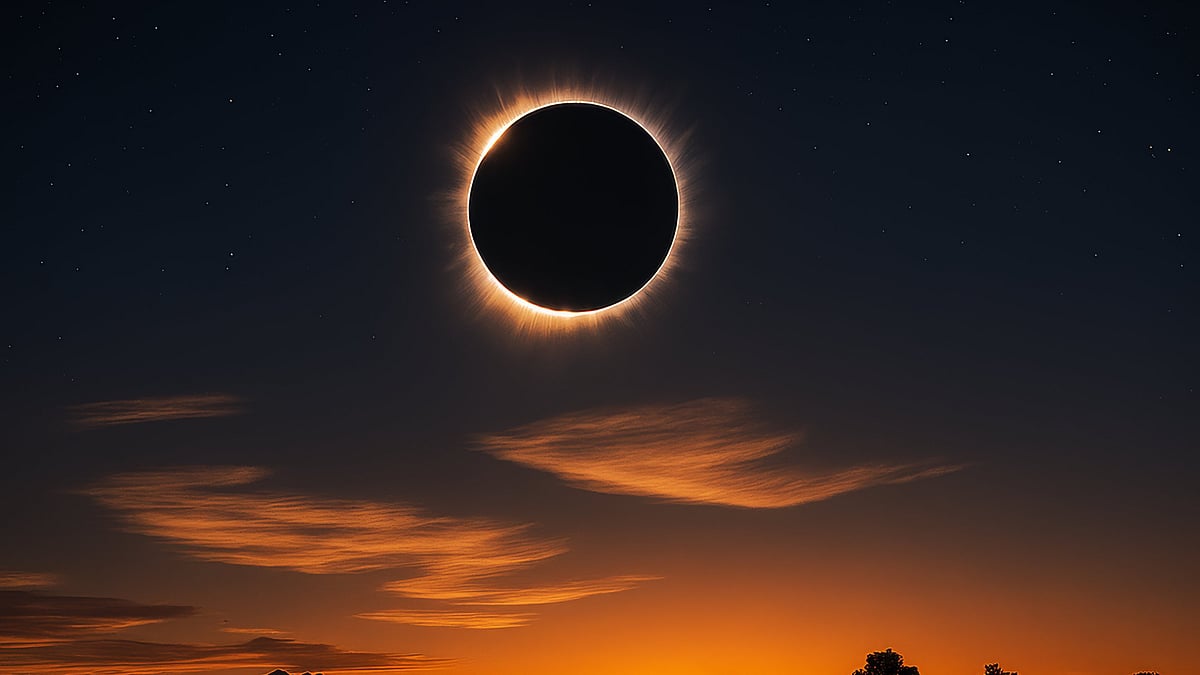
What is Solar Eclipse?
A Solar Eclipse occurs when the Moon passes between the Earth and the Sun, which blocks all or part of the Sun’s light from reaching Earth. This alignment happens only during a new moon. There are three main types of solar eclipses: total, when the Sun is completely covered; partial, when only a portion is obscured; and annular, when the Moon covers the centre, which leaves a ring-like appearance. Solar eclipses are rare and visible only from certain parts of the world.

