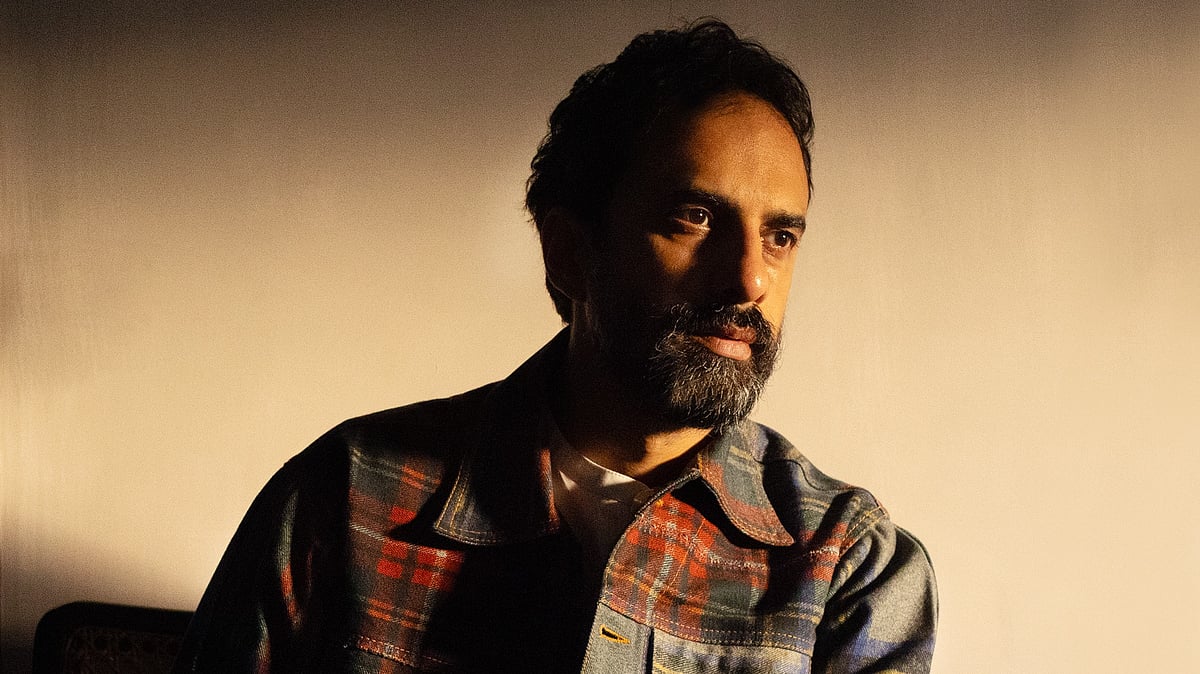
Singer-songwriter, composer and lyricist Ankur Tewari recently released his new album ‘Mr. Faarigh’ an introspective and vulnerable collection that is intentionally rough around the edges. The album delves into the often-misunderstood world of procrastination, exploring it not as laziness but as a complex interplay of perfectionism and analysis paralysis.
Since emerging on the independent music scene in 1998, Tewari has built a distinctive catalogue over a career spanning 25 odd years. His work encompasses independent music, live performances, film music, music supervision and cultural curation, making him one of the defining voices of India’s independent music movement.
Taking time out of his busy schedule, singer-songwriter Ankur Tewari, talks to Verus Ferreira about his remarkable musical journey, the making of his new album ‘Mr. Faarigh’, his love for Bandra and Mumbai and much more.
Excerpts from the interview:
You were born in Brussels, grew up in Roorkee and Bhopal, worked in Delhi and then came to Mumbai. How have these places shaped you as a musician and storyteller?
Every place has its own stories, people and vibes. My discography is like an open diary of my life. People and incidents from all these places have found home in my songs.
Your mother had a drama background, while your father was a metallurgist and engineer. Did you inherit something from both worlds and how have they influenced your music?
My parents have always encouraged my creativity. I was always intrigued by their creative approach to everything in life. The one thing they really instilled in me was my relationship with curiosity. Curiously it has helped sculpt my music and my craft.
What were the biggest challenges you faced as an independent musician when you started in 1998?
In 1998, the indie scene was barely hanging with threads. Some bands and people were holding it together and paved the path for the thriving scene of today. Bands like Silk Route, Lucky Ali, Euphoria and KK crawled so we could fly.
So what made you leave hospitality in Delhi and move to Mumbai to pursue music in 1998?
Music always brings joy to my soul and puts a smile on my face. I followed that feeling and found myself here.
You live in Bandra and we understand that your new album ‘Mr Faarigh’ is set against the Queen of the Suburbs. What do you love about Bandra and Mumbai?
Bandra feels like my hometown, Roorkee. It has a warm feel that you get in small towns, the small cafes, the bungalows, the dive bars. Mr. Faarigh is a throwback album to simpler times. Bandra makes for a perfect muse.
What does the title of the album ‘Mr Faarigh’ mean to you, and what was the thought or emotion that sparked this album?
Faarigh is an Urdu/Arabic word meaning free, disengaged, unoccupied, or finished. It indicates having leisure time, being done with a task, or being free from cares. In colloquial usage, it can also mean idle. Mr. Faarigh is a 9 song concept album that investigates procrastination. There was a time when this procrastination was carefree and leisurely. Now the same state is dipped in anxiety and nervousness. Mr. Faarigh now reminisces about the one from the past and attempts to strike a conversation. The album tries to help us discover our Faarigh and form a tribe of people who celebrate the innocence and nativity that we all seem to have lost in our journeys.
How was making ‘Mr. Faarigh’ different, and how did The Ghalat Family shape its instrumentation?
Independent work always comes from your personal space. My band has always been an integral part of the musicality of the songs. We have played some of these songs live on stage. The approach begins with a core theme for the story of the album. Each song forms a part of the narrative.
What themes, experiences or emotions run through ‘Mr. Faarigh’? Listening to the album, we find it is a very personal work with a lot of slow pieces?
Mr. Faarigh deals with multiple emotions of betrayal, relevance, belief, grit, rage and stages of grief. The album’s first single, 1:15 AM (After Hours), is set against Mumbai after dark, the song moves through music, friendship, crowded rooms and the city’s late-night energy. It captures the fleeting relief of making everything louder to silence the voices in your head. Another piece, Kasam Se, turns inward. Both songs establish the album’s central tension which is the movement between distraction and introspection, and the many things people do to postpone an honest conversation with themselves.
After nearly three decades in music, how has your understanding of songwriting changed? Do you find yourself writing differently today from the way you did in 1998?
Over the years I have witnessed the power of music. I have seen how a piece of music can become a soundtrack to someone's life. I have become a little more responsible with my words, than I was before.
What did MTV Sound Trippin and Coke Studio teach you about collaboration and Indian music?
Every musician is a music school in themselves. I haven’t had any formal training in music. Working with different musicians and technicians feels like going to music school. It helps shape your approach towards songwriting.

How has writing for cinema (Gully Boy, Gehraiyaan, The Archies, Kho Gaye Hum Kahaan) changed the way you approach songwriting, compared with writing music purely for yourself?
Cinema gives you a strong sense of narrative. It helps you elevate the story of the movie or the project. When you write music independently, you become the main character of the story.
What inspired you to co-found Tiger Baby Records with Zoya Akhtar and Reema Kagti and venture into the record-label space?
All three of us love music. We saw an opportunity to blend storytelling and music to express ourselves. We feel it’s the right curve in the Indian music scape to work on music, beyond just films.
What does The Ghalat Family offer you that your solo music doesn't?
Ghalat Family is like my spine. We play all my recorded music with the band. They are all phenomenally talented musicians. When you play a song live, you know what part of the song needs work. Their craft and approach to make music helps me write songs.

