Shardiya Navratri is a nine-day Hindu festival dedicated to the nine forms of Goddess Durga. The second day of the festival is dedicated to Maa Brahmacharini, who symbolises penance, devotion, discipline and spiritual strength. Devotees worship her to seek wisdom, inner peace and the strength to overcome life's challenges.
This year, Shardiya Navratri began on Sunday, October 11, with devotees observing the first day, which is dedicated to Maa Shailputri, the daughter of the Himalayas. The second day of Navratri falls on Monday, October 12, and is dedicated to Maa Brahmacharini. Let's learn more about the deity.
Who Is Maa Brahmacharini?
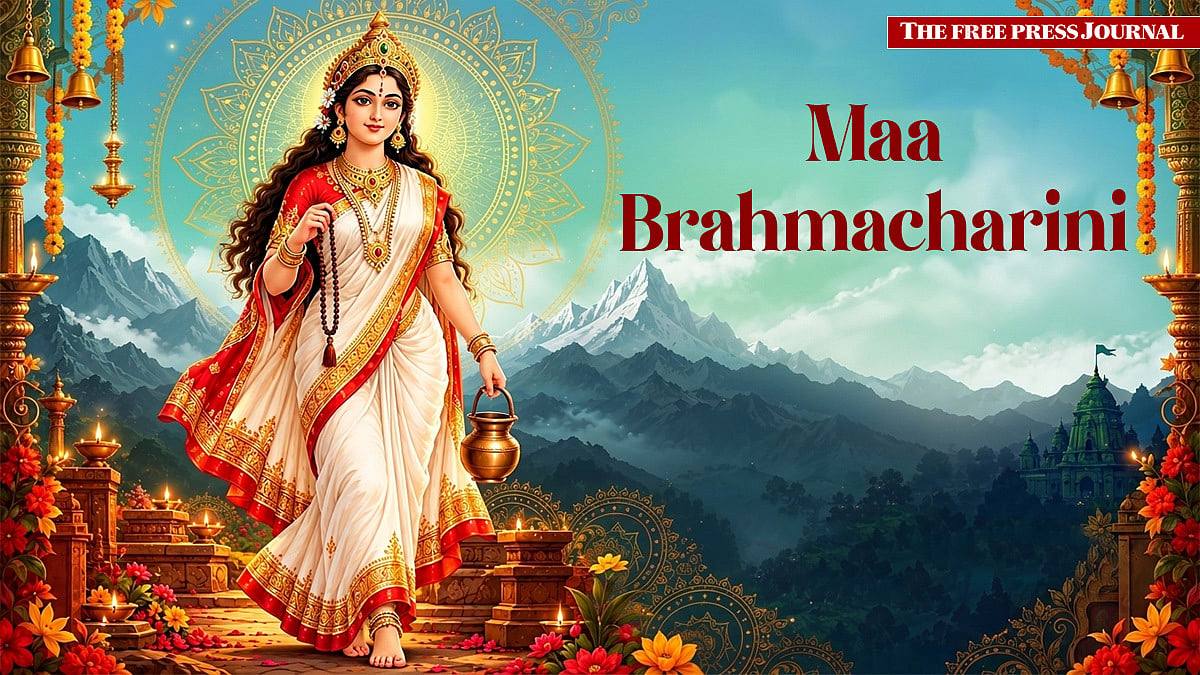
Maa Brahmacharini is the second form of Goddess Durga and is associated with severe penance and unwavering devotion. The word 'Brahmacharini' refers to a woman who practises austerity and follows the path of spiritual discipline.
She is traditionally depicted wearing a white saree and carrying a jap mala (prayer beads) in one hand and a kamandalu (water pot) in the other. Her simple appearance represents purity, determination and dedication to spiritual pursuits.
Story Of Maa Brahmacharini
Maa Brahmacharini is associated with Goddess Parvati, who is considered an incarnation of Adi Shakti. According to Hindu beliefs, she undertook severe penance to win Lord Shiva's love and acceptance.
Each form of Goddess Durga or Parvati symbolises a particular quality. For instance, Maa Shailputri, worshipped on the first day of Navratri, represents the daughter of the mountains. The word 'Shaila' means mountain, while 'Putri' means daughter.
Legend Of Maa Brahmacharini
According to Hindu mythology, Maa Brahmacharini is associated with the story of Goddess Parvati's intense penance to win Lord Shiva as her husband.
It is believed that Parvati undertook rigorous austerities and endured difficult conditions for thousands of years to demonstrate her unwavering devotion to Lord Shiva. According to popular legends, she survived on fruits and leaves before eventually giving up food during her prolonged penance. Her determination and dedication earned her the name Brahmacharini.
Impressed by her devotion and commitment, Lord Shiva eventually accepted her. The story highlights the importance of patience, perseverance and faith in overcoming obstacles.
Significance Of Worshipping Maa Brahmacharini
Maa Brahmacharini represents inner strength, self-control and dedication. Her form reminds devotees that achieving meaningful goals requires discipline, patience and determination.
On the second day of Navratri, devotees offer prayers to the goddess and seek her blessings for courage, wisdom and spiritual growth. They may also chant the mantra, "Om Devi Brahmacharinyai Namah", with devotion.
Worshipping Maa Brahmacharini is believed to inspire patience, strengthen resolve and encourage spiritual growth. Devotees also seek her blessings for inner peace and the strength to face challenges with determination.

