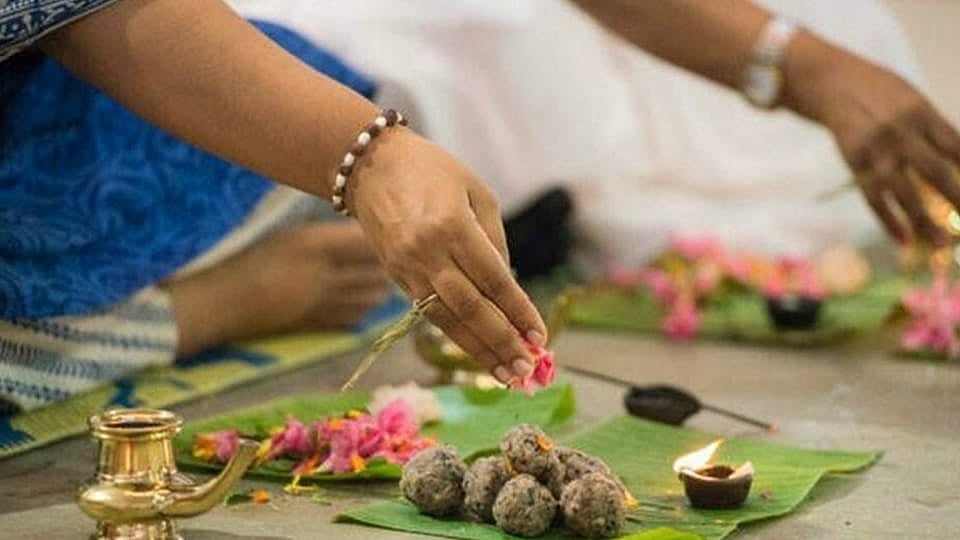
Mahalaya Amavasya, also known as Sarvapitru Amavasya or Mahalaya, is considered one of the most significant days during Pitru Paksha, the 16-day period dedicated to remembering and honouring ancestors. It falls on the Amavasya (new moon) that marks the end of Pitru Paksha and is observed by Hindus to pay homage to departed family members. In 2026, the sacred day will be observed on Saturday, October 10, 2026.
But who is allowed to eat food prepared during Shradh? According to traditional Hindu beliefs, certain customs are followed while preparing, offering and consuming food during this period. Let's understand more about the eating ritual in Shradh, muhurat and more.
Mahalaya Amavasya marks the end of Pitru Paksha
Mahalaya Amavasya is an important Hindu day that marks the conclusion of the Pitru Paksha phase. The sacred day is also referred to as Pitru Moksha Amavasya or Sarva Pitru Amavasya. It is an important period for conducting Shraddha ceremonies, providing food and water to the spirits of ancestors, and asking for their blessings for a successful life. This day also marks the start of Devi Paksha, the festive season before Durga Puja, and is when the eyes of Goddess Durga are customarily painted. According to Drik Panchang, the muhurat are as follows:
Amavasya Tithi Begins - 01:05 AM on Oct 10, 2026
Amavasya Tithi Ends - 12:49 AM on Oct 11, 2026
Kutup Muhurat - 11:05 AM to 11:51 AM
Rohina Muhurat - 11:51 AM to 12:37 PM
Aparahna Kaal - 12:37 PM to 02:55 PM
Who can eat Shradh food?
Traditionally, food prepared for Shradh is first offered to ancestors as part of the ritual. A portion may also be offered to a cow, depending on family customs. Brahmins are commonly invited to partake in the meal, as feeding them is considered an important aspect of Shradh ceremonies in many Hindu traditions.
Family members who perform the Shradh rituals may also consume the food after the prescribed offerings have been made. According to Hindu belief, food prepared only for ancestors should not be consumed by family members.
What foods are traditionally prepared during Shradh?
Shradh meals are generally prepared using simple, sattvic ingredients. Depending on family and regional customs, the menu may include rice, dal, seasonal vegetables, puris, kheer and other vegetarian dishes. It is also believed that the food menu should include a favourite dish of an ancestor.
People also avoid onion, garlic, meat, fish and alcohol while preparing food for the ritual.

