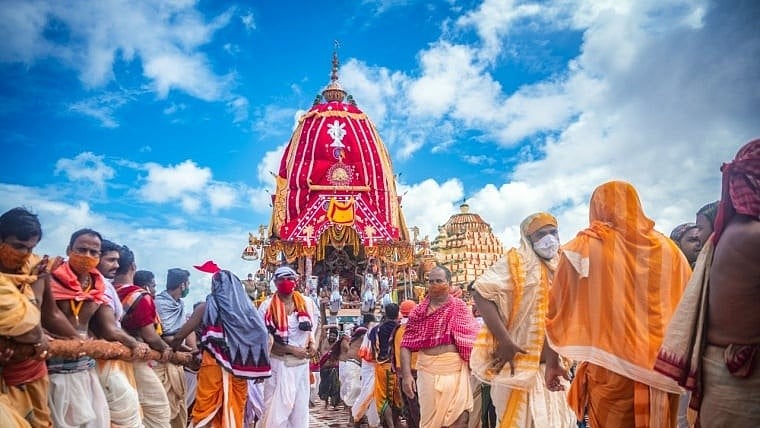
Jagannath Rath Yatra is one of the most sacred and biggest Hindu observances dedicated to Lord Jagannath, and it is predominantly celebrated in Puri, Odisha. Also part of the Char Dham of India, the Jagannath Temple celebrates the festival every year, attracting lakhs of devotees from around the world.
This year, the Chariot Festival is set to begin on July 16 and will be celebrated until July 27, 2026. From July 16 to 27, Lord Jagannath's journey unfolds through a series of traditions, each carrying its own significance. Let's break down each day's rituals and significance.
Jagannath festival begins with Pahandi Bije, followed by Chhera Pahanra.
Pahandi Bije includes the rituals of Snan Purnima, which mark the beginning of the festival. The grand ceremonial procession involves the deities; Lord Jagannath, Lord Balabhadra, Devi Subhadra, and Sudarshan-stepping out of the temple to their respective chariots in a slow, rhythmic, swaying motion on the shoulders of their servitors.
Then, the deities are bathed with 108 pitchers of water, and the Gajapati Maharaja of Puri performs the sacred Chhera Pahanra ritual. Dressed in traditional attire, the king sweeps the chariots with a golden broom and sprinkles sandalwood water. This symbolic act reflects humility and reminds devotees that everyone is equal before the Lord. The ritual of Chhera Pahanra will take place on July 16, 2026.
Journey to Gundicha Temple
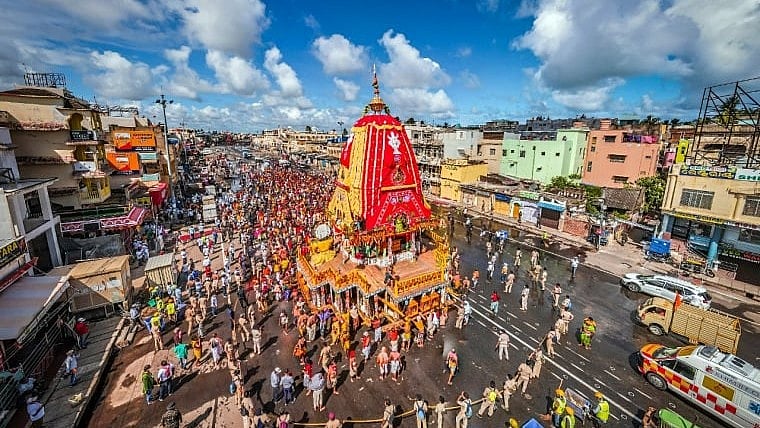
After Chhera Pahanra, the massive wooden chariots are pulled by thousands of devotees along the Grand Road (Bada Danda) to the Gundicha Temple, believed to be the garden house of Lord Jagannath's aunt. The deities remain there for several days, allowing devotees to seek their blessings. This phase of the festival will be observed from July 17 to July 19.
Hera Panchami
On the fifth day of the festival, Goddess Lakshmi visits the Gundicha Temple in search of Lord Jagannath. According to tradition, she expresses her displeasure at being left behind, making Hera Panchami one of the most unique and symbolic rituals of the Yatra. This ritual will be observed on July 20.
Bahuda Yatra
Bahuda Yatra marks the return journey of the deities from the Gundicha Temple to the Jagannath Temple. On the way back, the chariots halt at the Mausi Maa Temple, where Lord Jagannath is offered the famous Poda Pitha, a traditional Odia baked delicacy. It will be observed on July 22. It also includes the Sandhya Darshan ritual, where the deities give their final evening darshan before departing from the Gundicha Temple.
Niladri Bije
Niladri Bije will be observed on July 24. The festival concludes with Niladri Bije, when the deities re-enter the Jagannath Temple. Before allowing Lord Jagannath inside, Goddess Lakshmi playfully blocks the entrance. The Lord offers her Rasagola to seek forgiveness, after which the temple doors are opened. This ritual marks the joyous conclusion of the Rath Yatra and symbolises love, reconciliation, and the return of the deities to their sacred abode.

