
Growing up in New Delhi, Rahul Nair’s early ambition was to become a footballer or a dancer. But after injuring his right leg during a game, he spent time on the keyboards during recovery. “That phase gradually changed everything for me and brought me closer to music in a way I hadn’t experienced before. I still follow both football and dance. They continue to shape the way I feel rhythm and movement in music.,” he says.
Now 31, Nair is making his debut as a music director in the film Main Na Raha Mera, due for theatrical release on December 11. What’s noteworthy is that he has composed all the 16 songs, featuring singers Sonu Nigam, Arijit Singh, Rekha Bhardwaj, Sunidhi Chauhan, Benny Dayal, Stebin Bin and others. The title song, by Arijit, and Rekha Bhardwaj’s Shayad were the first to be released.
The composer says the task of creating 16 songs was hugely satisfying. He says, “The real challenge was expressing the different shades of love in a distinctive way while maintaining a cohesive soundscape. Every song needed its own identity, yet it had to belong to the same musical world. I had to make 16 songs feel like 16 different emotions without losing the soul of the film.”
Main Na Raha Mera has been directed by Amit Kasaria, and stars Adhyayan Suman and Divita Rai. Though this is his first film, Nair has been associated with music and films in a different way, as chief operating officer of Madrigal Studios. He says, “it is a three-partner venture between Dharmesh Sangani, Adhyayan Suman and me. Based in Andheri, we’re a film post-production studio working across music, sound and other aspects of post-production. We’ve worked on several films, including Cocktail, Toxic, Raja Shivaji and Prahaar.”
How did the composing break happen? Nair replies, “Main Na Raha Mera came to me through director Amit Kasaria, and the idea of creating a romantic musical genuinely excited me. I allowed myself to flow with the emotions of the story, and the film taught me a lot, both personally and musically. Our producer, Dharmesh Sangani, has been a constant support too. Working closely with Adhyayan also helped us understand each other’s creative sensibilities. He has been deeply involved throughout the making of the album.”
Dev Pandey has penned lyrics for 10 songs, while Rajesh Dheeraj and Nuarma have also contributed to the soundtrack. Says Nair, “My process usually begins with the lyrics because I believe words are the soul of a song. I spend a great deal of time working with the lyricists, sharing my vision, discussing the nuances of an emotion and finding the right words to express it. Sometimes, I may not even have a complete brief for a situation, and that’s where the creative process becomes exciting. We begin with an emotion, build a story around it, and gradually discover what the song wants to say. For me, a melody can make you fall in love with a song, but it’s often the words that make you fall in love with what the song means.”
How did he go about choosing the singers, considering there are some known names? He says, “That’s a story in itself! Actually, we have legends as well as debutants, and that balance has been incredibly enriching. For me, choosing a singer is less about a name and more about the voice, its texture and the emotion it can bring to a composition. I believe every song has a voice of its own. My job as a composer is to recognise it.”
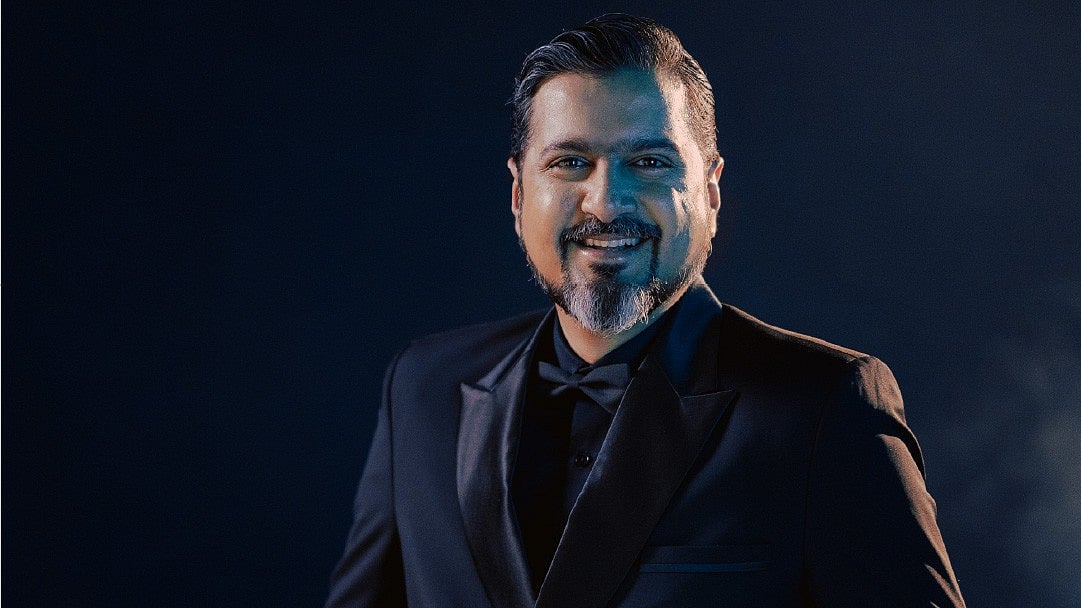
Nair says he is happy he has chosen music as a profession. He completed his education in Delhi, and though his family was comfortable with music as a passion or hobby, they were not sure if it was the right career. He recalls, “My mother wanted me to become a doctor. I had to prove to her that this wasn’t just a passing interest, and that I was genuinely passionate about music and had the courage to find my own way. Since then, my family has been extremely supportive.”
His biggest influences are music directors A.R. Rahman and Amit Trivedi, and rock band Led Zeppelin’s late drummer John Bonham. “I’ve always been a huge Zeppelin fan. Bonham is someone I genuinely admire, especially because of how unpredictable his drumming was. There was something so instinctive about the way he played; you could never quite anticipate what he was going to do next, and I loved that,” he says.
As Nair awaits the response to Main Na Raha Mera, he has already begun working on his next project. “I’m excited about it, but I’d like to keep the details under wraps for now,” he says. The next few months will be exciting for him.

