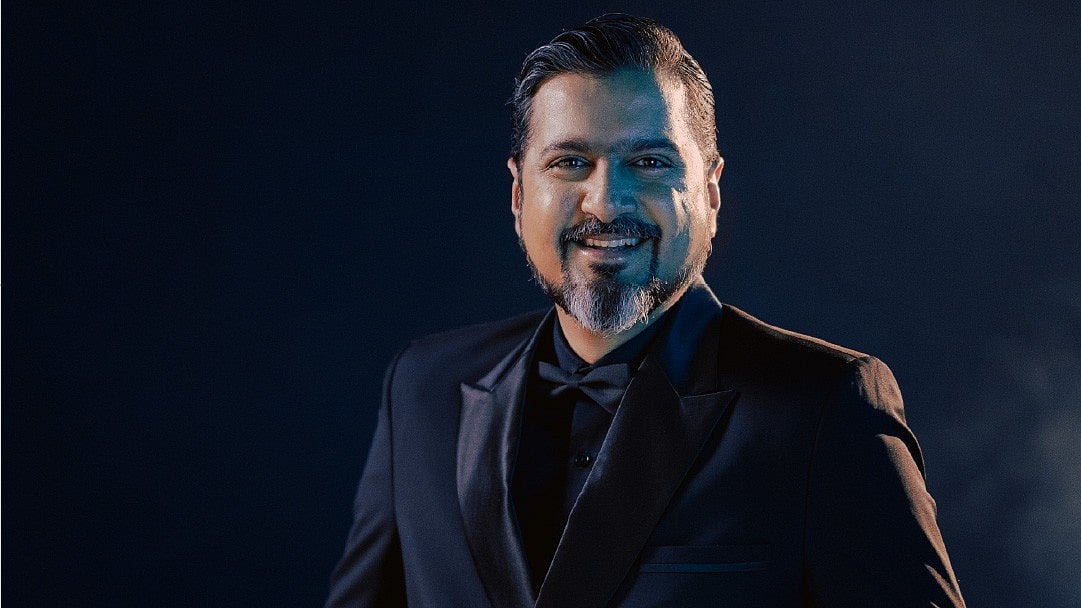
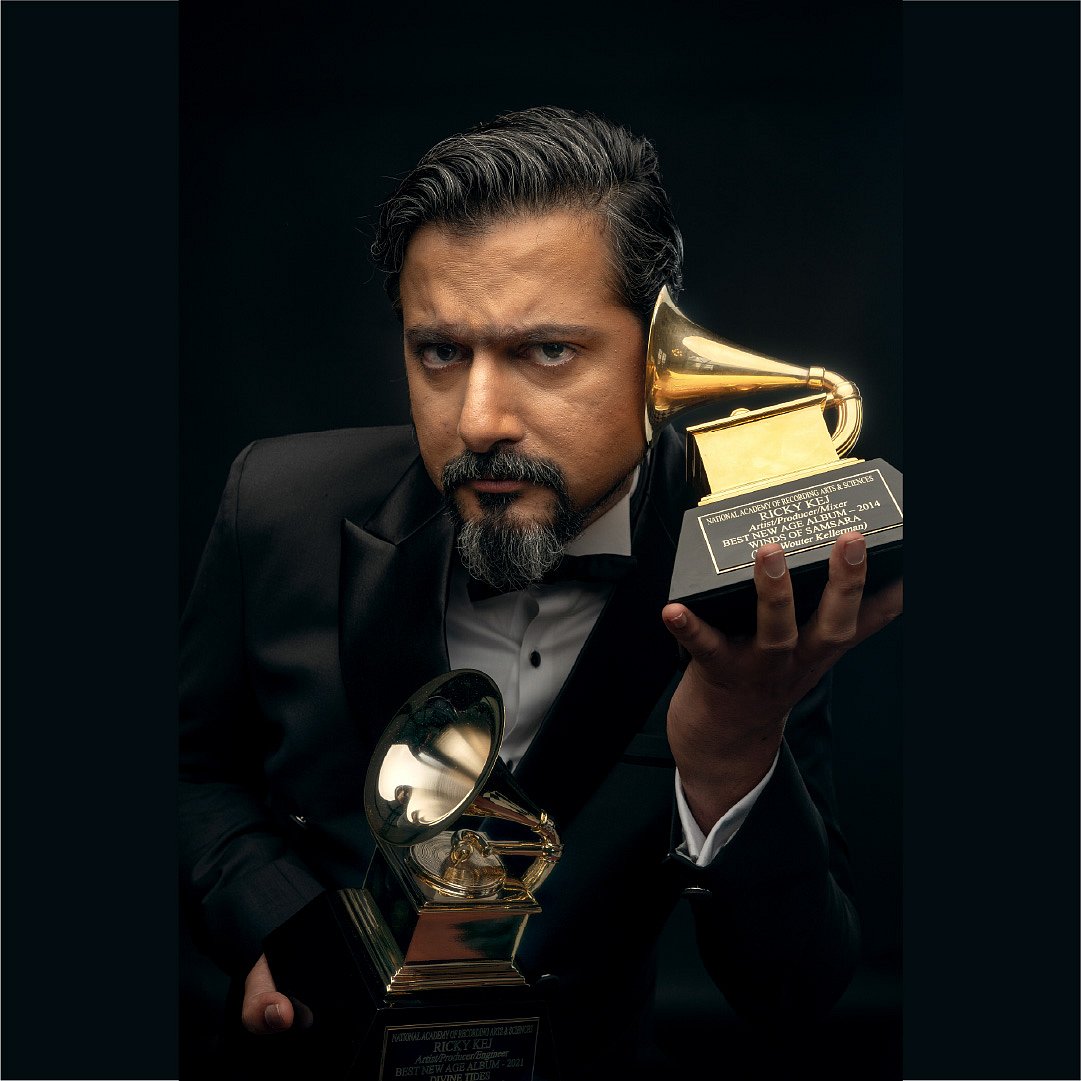
When one talks of composer Ricky Kej, the first thing that comes to mind is the Grammy award, which he’s won three times for his albums Winds Of Samsara and Divine Tides. Besides recordings, he also enjoys touring, and that will be his focus over the next few months.
After performing in the US and Canada during the first week of October, the Bengaluru-based Padma Shri recipient is looking forward to one of his most ambitious projects. The Damrooh – Dance To The Cosmic Spirit tour will be held in Bengaluru, New Delhi-NCR, Mumbai, Ahmedabad and Chennai between end-October and December. In Mumbai, he will perform at the MMRDA Grounds on December 5.
Before the tours, Kej takes time off for a conversation.
Excerpts from the interview:
What makes the Damrooh tour special?
Like all my concerts, this will have a theme of co-existence, sustainability and celebrating nature, but through a spiritual lens. But the main theme is inspired by the damrooh, which is the first sound of the universe, and is an ancient sound. Also, the damrooh is associated with Lord Shiva. With the symbol of co-existence, it works beautifully together. But what makes it special is the production scale, which will be something never seen before in India. They will all be open-air arena concerts with stunning visuals, lighting and over 70 musicians on stage.
What kind of orchestra will you have?
There be a string section, a choir, a large percussion ensemble, those who play sitar, sarangi, flute. The singers include Sudhir Yaduvanshi of Dhurandhar fame, Siddharth Basrur, Anjana Padmanabhan and Abby V.
What albums are you working on these days?
I’ve mostly been touring. I just came back from Mongolia, China and Hong Kong. Now there is the US and Canada tour, followed by Damrooh. But simultaneously I have begun preparations for two full-length symphonies – the Gandhi symphony and the Ekam symphony. They are still in their early stages. I plan to record them as well as perform them live.
You’re also performing in the Lollapalooza festival in Mumbai in January with Stewart Copeland, former drummer of the Police who worked with you on the album Divine Tides. Now, different kinds of people come to Lollapalooza. Some come for rock, some for pop, some just to hang out with friends. Where do you see your kind of new age music fitting into that space?
I love playing at festivals, and have performed in various places. It’s fantastic because not everybody comes just to watch you. What works in our favour is that there is something for everybody. Our music is very approachable, uptempo and fun. We get everybody to dance and sing with us. Yet, because of the environmental message, people have something to think about when they go back home. Whatever their taste is, people enjoy our music and we end up making many new fans.
How did you develop such a strong rapport with Stewart Copeland, who’s a legendary drummer?
Growing up, I loved his band the Police, and specially his style of drumming. He was part of a benefit album 2 Unite All, which I produced 10 or 11 years ago. It also featured Peter Gabriel, Def Leppard’s drummer Rick Allen and others. I interacted with all of them through artiste managers. When I started making the album Divine Tides in 2020, I thought it would be great to have Stewart on board. I approached him through a common friend, and he said yes. We worked for a year on the album but we never met as it was the Pandemic. But we became very close and he gave me lots of life advice too. The album was nominated for a Grammy and I decided to meet him then. We ended up winning the Grammy. I am now working with him on another album.
How much did the Grammy victories help change the direction of your musical journey?
The Grammy is the most prestigious award in the world and I feel grateful to have won it three times. A lot of people feel it takes a lot of effort to win such an award, but I think the real effort begins after winning the award. For me, winning is not an end-goal, but the starting of something amazing. It helps me convey my social and environmental messages more easily, because there is a certain stature attached to the award.
Talking of messages, your songs talk of Gandhian philosophy, environmental or mental health issues. Do you begin your projects with a plan of spreading certain messages or do they come while you are composing the songs?
They happen organically because nobody commissions me to make music. For instance, I did this album Break Of Dawn on mental health. I came across this Hindu-Buddhist philosophy which says the impurities of the environment are directly related to impurities of the mind. That slowly made me study about mental health and what role music can play, and this went into the creation of the album. Likewise I had read about the human-and-elephant conflict, and after speaking to people I was inspired to write a song called Love Divine. Any time I feel affected by something, I look at ways to express my thoughts with the kind of music I make. Besides the melody and the tunes, the message is what’s important to me.

