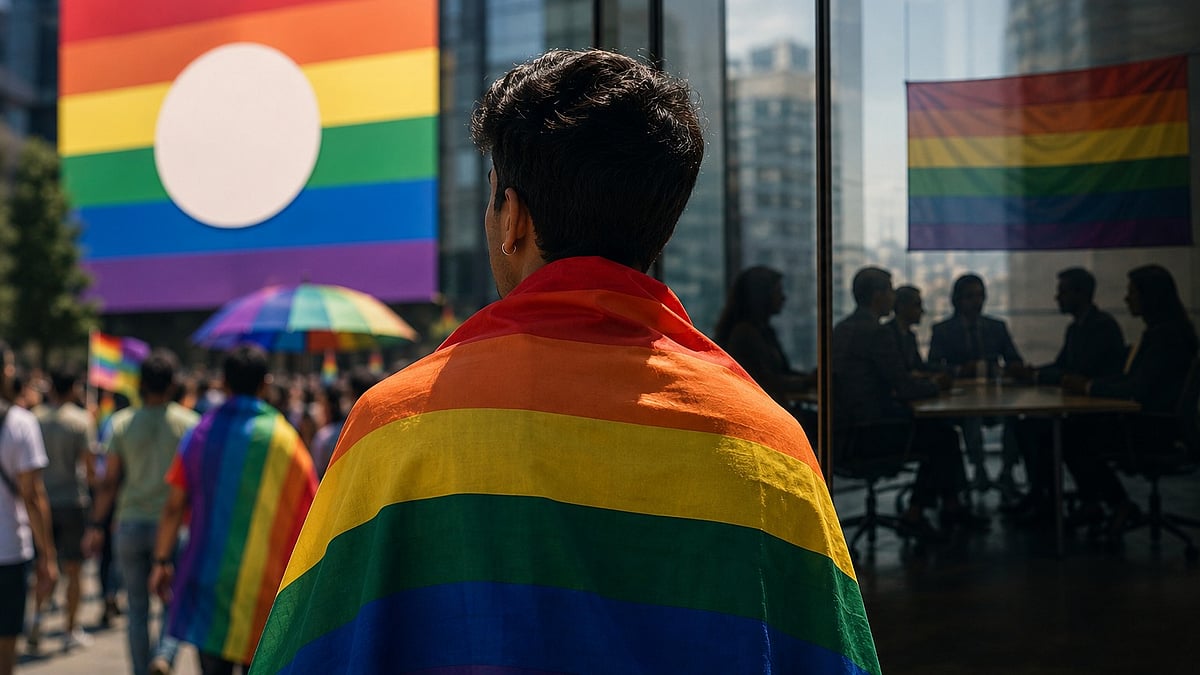
Every June, the colours appear almost on cue. Brand logos turn rainbow, social media feeds fill with messages of solidarity, and limited-edition Pride merchandise begins competing for attention. For a month, inclusion becomes highly visible. Yet for many members of the LGBTQIA+ community, that visibility is beginning to feel less like celebration and more like a marketing season.
"I don't feel excited about Pride Month at all because I feel all the rainbow marketing takes over. Is it really a marketing opportunity, or is it a time to accept us as everyone else?" says one queer individual who requested anonymity.
That sentiment captures a growing debate around what critics call "rainbow capitalism" — the practice of using LGBTQIA+ identities and Pride symbolism to market products without demonstrating meaningful commitment to the community. While Pride campaigns once represented progress in a country where queer identities were largely absent from mainstream advertising, consumers are increasingly asking whether visibility alone is enough.
Visibility to authenticity
The conversation around Pride has evolved significantly over the past decade. Earlier campaigns focused on representation and breaking taboos. Today, audiences are scrutinising what lies behind the messaging.
Recent global consumer research by Omnisend found that 45% of consumers believe only brands that genuinely support LGBTQIA+ rights should participate in Pride campaigns, while a quarter expect year-round support rather than June-only engagement. The study also found that younger consumers are particularly attentive to whether companies consistently uphold the values they promote publicly.
That demand for authenticity is echoed by Arisha Nigam, Founder of Naughty Rituals and Thrillerrr. "Pride has moved from a moment of visibility to a broader discussion around identity, inclusivity, and authentic representation. Rainbow-led campaigns have certainly been influential in bringing these conversations to the forefront. However, today's consumers are looking beyond seasonal messaging and assessing whether brands truly embody the values they espouse," she says.
According to Nigam, younger audiences increasingly evaluate brands through their actions rather than their advertisements. "Representation cannot be reduced to a campaign or a calendar moment; it must be integrated into a brand's everyday purpose."
Branding vs reality
For many queer consumers, the frustration stems from the disconnect between marketing narratives and lived experiences. Another anonymous community member says, "I like how brands take initiative but sometimes it gets too much. Especially when I face less acceptance from the same brands when I want to work with them. Initiative is good but don't fake it."
The comment highlights a challenge facing corporate India. Pride-themed campaigns may create visibility, but employees and consumers are increasingly evaluating companies on workplace culture, hiring practices, leadership diversity, benefits, and long-term inclusion efforts.
Research published earlier this year examining LGBTQIA+ experiences in Indian workplaces found that queer professionals continue to face barriers ranging from discrimination and exclusion to limited representation in leadership positions, suggesting that workplace inclusion remains a work in progress despite increased public visibility.
The gap between external messaging and internal culture can be costly. A 2026 Human Rights Campaign Foundation report found that over 71% of LGBTQ+ consumers reduced purchases from companies perceived as retreating from inclusion commitments, while nearly 70% increased spending with brands they viewed as genuinely supportive.
Investing in real change
For activists and community leaders, the answer lies in moving beyond symbolic gestures and investing in year-round engagement. "It is indeed welcome that brands and companies want to support the LGBTQ+ community, but their support should not be limited to Pride Month alone," says filmmaker and KASHISH Pride Film Festival director Sridhar Rangayan. "The community isn't here for your pinkwashing. You need to walk the talk and invest in real changemaking organisations and events. Companies should come forward to support grassroots community work where the real change is needed instead of creating reels with celebrities or influencers."
Rangayan points to long-term partnerships and initiatives such as community screenings, educational programmes, and sustained support for queer organisations as examples of engagement that create impact beyond marketing metrics.
His comments resonate with another community member's observation: "I truly demand authenticity over capitalism. I really would want more inclusivity than just rainbow marketing that keeps happening in June."
Inclusion as business culture
Some companies argue that inclusion should be measured less by campaigns and more by organisational systems.
Rajan Sethi, Managing Director at Bright Hospitality Pvt. Ltd., says the company's approach focuses on building diverse teams across operational and leadership roles while ensuring equal opportunities for growth.
"For us, inclusivity is not defined by a campaign or a particular month of the year. It is reflected in the systems, opportunities, and culture we build consistently across the organisation," he says.
That shift from campaign-driven inclusion to culture-driven inclusion may become increasingly important as consumers demand greater transparency. The Human Rights Campaign's 2026 workplace report notes that organisations maintaining clear and visible commitments to inclusion continue to see stronger employee trust, engagement, and loyalty.
Tech for meaningful inclusion
As brands seek deeper engagement, technology and artificial intelligence are emerging as new tools in the inclusion conversation. According to Ankush Sabharwal, CEO and Founder of CoRover, AI can help brands better understand community concerns through sentiment analysis, multilingual communication, accessibility features, and personalised experiences.
"Technology and AI have a significant role to play in helping brands create more inclusive and authentic engagement at scale. However, technology is only an enabler. The effectiveness of AI depends on the quality of data, the inclusiveness of the design process, and the intent behind its deployment," he says.
Sabharwal argues that genuine commitment ultimately depends on sustained action rather than sophisticated tools. "Authentic brands embed inclusion into their long-term strategy, invest in communities, measure outcomes, and remain accountable beyond specific campaigns or calendar moments."
As Pride Month unfolds once again, the rainbow logos will continue to appear across billboards, storefronts, and social media feeds. The difference in 2026 is that consumers are no longer judging brands solely by what they say during June. They are paying closer attention to what happens in July, October, and every other month of the year. In that environment, authenticity is no longer a moral aspiration; it is increasingly becoming a business expectation.

