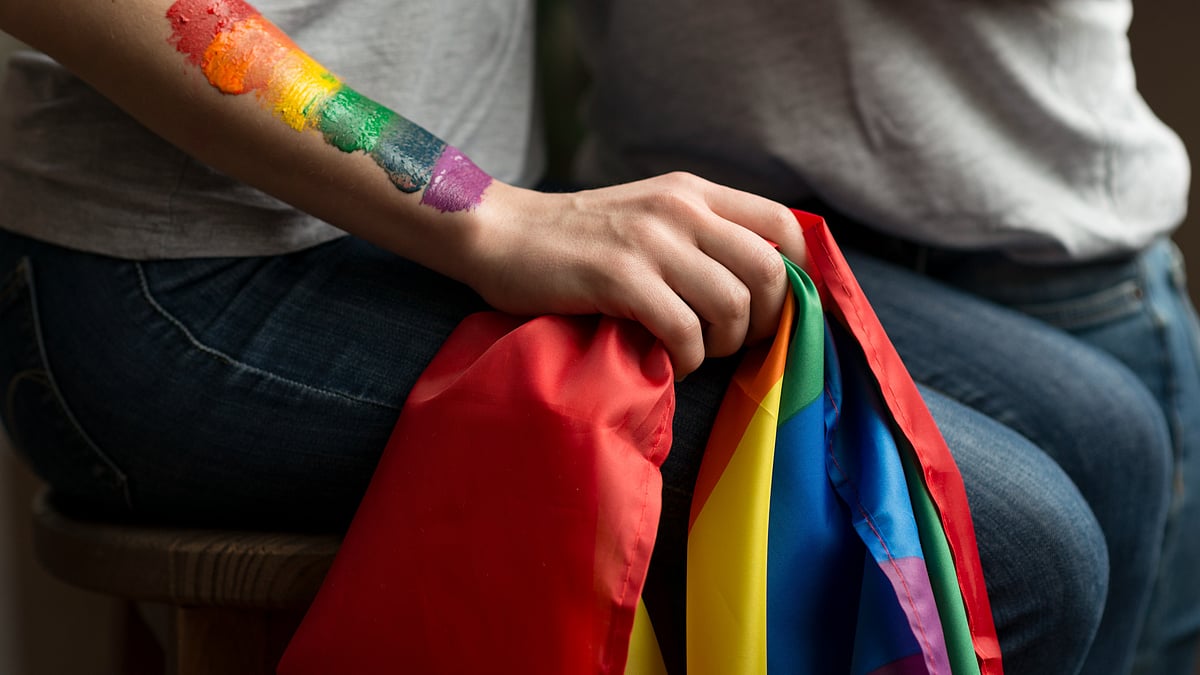
A young professional had finally decided to share something she had spent years protecting. She was queer, and after carefully weighing the risks, she chose to confide in a colleague she trusted. What she hoped would remain a private exchange soon became the subject of workplace curiosity.
"I shared my identity with a colleague at work because I trusted them. What followed wasn't support but intrusive questions about my personal life. Soon after, other colleagues knew about my identity without my consent. The experience left me feeling exposed and unsafe. Within a few months, I left the organisation and moved on, carrying with me a promise that I would think twice before opening up again," she says.
Her experience underscores a reality that remains largely hidden beneath the colourful celebrations and corporate campaigns that accompany Pride Month. While visibility has increased significantly over the years, many women continue to approach disclosure not as an act of liberation but as a calculation of consequences. The fear is not necessarily about identity itself but about what happens after that identity becomes known.
Barriers
For another woman, the challenge did not arrive through betrayal but through the accumulation of everyday assumptions.
At work, conversations frequently revolved around marriage, dating and plans. Colleagues casually speculated about when she would settle down or whether she was on dating apps. None of the remarks was intended to exclude her, yet each one reinforced a version of womanhood that left little room for her own reality.
"At work, jokes about my age, marriage prospects and whether I was on dating apps were a regular part of conversations. To others, it seemed harmless. To me, it felt like there was no safe space to be honest about who I was. The constant assumptions and banter made it difficult to share my truth, even with people I worked with every day," she says.
The experience highlights how exclusion often operates in subtle ways. Not every barrier is overt discrimination. Sometimes it is the persistence of assumptions so deeply embedded in workplace culture that they quietly communicate who belongs and who does not.
Learning to stay silent
For some women, however, the struggle begins long before they enter the workplace. Family is often the first space where identity is tested, and when acceptance is absent at home, the prospect of being accepted elsewhere can feel remote.
"As a woman, you are judged far more than most people. When I was not accepted at home, how could I even expect society to accept me? I just thought to stay quiet until one day, a colleague really supported me after listening to me. That day made me a little comfortable," says another woman who requested anonymity.
Her story reflects a pattern experts repeatedly observe. Many women are not silent because they are uncertain about who they are. They remain silent because previous experiences have taught them that disclosure may invite rejection, scrutiny or isolation. In such circumstances, even a single act of empathy can become transformative.
Invisible women of pride
While public conversations around LGBTQIA+ rights have expanded considerably since the Supreme Court decriminalised consensual same-sex relationships in 2018, queer women often remain among the least visible voices within the movement.
Sonica Aron, Founder and Managing Partner of Marching Sheep, believes this invisibility stems from a misunderstanding of the LGBTQIA+ community itself.
"LGBTQIA+ is an umbrella, and under it each letter holds a different spectrum of identities and experiences. The mistake organisations make is assuming one Pride initiative fits all of them. It does not," she says.
According to Aron, queer women frequently occupy a unique position where they navigate both gender-based expectations and identity-based prejudice.
"Within that community, queer women are often the least visible, and the silence around them is not an accident. It is built, conversation by conversation."
The stories of the women she encountered reveal how different forms of exclusion can produce the same outcome. One woman was outed after confiding in a colleague. Another found herself silenced by a workplace culture that constantly assumed heterosexuality. Neither situation involved explicit hostility, yet both created environments where authenticity felt unsafe.
"What both cases point to is the need for a holistic approach to Pride inclusion. Real inclusion is not a month or a logo. It is whether a human being can be themselves at work without paying for it," Aron adds.
More than sexuality
For many women, conversations around identity extend beyond sexuality and into broader questions of self-worth, belonging and acceptance.
Mihika Aishwarya, Founder of ConnectStory Communications, believes women are often conditioned from an early age to prioritise acceptability over authenticity.
"Like any other woman, I grew up hearing what I should be and how to behave in public. Be polite, be strong but not too strong. Speak, but not too much. Look a certain way. Adjust. Smile. Don't make people uncomfortable with your actions or words," she says.
Over time, those expectations can shape how women relate to themselves. "After a point, you stop asking yourself who you truly are. You start asking whether you are acceptable to everyone else."

Reflecting on her own journey through cancer, public scrutiny and entrepreneurship, Aishwarya says her understanding of identity changed profoundly when she stopped seeking external validation.
"I don't need anyone or everyone to understand me anymore. I just need to recognise myself. That, for me, is identity."
Why women internalise more
The hesitation many women experience around disclosure is often rooted in psychological conditioning.
Dr Munia Bhattacharya, Senior Consultant, Clinical Psychology, Marengo Asia Hospitals, Gurugram, says the question she frequently encounters is why women appear less likely to come forward or openly discuss their experiences.
"The answer is far more psychological than people assume," she says.
In her clinical practice, she has observed that women are often socialised to internalise distress rather than externalise it.
"They may express pain through anxiety, guilt, self-blame or silent suffering, whereas men, because of conditioning around power and entitlement, are sometimes more likely to display their struggles through outward behaviour. As a result, these behaviours become more visible and attract public attention."
Another major factor is stigma. "Women frequently fear character assassination, victim-blaming and damage to their social or professional identity. Many choose silence not because the experience is insignificant, but because the psychological cost of speaking out appears too high. Silence should never be mistaken for absence."
Her observations resonate with a powerful conclusion. "The loudest stories are not always the most common stories; they are simply the ones society is willing to hear."
What research reveals
Research suggests that the experiences shared by these women are not isolated.
The Ipsos LGBT+ Pride Survey found that nearly one in five Indians identifies as non-heterosexual, indicating that LGBTQIA+ identities are significantly more common than public visibility might suggest. Yet studies examining workplace disclosure continue to show that fear of discrimination, exclusion, damaged relationships and professional repercussions remain among the strongest reasons individuals choose not to reveal their identities.
Research published in international and Indian workplace studies has consistently found that employees who perceive their organisations as psychologically unsafe are far more likely to conceal their identities. Meanwhile, reports by the United Nations Development Programme have highlighted that LGBTQIA+ individuals in India continue to face barriers in employment, housing and public life despite increasing legal recognition.
The gap between legal progress and lived experience remains particularly pronounced for women, who often contend with gendered expectations alongside identity-based stigma.
Rights, recognition, reality
India's legal framework has undoubtedly evolved over the past decade. The Supreme Court's landmark Navtej Singh Johar judgment decriminalised consensual same-sex relationships, while the NALSA judgment recognised the rights of transgender persons. These developments were followed by the Transgender Persons (Protection of Rights) Act, 2019.
Yet legal protections alone cannot dismantle deeply rooted social attitudes.
Sana Raees Khan, Founder of SRK Legal and Supreme Court Lawyer, argues that the barriers preventing women and LGBTQIA+ individuals from asserting their rights are often social rather than legal.
"The silence around women's rights and LGBTQIA+ rights is often not due to a lack of legal protection but because of the social, economic and cultural barriers that discourage individuals from speaking out," she says.
Fear of stigma, retaliation, family pressure, workplace repercussions and concerns about personal safety continue to shape disclosure decisions.
"Rights become meaningful only when individuals are aware of them and feel empowered to exercise them without fear. The true measure of progress lies not merely in the existence of laws but in creating a society where women and LGBTQIA+ individuals can assert their rights confidently, safely and without fear of judgment or discrimination."
Visibility doesn’t mean acceptance
The visibility of public figures such as Lilly Singh and Sushant Divgikr has undoubtedly expanded public understanding of identity and representation. Their willingness to speak openly has helped challenge stereotypes and create space for conversations that were once pushed to the margins.
Yet for most women, identity is negotiated not on public stages but in homes, workplaces and everyday interactions.
Their stories rarely make headlines. They unfold in moments of hesitation before a conversation, in decisions about whom to trust, and in the emotional calculations that precede disclosure.
For many women, Pride is therefore not defined by grand declarations. It is defined by something quieter and perhaps far more profound: the ability to tell the truth about who they are without fearing what that truth might cost.

