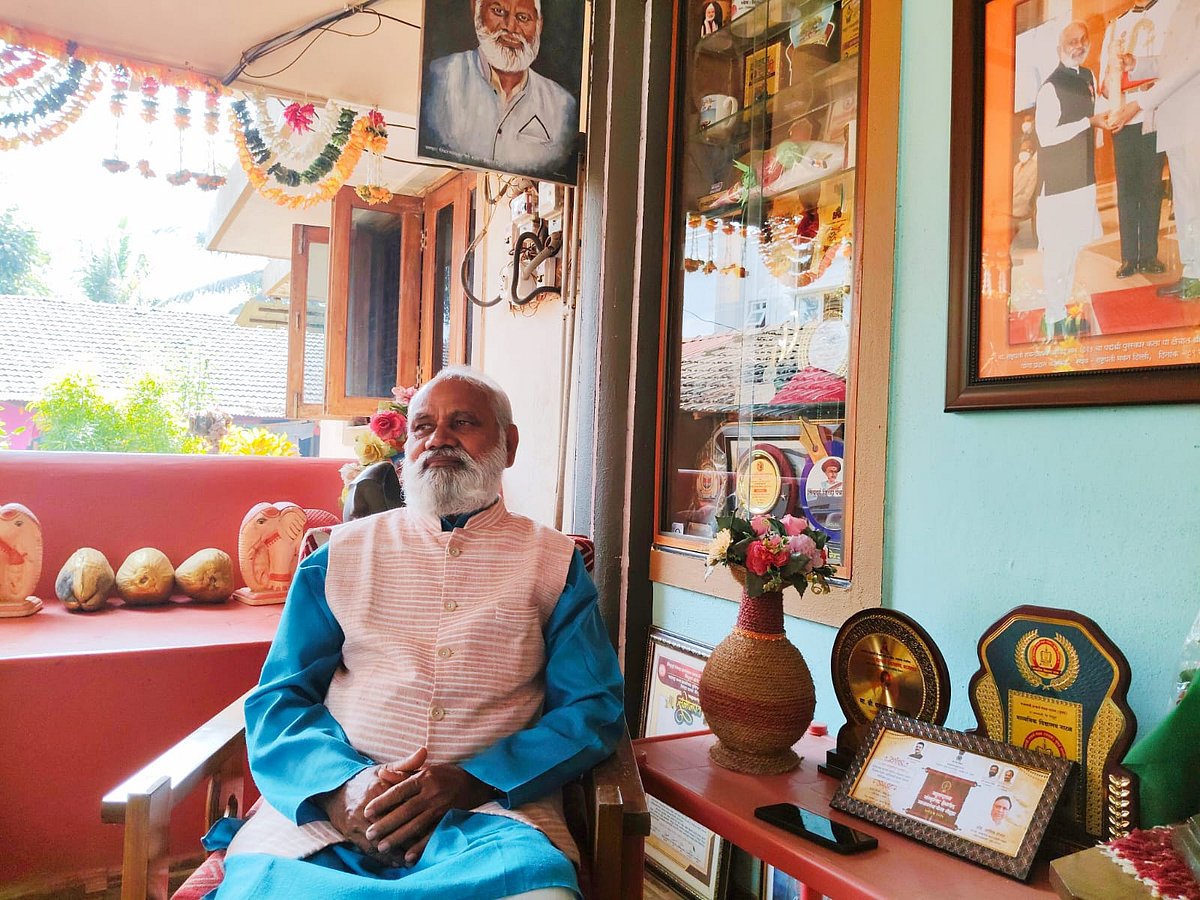
Highway sights are generally the same—long stretches of concrete, road signs, and billboards blurring past for miles. But if you’re traveling on the busy NH 66 highway connecting Goa and Mumbai, something unexpected appears as you approach Pinguli. On the left, a signboard points toward the Thakar Adivasi Kala Aangan Museum & Art Gallery.
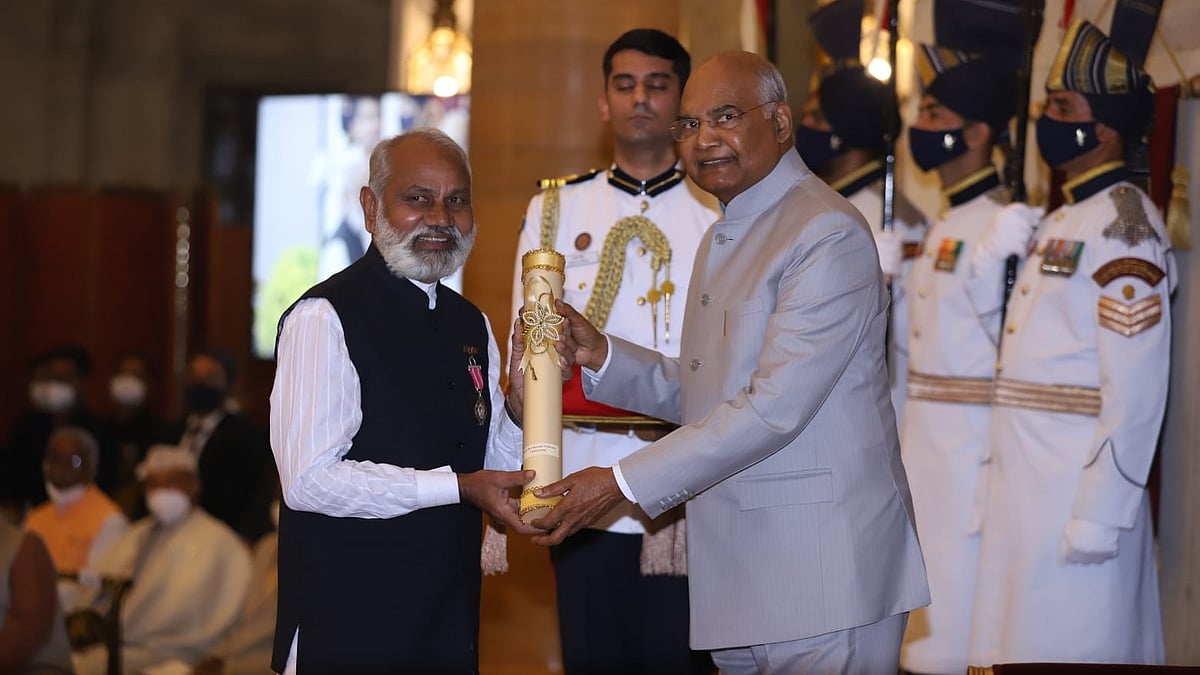
Leaving the highway for a narrow lane, you arrive at a rare slice of Maharashtra’s ancient artistic heritage. Within its humble surroundings, history is carefully preserved by Padma Shri awardee Parshuram Gangavane, one of the few remaining representatives of the Thakar tribe.
While the world outside rushes by with the sounds and sights of modernity, Gangavane sustains ancient art forms such as Chitrakathi, Kalsutri Bahulya (leather puppetry), Pangul Bael, Powada, Gondhal, Radhanrutya, and six other traditional Thakkar forms—each maintained with deep reverence and pride. His sons, Eknath and Chetan, now assist him in carrying forward this legacy.
About the tribe
The septuagenarian with ease of a skilful story-teller weaves a story of artistic ingenuity, resilience, and unwavering commitment. Speaking in his native Marathi, memories of family history flow as Gangavane traces his ancestry to the Sahyadri ranges.
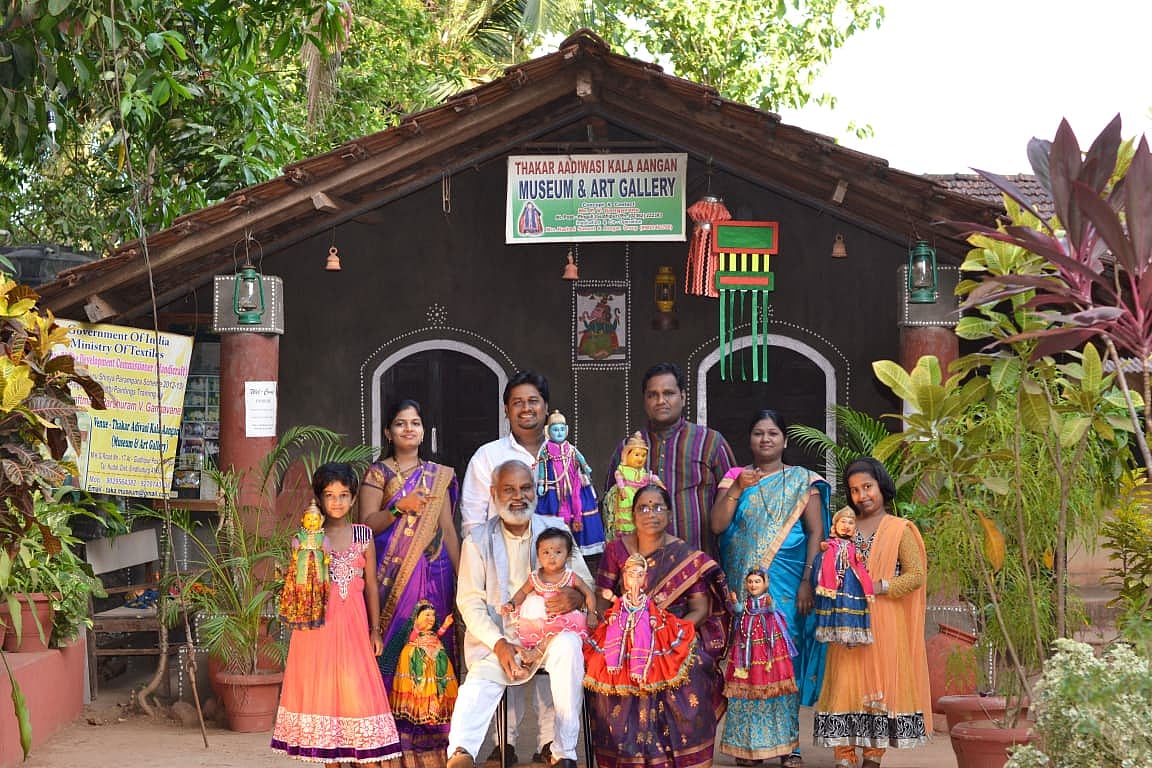
“My ancestors lived in the jungle, surviving on wild berries and whatever nature provided. Being isolated from the world for so long, our people devised ways to entertain themselves. That’s when they began recounting tales from the Mahabharata,” shares the Gangavane seated in his recliner against a backdrop of walls lined with his achievements.
With no access to paper or commercial pigments, these artists improvised with natural materials.
“One picked up a fallen peepal leaf and used it as a canvas. You may ask—what about colour? Red came from the earth, black from ash, green from leaves,” he explains. Thus, natural media gave birth to an enduring visual language..
Their creativity and coded communication soon caught the attention of the Maharaja of the region. Gangavane recounts that Chhatrapati Shivaji Maharaj, impressed by their skills, brought them out of isolation and granted them land around Pilguri.
Beyond epic narratives, the tribe crafted puppets from sheesham wood, dressing them in vibrant colours to depict mythological heroes and characters. Shivaji Maharaj also found strategic value in their talents.“When we fought wars, he took our people with him. He would send our people to gather local intelligence—details about enemy soldiers, cavalry, and movements. One man would signal the details back to Shivaji’s camp,” Gangavane says.
The tribe also played a significant role during Navratri.
“We were assigned certain temples where we had to sing and perform through all nine nights. In return, villagers would give us 1Kg rice as dhan,” he recalls.
However, their fortunes declined after Shivaji Maharaj’s reign. Difficult times followed.“I faced insults from villagers—‘Arre Thakarra, bheekh maangne kyun aaya?’ they would shout,” he says quietly. The humiliation nearly pushed him away from temple performances until a priest urged him to continue his ancestral duty.
After Independence, many artisans abandoned traditional practices in search of stable livelihoods in cities.
A legacy lives on
Gangavane’s main source was agriculture and after an accident even started a tea stall. Despite financial hardship, he remained steadfast to his art. That determination eventually led to fulfilling his long-time dream. “I had this wish to set up a museum to keep our traditions alive,” he tells.
What was once a cowshed slowly transformed into a modest gallery showcasing rare ancient paintings. A modern two-room structure now houses 450-year-old artworks, puppets, and memorabilia passed down through generations.
“I have around 1,000 paintings inherited from my ancestors. We sold only one, decades ago, for ₹7,000. After that, we decided never to part with our ancestral wealth,” he says with pride.
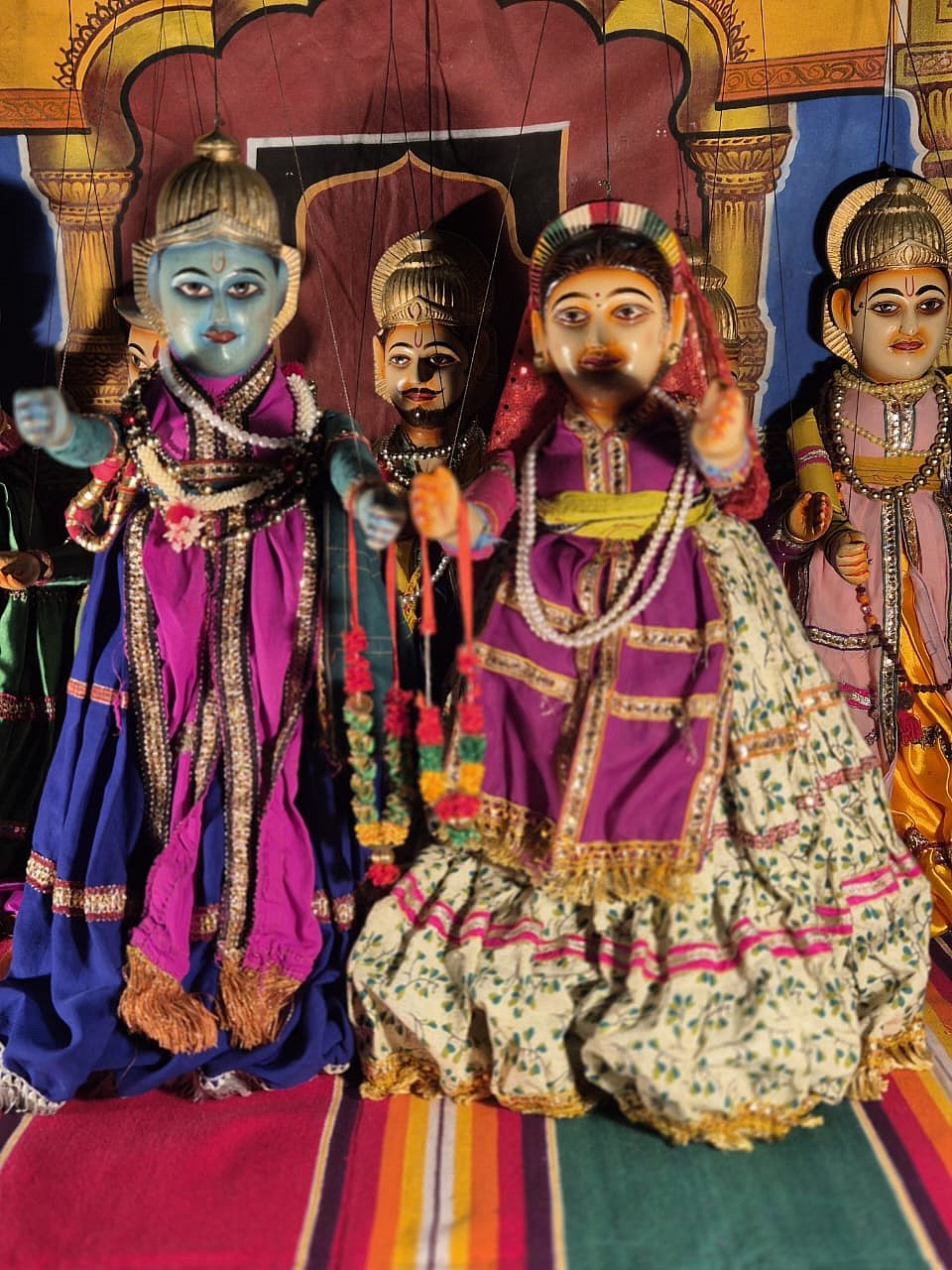
A stage-area hosts puppet shows for guests. In recent times, a guest house accommodates upto 20-guests looking for a rustic experience.
From enduring ridicule to receiving one of India’s highest honours, Gangavne continues to take his art across the country. His performances have supported social initiatives such as HIV/AIDS awareness, Beti Bachao Beti Padhao, Vyasan Mukti, Swachh Bharat Abhiyan, health awareness campaigns, and COVID-19 education—often conveyed through Kalsutri Bahulya (string puppetry) in rural Maharashtra.
Through the Thakar Adivasi Kala Aangan Museum & Art Gallery, he also mentors Thakar youth who have moved away from traditional occupations, encouraging them to reconnect with their roots.
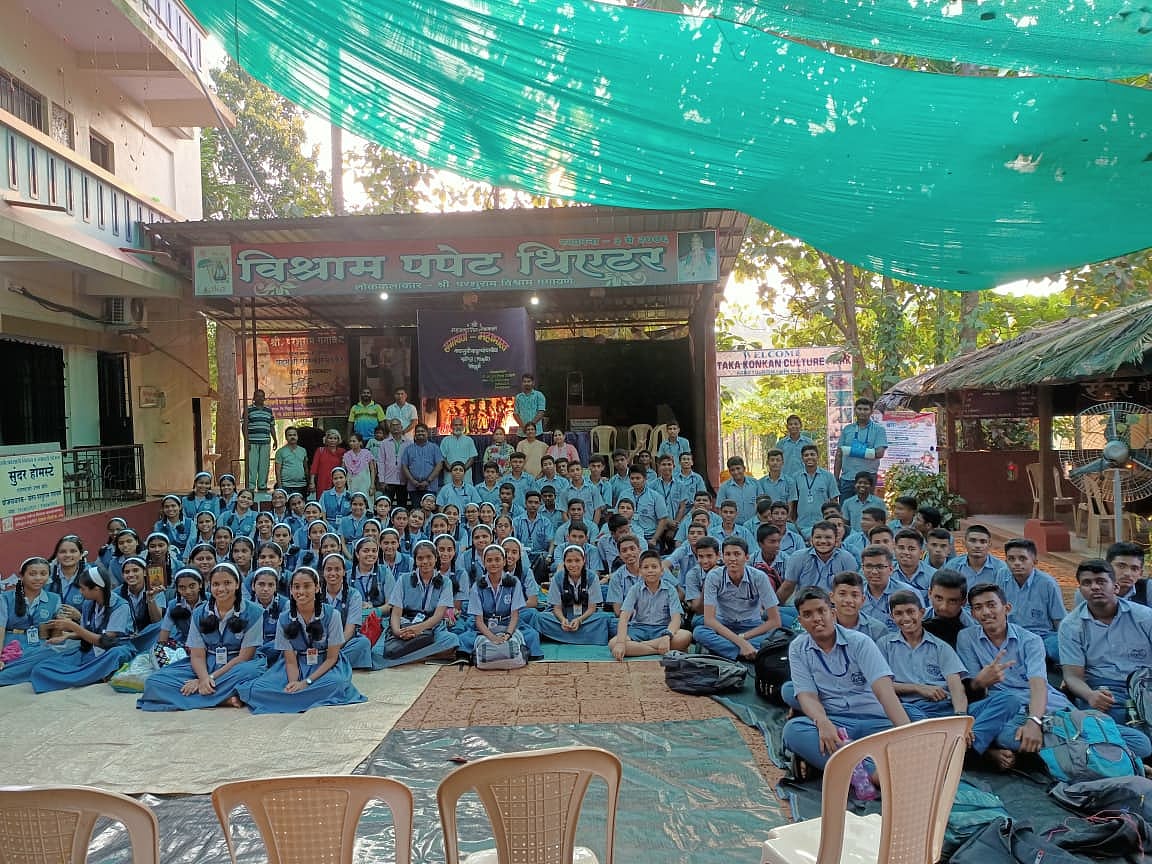
Under the Guru-Shishya Parampara scheme initiated by the Ministry of Culture, he has conducted eight training programmes, mentoring over 150 students. He has also participated in more than 100 workshops across India to promote and preserve tribal art forms.
Additionally, the Deccan Odyssey’s stop at Kudal brings tourists from around the world to witness these mesmerizing traditions.
His one remaining wish is simple yet profound:
“I hope to take my art abroad.”

