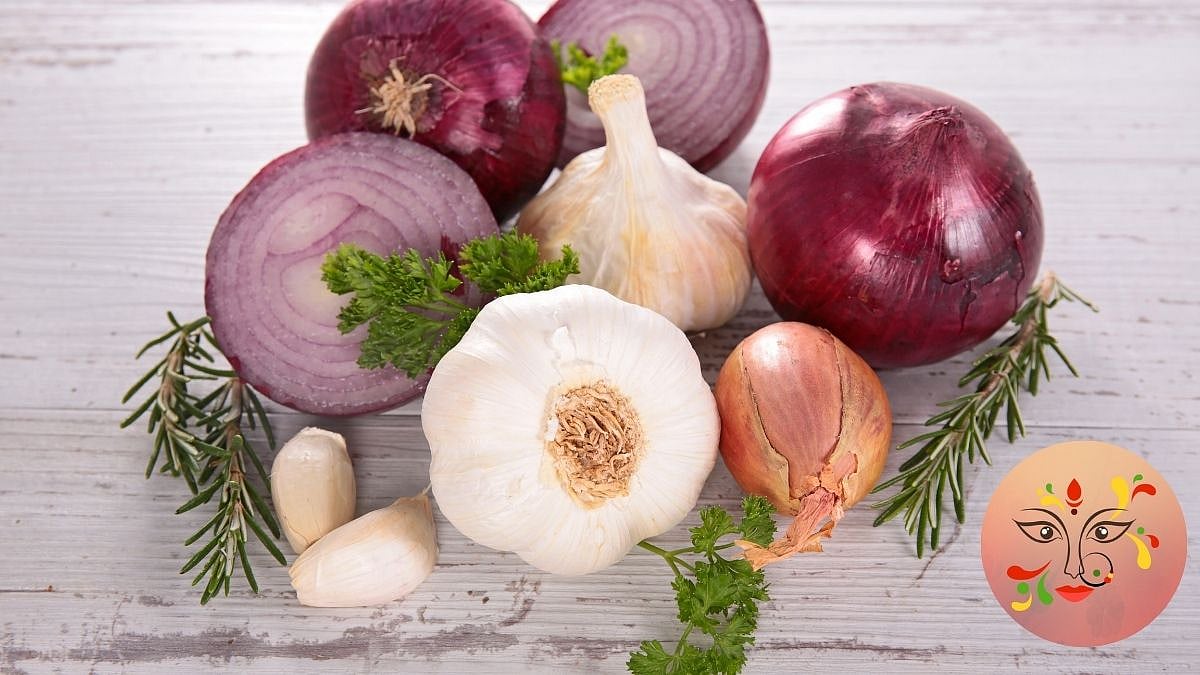
In India, people are celebrating Shardiya Navratri from Sunday, October 11, 2026, with regional fervour. The nine-day festival is dedicated to the nine forms of Goddess Durga. During this time, people refrain from non-vegetarian food, alcohol, smoking, negative things and indulging in bad activities or behaviour. That's what we all do know. But, during this auspicious time, people also refrain from consuming onions and garlic. In this article, let's understand the reason behind it.
Why are onion and garlic avoided during Navratri?
The 2026 Shardiya Navratri has already begun from Sunday, October 11. Refraining from non-vegetarian food, alcohol, smoking and negative things is important, but consumption of onion and garlic is also restricted during these nine days. According to Hindu religious beliefs, food is often classified into three categories: sattvic, rajasic and tamasic. These classifications are associated with different qualities and their perceived effects on the mind and body.
Sattvic, rajasic and tamasic foods: Food Classification
Sattvic foods, such as fresh fruits, milk, nuts and certain vegetables, are traditionally believed to promote purity, calmness and mental clarity. Many devotees prefer a sattvic diet during Navratri to support meditation, prayer and spiritual practices.
Onion and garlic are commonly classified as rajasic or tamasic in certain Hindu dietary traditions. Rajasic foods are believed to stimulate activity and restlessness, while tamasic foods are associated with heaviness and lethargy.
What do religious traditions say?
The practice of avoiding onion and garlic is associated with traditional interpretations of Hindu scriptures, including certain yogic and Ayurvedic dietary principles. These traditions emphasise mindful eating and the belief that food can influence a person's mental and spiritual state.
Seasonal changes and dietary practices
Besides the religious aspect, there is a scientific reason behind this too. Sharad Navratri falls around the months of October-November, which usually mark the transition period from autumn to winter. During this time of seasonal change, our immunity tends to decline, and therefore, eating light (sattvic) food does not burden your digestive system, hence preventing restlessness and other stomach problems, including bloating.
What to eat during Navratri?
Those observing Navratri fasts often consume fruits, milk, curd, nuts and fasting-friendly ingredients such as sabudana, kuttu flour and singhara flour. Rock salt, commonly known as sendha namak, is also preferred by many devotees instead of regular table salt during fasting.

