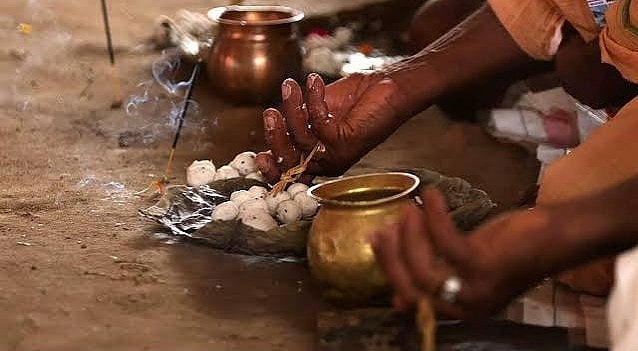
Mahalaya Amavasya, also known as Sarva Pitru Amavasya, marks the end of Pitru Paksha. It holds special significance in Hinduism, as it is a period dedicated to honouring deceased ancestors. On this day, devotees perform Shradh, Tarpan, Pind Daan and other rituals to express gratitude to their forefathers and seek their blessings. But did you know that water (Tarpan) is offered to ancestors from the thumb side of the palm and why? This traditional gesture has religious and symbolic significance in Hindu rituals. Let's understand in detail.
Why is water offered from the thumb side?
Mahalaya Amavasya or Sarva Pitru Amavasya marks the conclusion of Pitru Paksha. It also marks the beginning of Shardiya Navratri, dedicated to nine forms of Goddess Durga. This year, Mahalaya Amavasya is observed on Saturday, October 10. On this sacred day, let's understand why Tarpan is performed to ancestors from the thumb side of the palm.
The significance of Pitru Tirtha
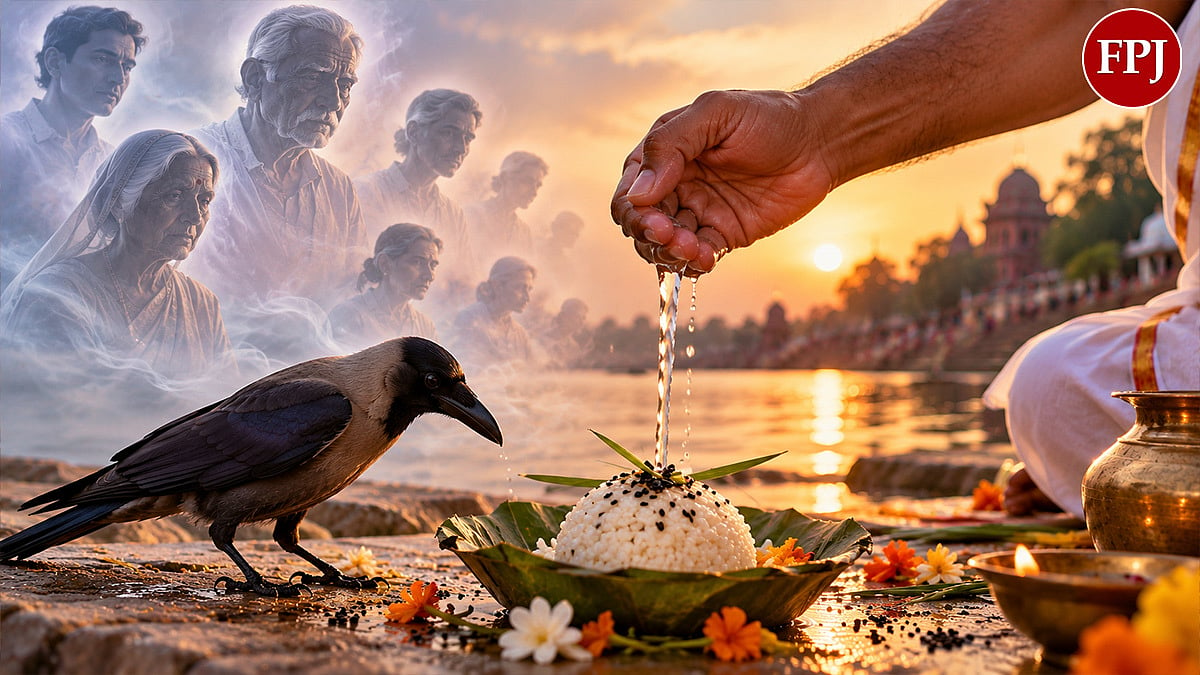
According to Hindu ritual traditions, water offered to ancestors is associated with the Pitru Tirtha, a specific part of the hand used while performing ancestral rites. It is generally located at the base of the thumb, near the palm.
During Tarpan, devotees pour water through this area while reciting prayers and remembering their ancestors. This method distinguishes offerings made to departed ancestors from those offered to deities or sages, for which different parts of the hand may be used according to ritual traditions.
Spiritual beliefs behind the ritual
According to astrological and spiritual belief, the mount at the base of the index finger is associated with Jupiter (it represents wisdom, intellect, and salvation), while the thumb represents the sense of self and soul. Flowing water through this exact channel activates spiritual energy that is believed to satisfy the unfulfilled subtle desires of ancestors, helping them progress peacefully on their onward journey.
What is the significance of Tarpan during Pitru Paksha?
Tarpan is one of the most important rituals of Pitru Paksha in which water is offered to ancestors as an expression of respect, remembrance and gratitude. The word is associated with the idea of satisfying or honouring through offerings.
During Pitru Paksha, devotees may perform Tarpan near rivers, ponds or other designated places, while some families carry out the ritual at home. Water is often offered with black sesame seeds, known as kala til, and prayers are recited according to family customs.
Why is Mahalaya Amavasya important?
Mahalaya Amavasya is considered especially significant because it is the concluding day of Pitru Paksha. On this day, all families perform Shradh to honour ancestors, particularly when the specific date of their death is unknown or when they wish to observe the ritual for multiple ancestors.

