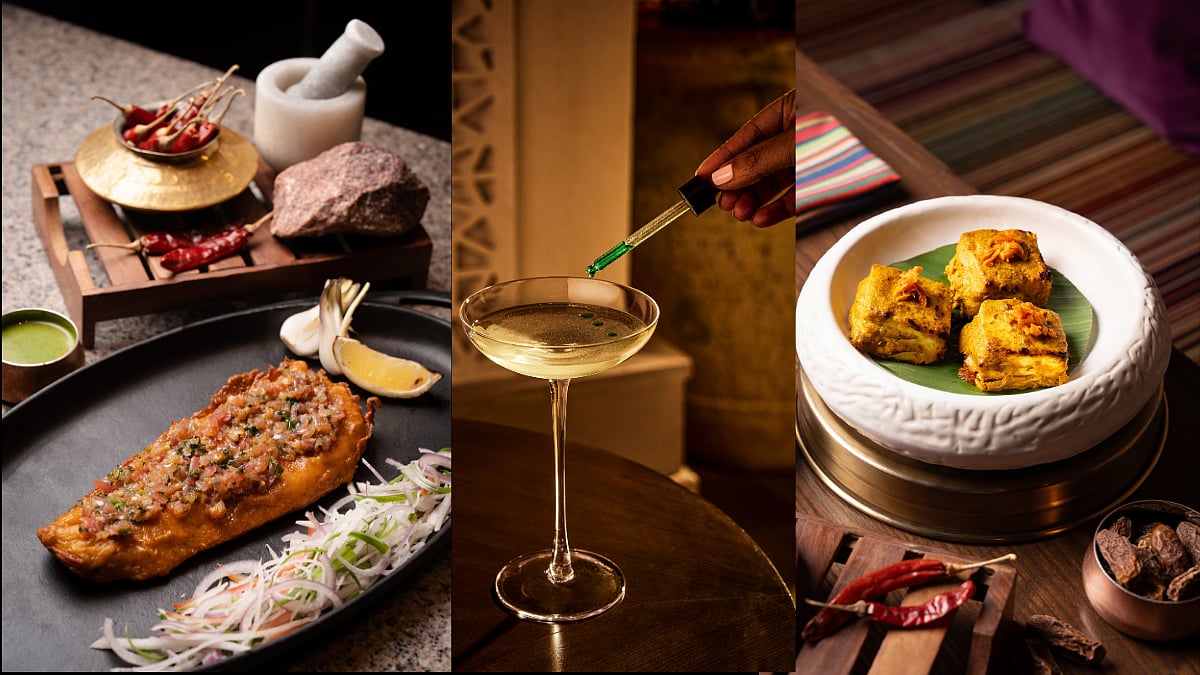
Loya, the Indian restaurant at the Taj Mahal, Mumbai, recently introduced a new menu.
Loya brings age-old North Indian cooking traditions to the modern table, celebrating the flavours of fire, smoke, spice and time. Techniques such as dhungar (smoking), baghar (tempering), sigdi (coal cooking) and dum (slow cooking) add depth, aroma and character to each dish. Traditional clay pots and iron kadhais further enhance the earthy flavours, creating a dining experience rooted in the culinary heritage of North India.
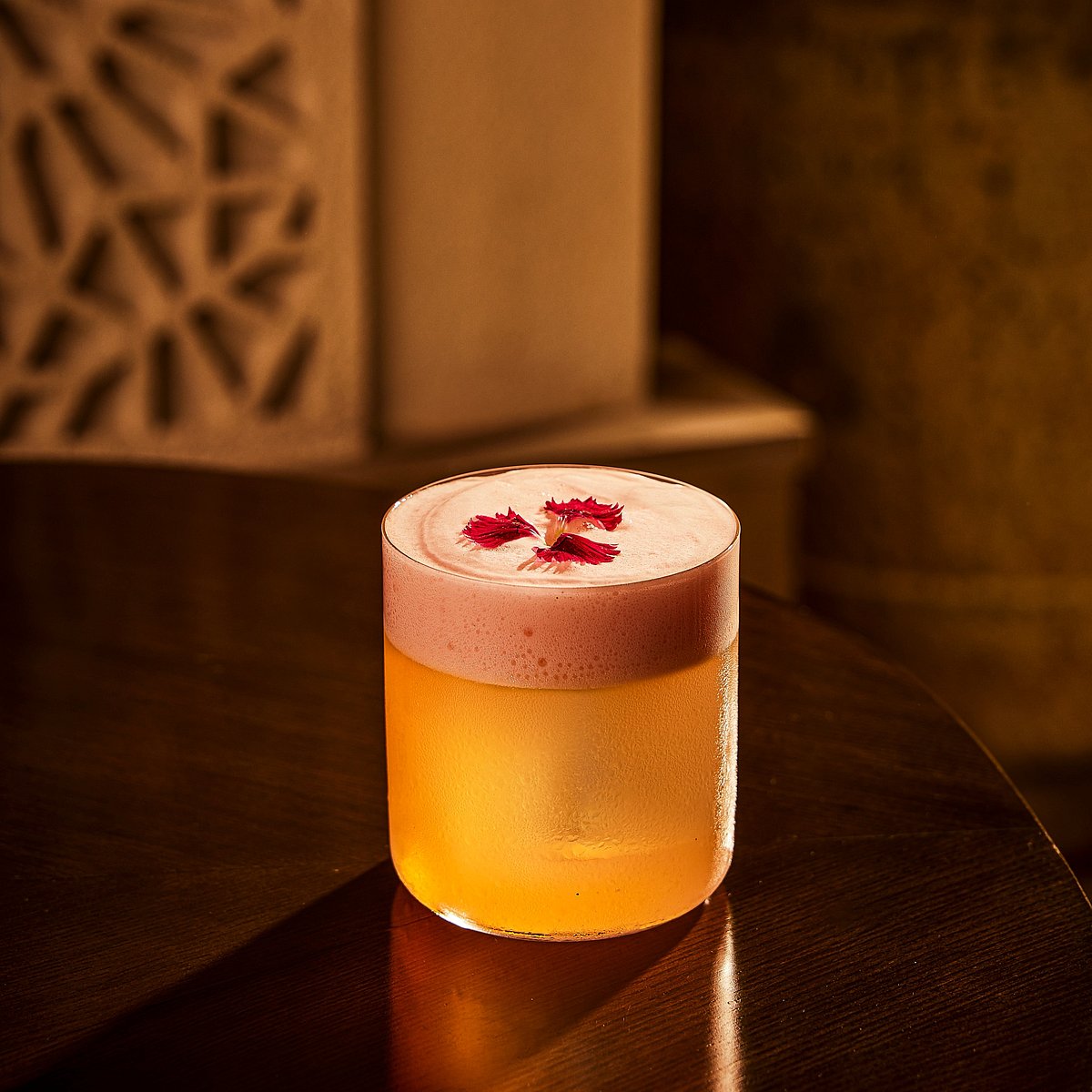
Whis-Gal (Pitch) |
Their new menu brings this and much more to the table. Based on the Dham cooking, lot of effort has gone in creating this new menu at Loya. Chef Farouq and his team spent days foraging through the northern states for recipes and ingredients along with their Delhi counterparts to curate the current menu. research.
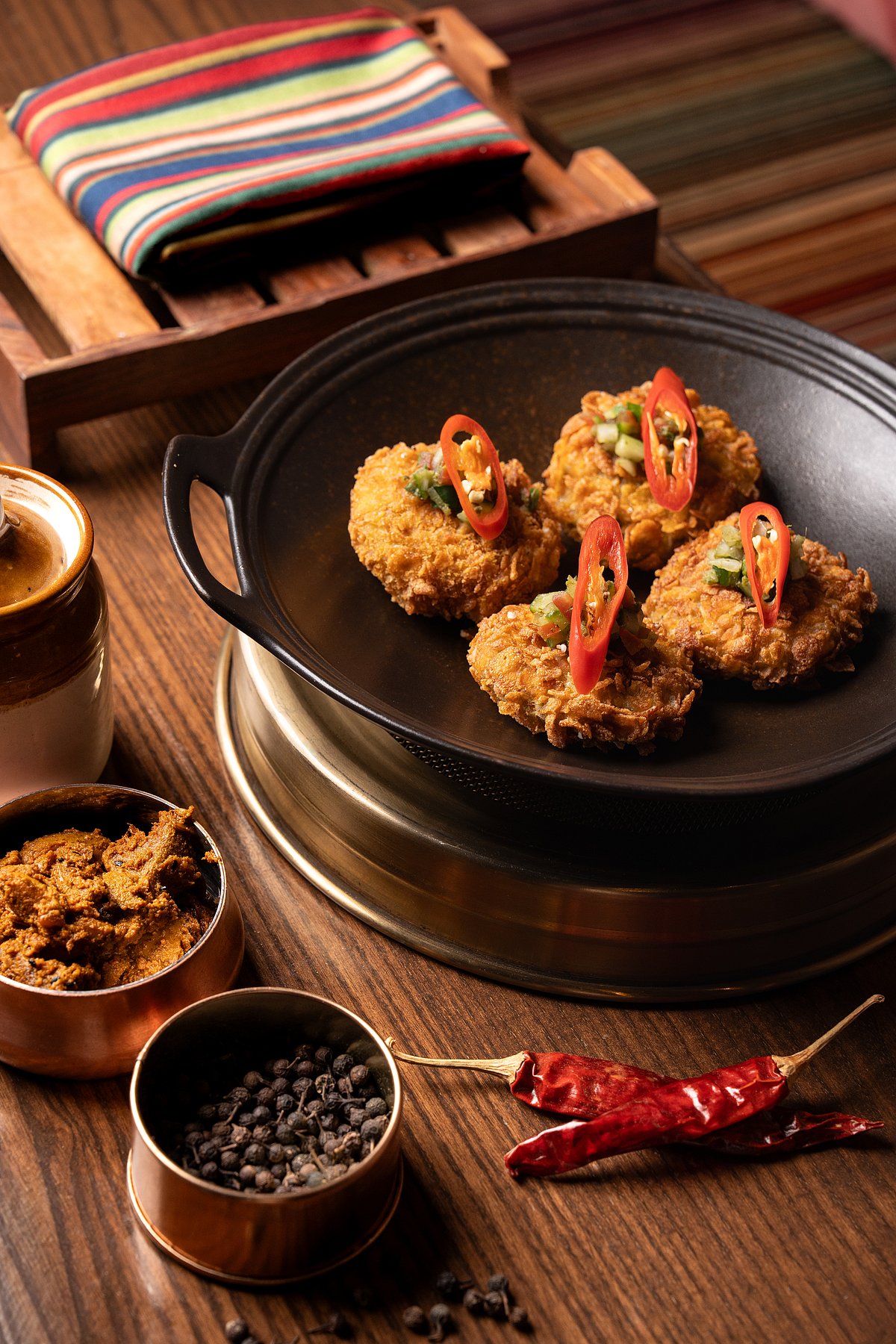
Kurmuri Moongri |
At Loya, research is not something confined to a chef’s notebook. It arrives at the table, sometimes in a cocktail, sometimes as a pickle and occasionally under a dramatic flambé. The philosophy behind the new menu, according to Ansh, the restaurant manager of Loya, is simple: the first year was about education; this phase is about the deep dive. The menu is an ode to that!
“Our attempt is to keep the menu as satvik and authentic as we can keep it,” reiterates Chef Farouq while talking about the philosophy behind the new menu. “Most dishes are dham cooking inspired and do not have onion-garlic. Most non-veg dishes are yogurt based.”
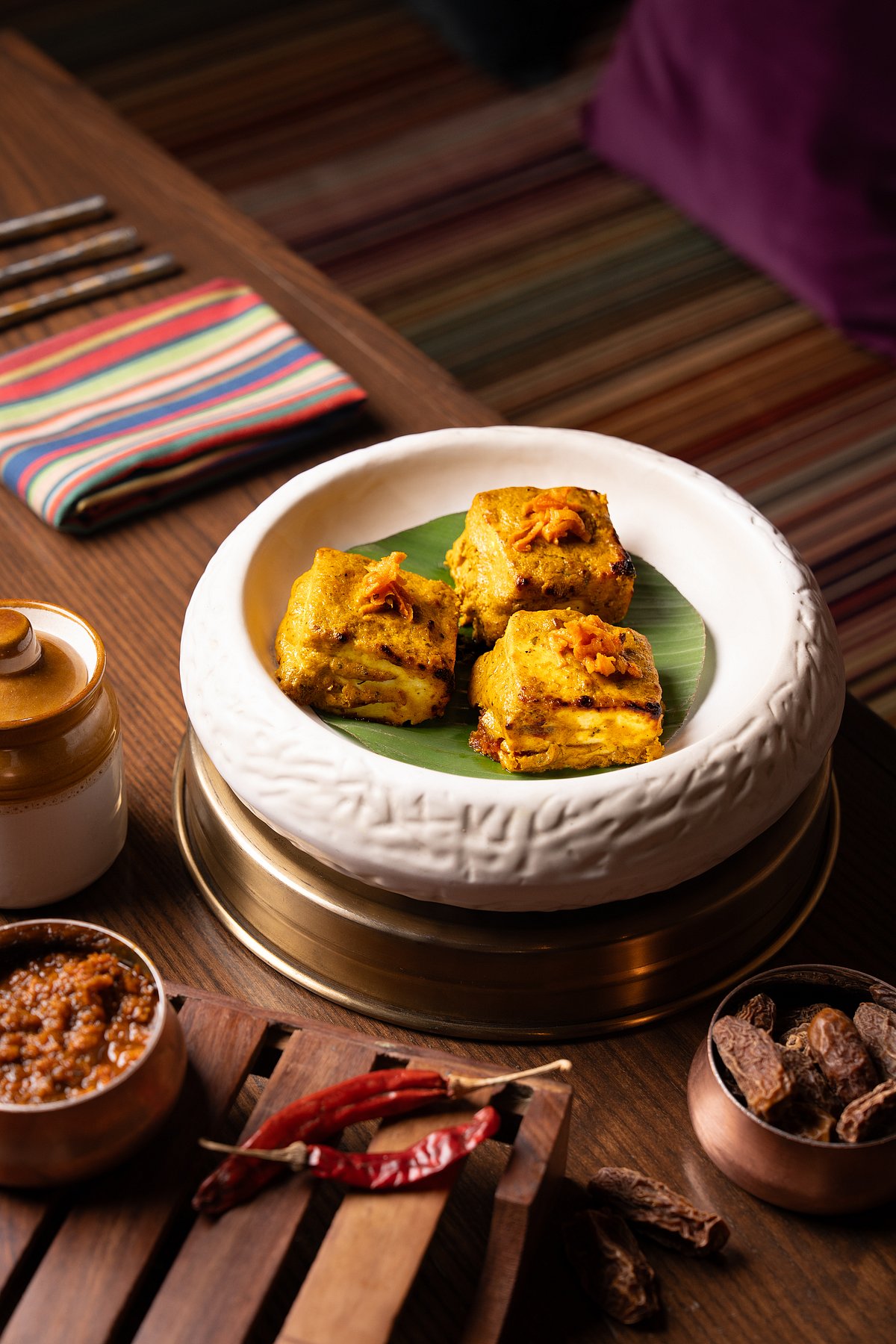
Kachhi Haldi aur Chuare ka Paneer |
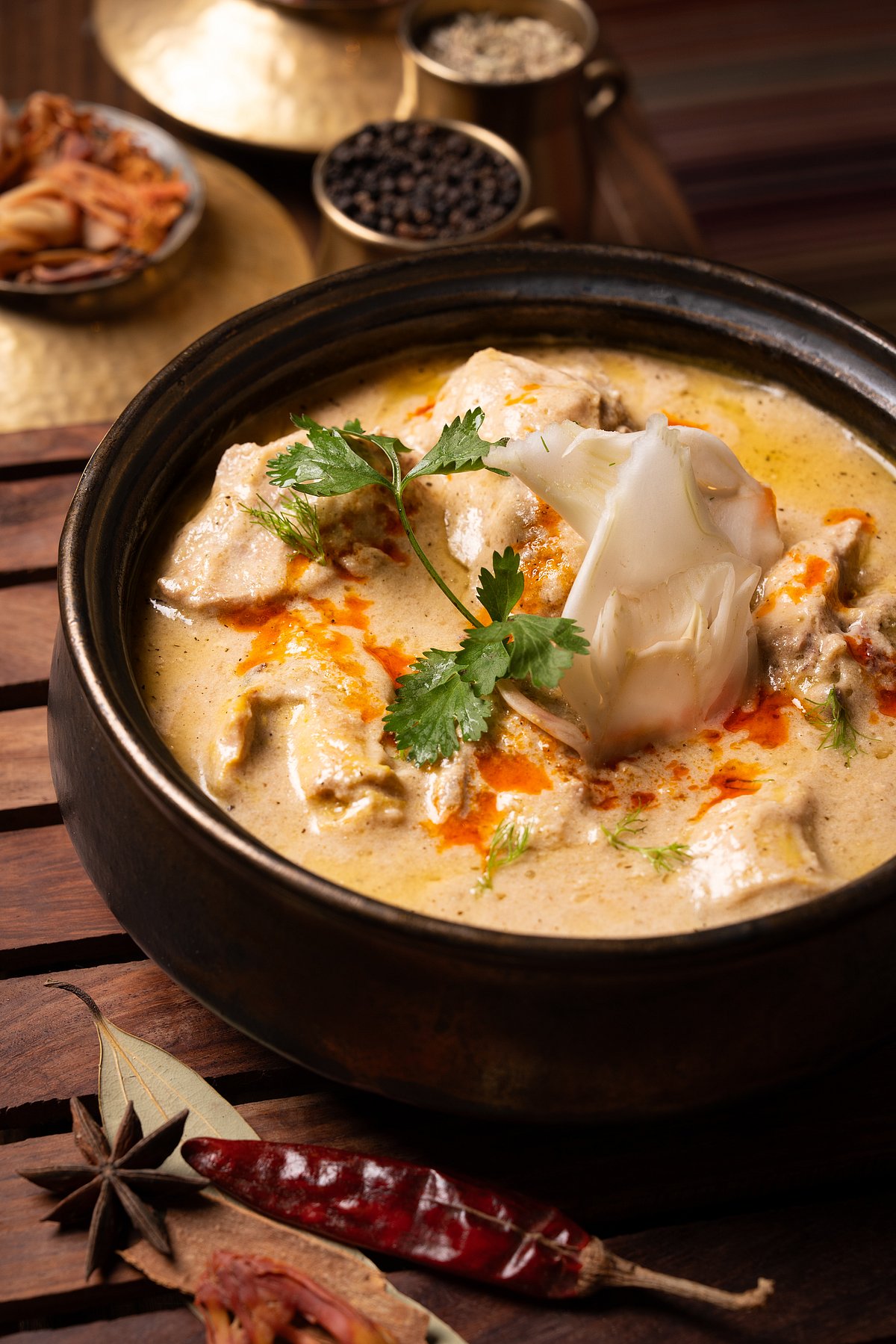
Kokur Yakhni |
The table is set with variety of pickles. Lungdi, or fiddlehead fern, makes an appearance, while the arbi pickle, with its mustardy zing, is dangerously moreish. It is the sort of condiment that makes you forget the rest of the meal for a moment and reach for another bite.
And it’s not just food, but they have revamped the cocktail menu as well. The cocktail menu is called the Loya Paanch experience. It propagates SPICE – Scale, Pitch, Instrumentation, Chords and Expression – as the theme. And truly, the cocktail program is something to be experienced, not tasted.
My first choice was the Malwa Highball since it has Campari as one of its components. Homemade cordial and seltzer are the key ingredients that influence the taste profile. The Kurmuri Moongri was a good accompaniment for that. Crispy corn tikki with stuffing of timla (wild fig) topped with cucumber-timur pickle, gets its crunch from puffed rice that coats it.
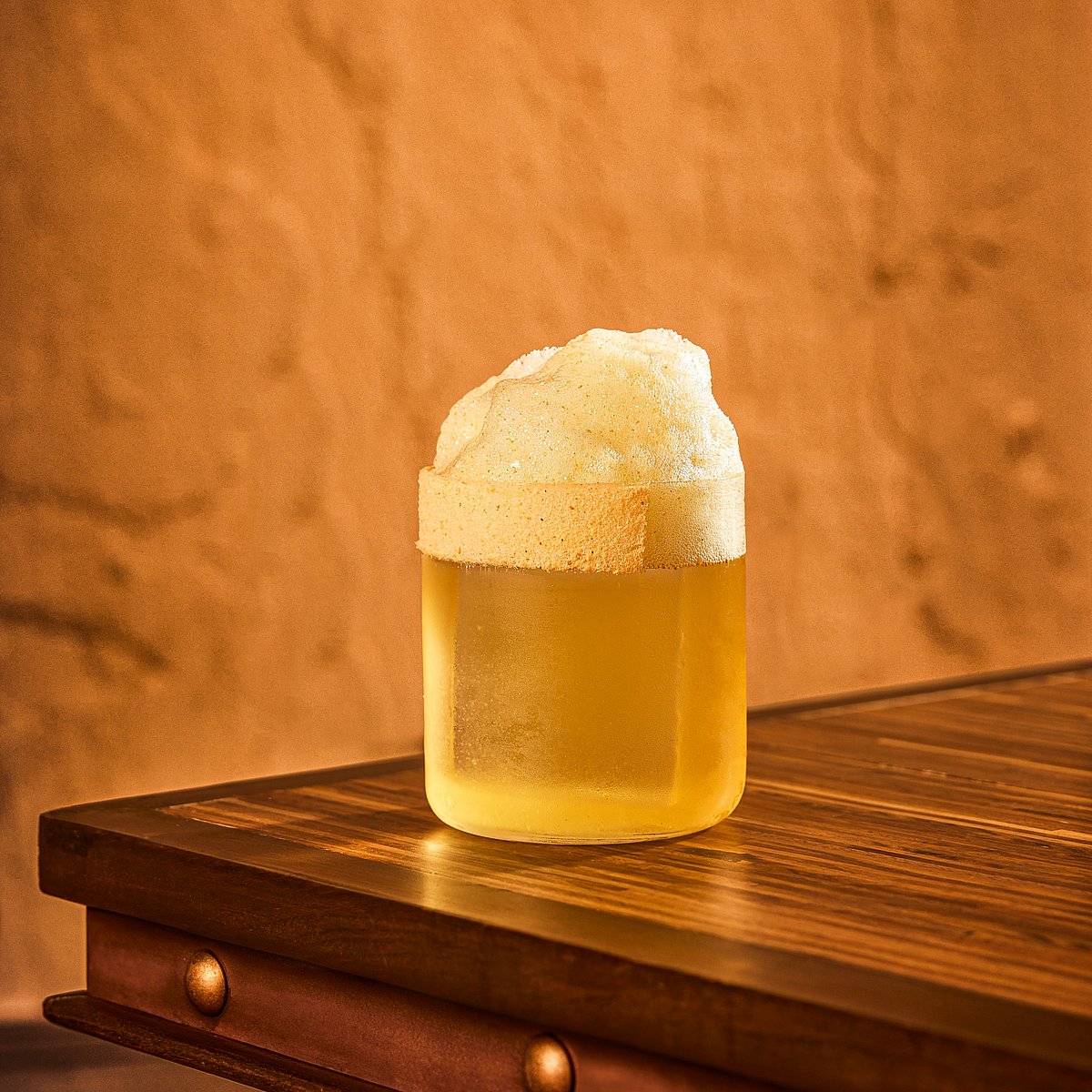
Loya Mary (Expression) |
Kadamb Munj, the next starter or Pehla Swad as the call it, is more adventurous. The kohlrabi leaves and tentacles are cooked with mild spices to deliver a soft galouti consistency kebab. Taste and texture of radish. Served with walnut yoghurt and the tentacles of the same plant come together for a medley of textures. This pairs best with the Patria’s Martini. Gin infused with stone flower mixed with clay-aged vermouth, clarified and served with spoonful of capers in a metal glass, is refreshing. The earthiness of clay is surprising welcome.
Kacchi Haldi aur Chuare ka Paneer is dish vegetarians, especially those fond of paneer, shouldn’t miss. Paneer marinated in fresh turmeric grilled to maintain the softness. Served with sweet, dried dates, it is another exercise in contrast. This too pairs well with Patria’sMartini and Kafuli – ghee washed rum with brine and spinach cordial finished with drops of spinach and green chilli oil. Smooth with a mild zest of chilli.
Kafuli can be paired with Chamba Gosht too. Mutton from the leg of a goat is marinated in Chamba chuk, the green chilli pickle from Himachal Pradesh, and served both on the bone and boneless. The chilli does not bulldoze its way through the meat; instead, it leaves behind just enough heat to complement the mutton.
Loya Cha, a mezcal-based amaro mixed with spicy wine and served with a cookie topped with chai-masala foam is the next cocktail. The spices hit immediately, then return at the back of the throat, leaving behind a pleasant smokiness. Once the foam settles, the wine and chai spices deliver another little jolt. It is certainly not your everyday cocktail, but something to savoured slowly, patiently and with flair.
In the mains, for vegetarians, Haak Sabzi is must. The leafy green, from the collard family, comes in a thin, almost soup-like gravy with garlic pearls and red chilli. With Tikkad ki Missi Roti, it could easily constitute a light, satisfying meal by itself.
In the mains they have Kokur Yakhni and Kangra Khodiya Gosht. The later pairs well with the tikkad roti or a laccha paratha. Succulent meat cooked Pahadi style in walnut ink is delight for meat lovers. The yakhni gravy is mildly spiced and yogurt based. Subtly flavoured, it is a treat to the palate. However, the chicken in it is kind of aloof to the gravy.
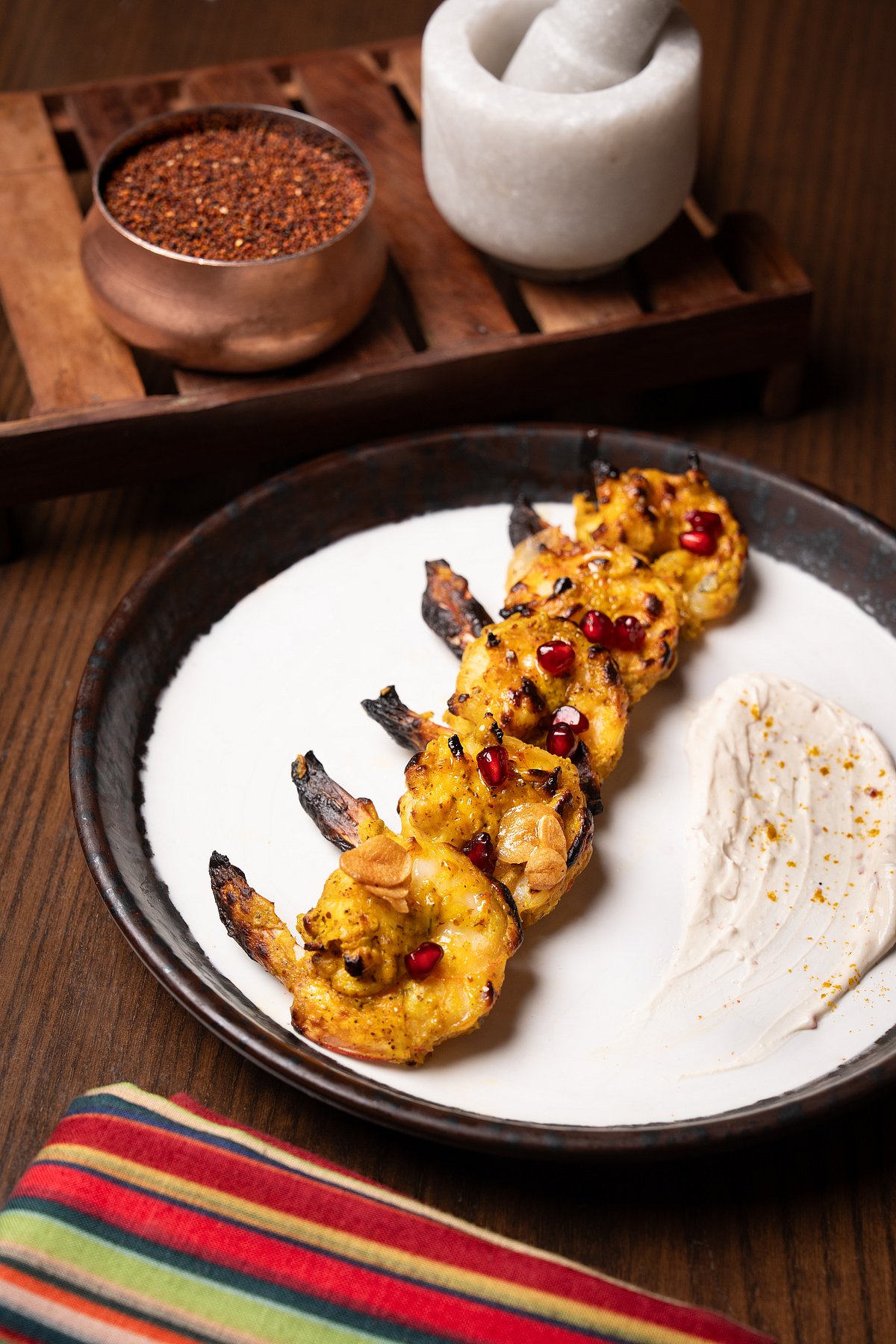
Ori Jheenga |
Amritsari Machli with dark rum flambé is the next on table. There is theatre at the table. The fish itself is delicate, and the onion pickle provides the necessary sharpness. While the flambé is fun; the delectably flavoured fish is what ultimately matters.
Daruni Jhinga is a prawns curry with difference. Wild pomegranate seeds gravy brings a distinctive tang, while khada masala adds texture and bursts of spice.
Tudkiya Bhaat is another meal in itself dish. A typical, dham-style rice tossed up with spices, slow cooked with drizzle of ghee is satiating to another level.
What is particularly striking about the menu is its lightness. Fennel, mint, besan and yoghurt do the heavy lifting when it comes to flavour.
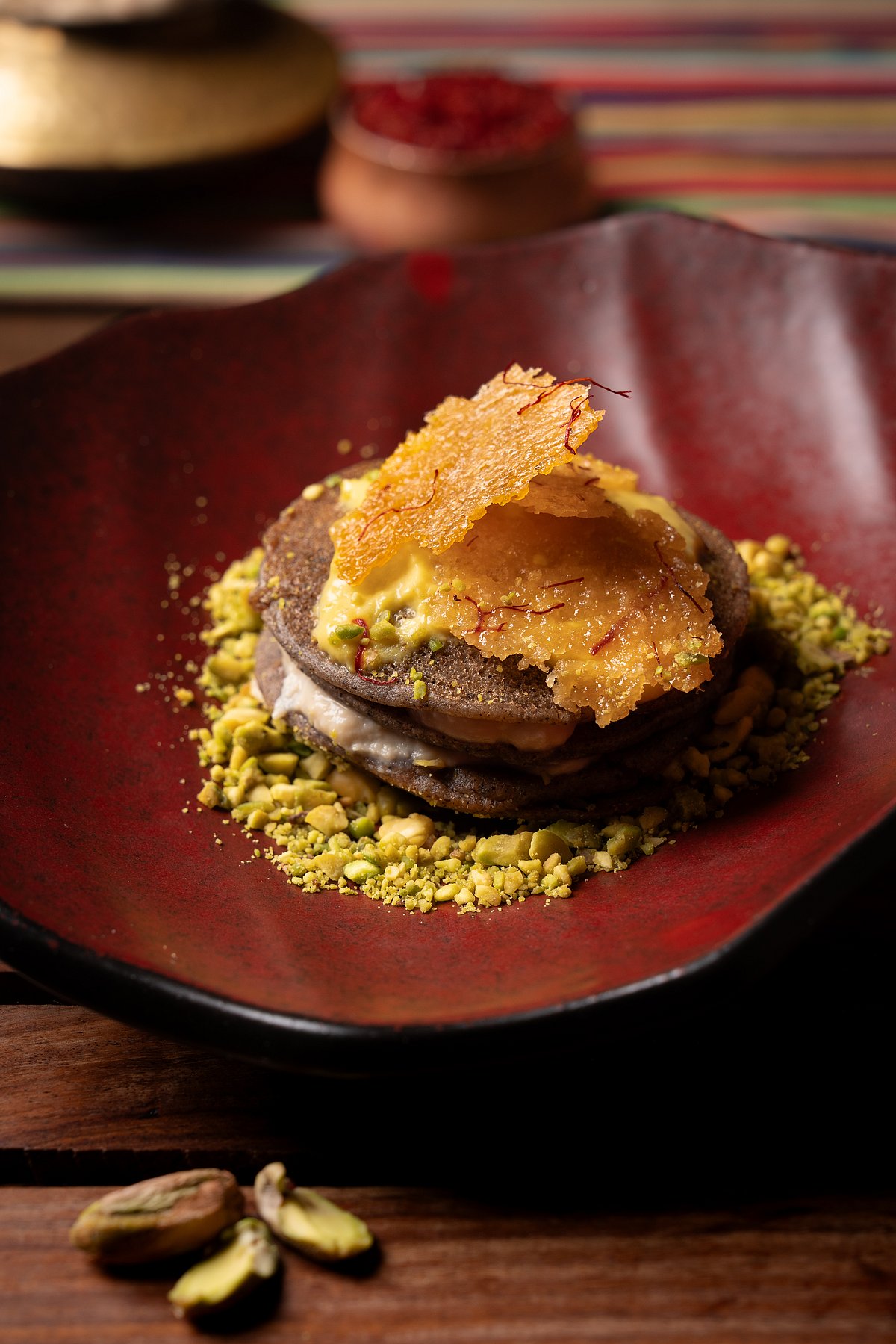
Akotri |
This is perhaps Loya's biggest achievement. The food is layered but doesn't sit heavily. There is plenty happening on the plate, but the flavours generally know when to step back and when to play the field.
The new menu is clearly the product of serious research. Occasionally, that research can feel intellectual—but here it translates into food that makes you curious about where an ingredient came from, how it was traditionally used and why it deserves a place on the modern table.

