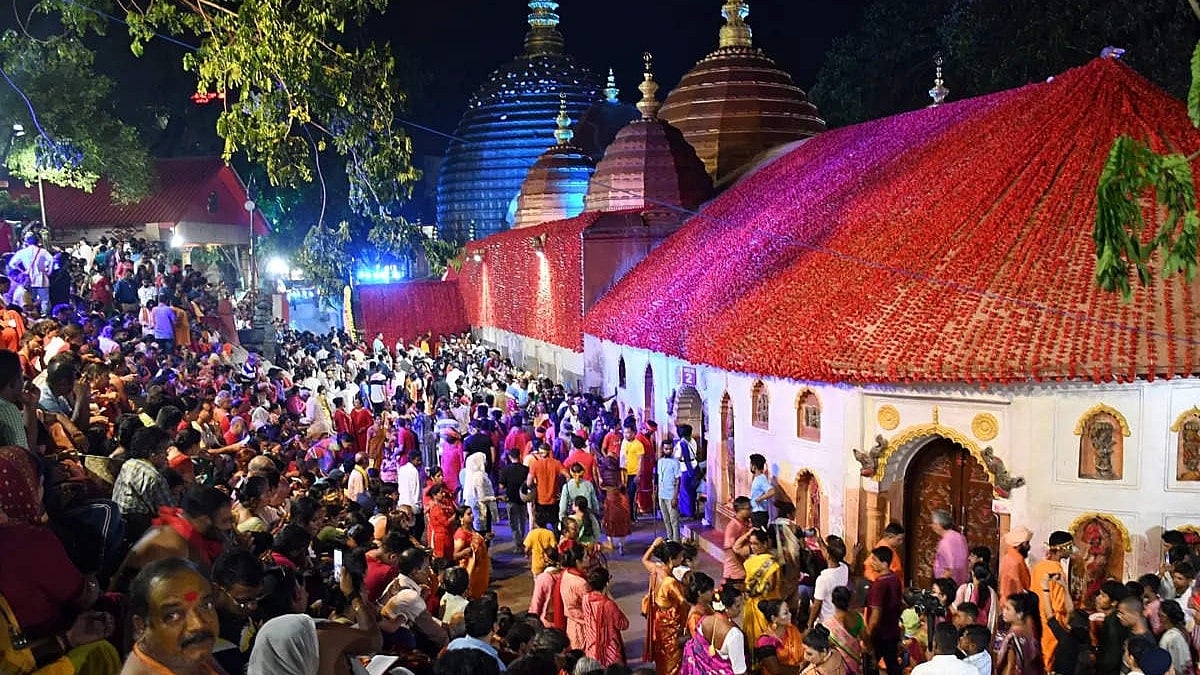
The Ambubachi Mela is an annual Hindu festival held at the Kamakhya Temple in Guwahati, Assam, during the monsoon season. The sacred festival, often called the Mahakumbh of the East, celebrates the annual menstruation cycle of Goddess Kamakhya.
The annual fair attracts lakhs of devotees, saints, and tourists from across the country and abroad. Celebrated with deep religious fervour, the festival marks the annual menstruation cycle of Goddess Kamakhya, symbolising fertility and the power of womanhood in Hindu tradition. One of India’s most significant spiritual festivals will be observed in the month of June.
About the Ambubachi Mela
The four-day festival is usually held in June during the monsoon season. During this period, the temple remains closed for three days, as it is believed that the goddess undergoes her annual cycle. No worship or religious activities are performed inside the shrine during this time. On the fourth day, the temple doors reopen after special purification rituals, allowing devotees to seek blessings. According to members of the temple’s Doloi community, the four-day festival will begin on the night of June 22, corresponding to the seventh day of the Assamese month of Ahar, and will conclude at sunrise on June 26.
Ahar is the third month of the Assamese calendar (Bhaskarabda), which corresponds to the months of June and July in the English calendar. It is very important for agriculture in Assam, and this month is known as the beginning of the monsoon season.
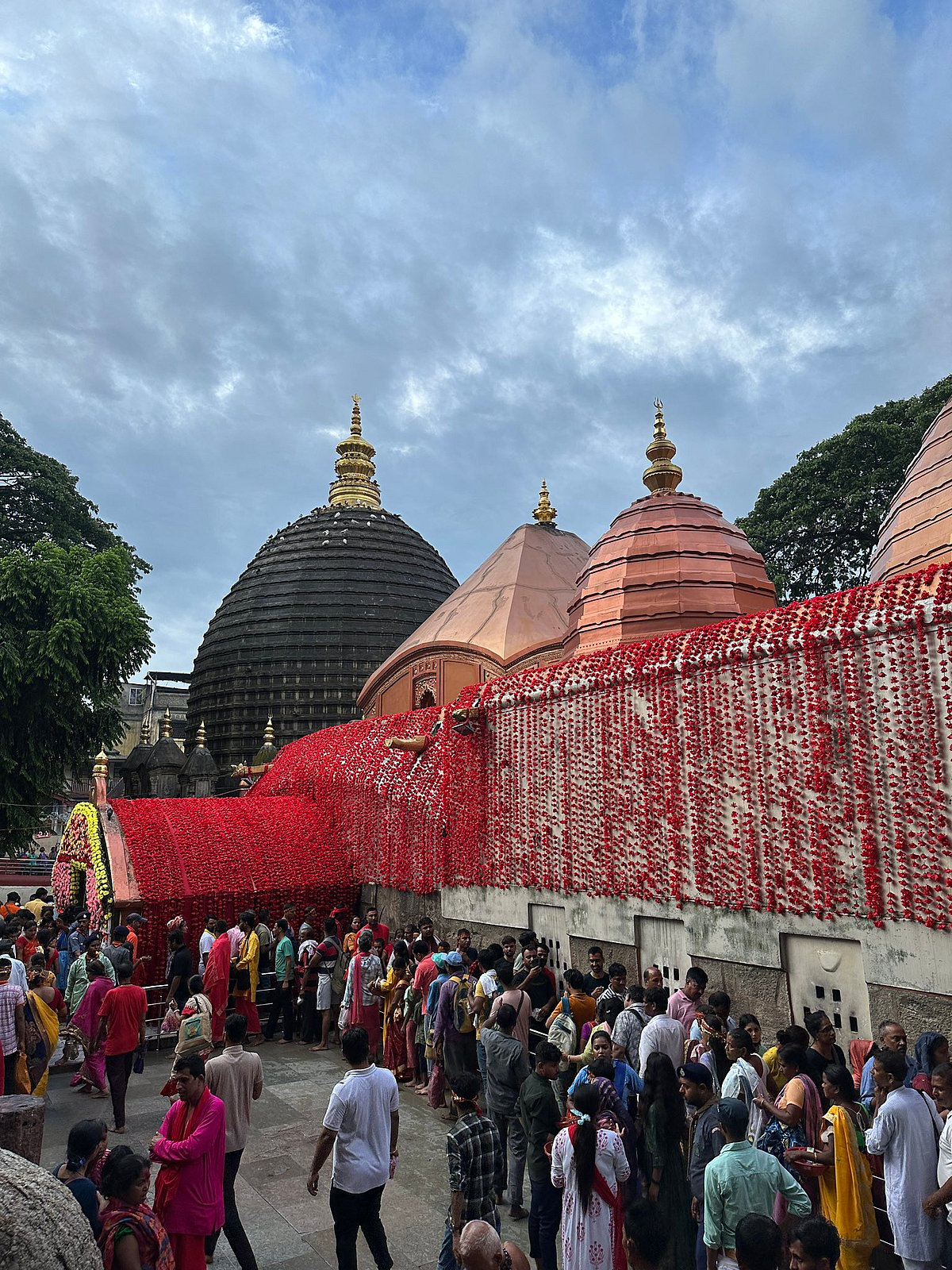
Ambubachi Mela | X/ @iamkamyabuch
Significance of Ambubachi Mela
Ambubachi Mela holds immense importance among Tantric devotees and ascetics. Several sadhus and saints from different parts of India gather at the temple during the festival. The fair also showcases Assam’s rich spiritual and cultural heritage, drawing huge crowds every year.
The Kamakhya Temple, located atop the Nilachal Hills in Guwahati, is one of the 51 Shakti Peethas in India and is considered highly sacred among Hindu pilgrims. During Ambubachi Mela, devotees receive a piece of red cloth called ‘Angabastra’, believed to symbolise the goddess’s blessing.
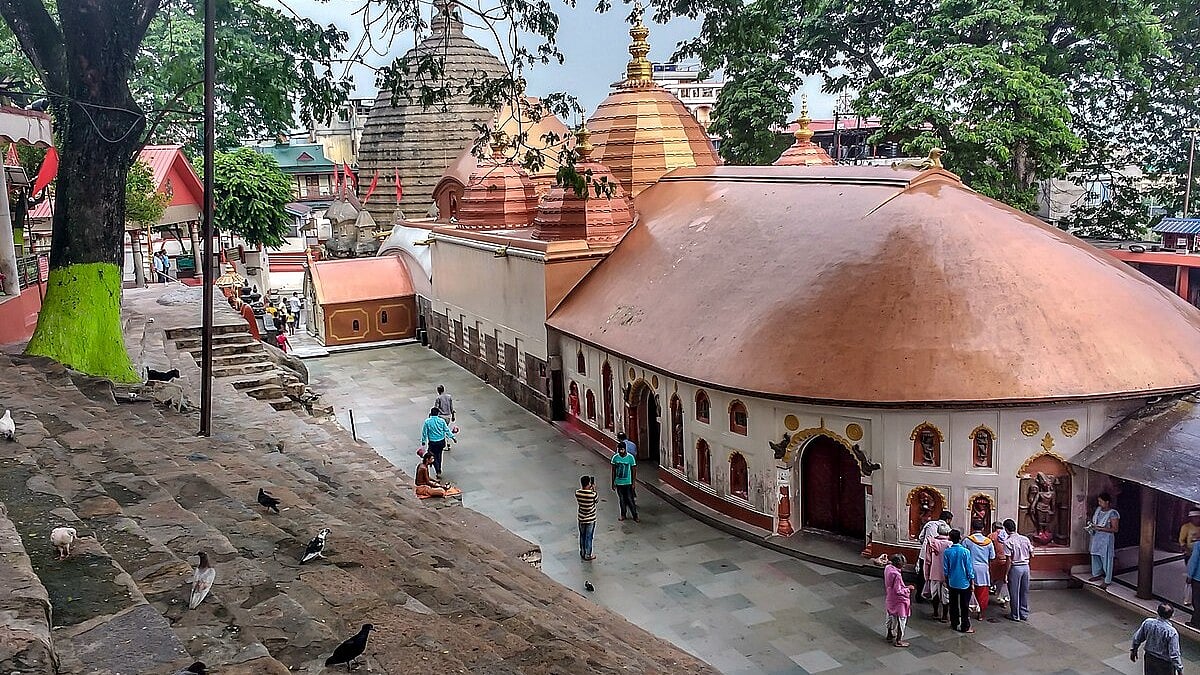
The temple remains closed for three days
The Kamakhya Temple remains closed for three days during the mela, as it is believed that Goddess Kamakhya rests for three days, similar to the traditional women's menstrual seclusion. During these three days, some restrictions are observed by devotees, such as not cooking, not performing puja or reading holy books, and no farming. After three days, the Goddess is bathed and other rituals are performed to ensure that Goddess Kamakhya is restored to her original form.

