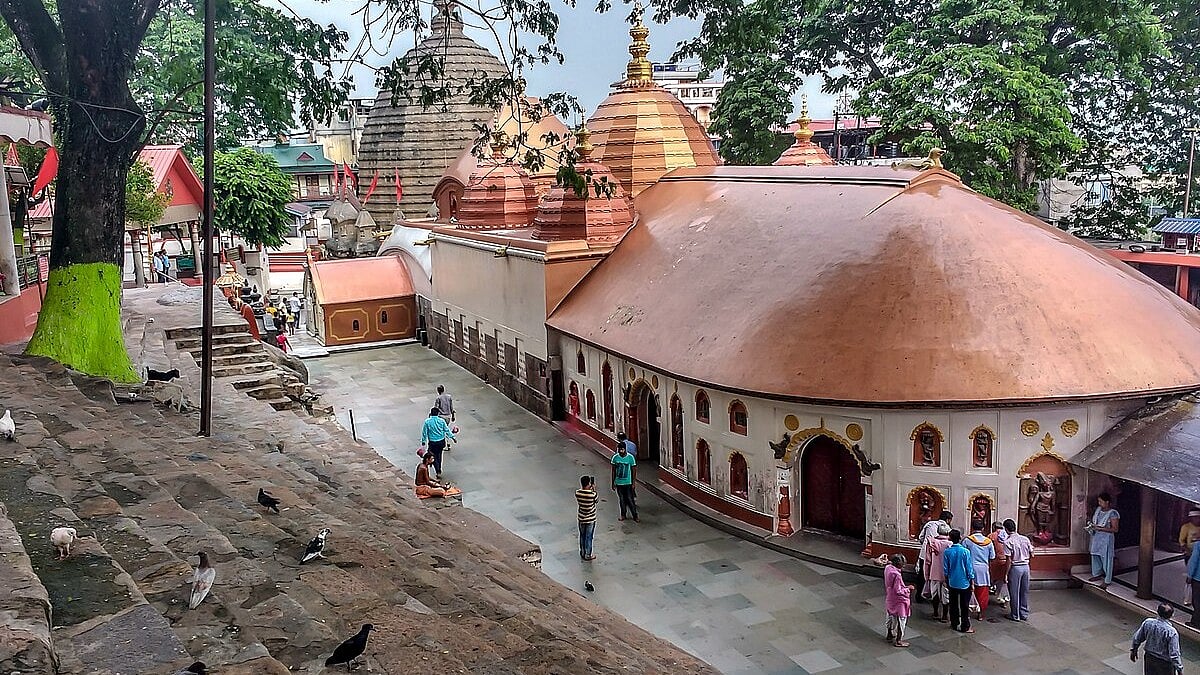
As leaders gather in Guwahati for the swearing-in of Himanta Biswa Sarma on Tuesday, many political stalwarts have used the occasion to seek a divine connection, visiting the Kamakhya Temple in search of spiritual peace and political guidance. Perched atop the Nilachal Hills in Guwahati, the Kamakhya Temple overlooks the vast, shimmering expanse of the Brahmaputra river, creating a landscape where spirituality meets the raw power of nature.
Over the year, the Kamakhya Temple has evolved into a unique political theatre where ancient mysticism, regional identity and modern electoral strategy converge. As the temple continues to attract millions of pilgrims from across India, its influence on the national scenario remains a bridge between the spiritual heritage of the Northeast and the broader Indian political discourse as leaders starting from Prime Minister Narendra Modi, Home Minister Amit Shah among many others have sought blessings from Goddess Kamakhya.
Ritual of political pilgrimage
The temple has often been a primary stop on the itinerary of India’s most powerful leaders, often timed with major elections or other political events. These visits serve as a powerful visual signal to the electorate, blending personal devotion with public messaging. By seeking blessings at the Shakti Peetha, leaders position themselves as custodians of Sanatan traditions while paying respect to the specific cultural sensibilities of the Assamese people. This trend has transformed the shrine into a venue for victory prayers, where the act of offering a pujas is perceived as a necessary spiritual precursor to exercising or attaining power.
Collective presence of leadership
The roster of visitors reads like a directory of the country's most influential decision-makers, emphasising how the temple has become a cross-party centre for spiritual validation.
Whether it is Modi or Shah many leaders across partylines have visited the Kamakhya Temple. From senior BJP leaders like JP Nadda, Uttar Pradesh Chief Minister Yogi Adityanath, his Maharashtra counterpart Devendra Fadnavis to the state's Deputy Chief Ministers Eknath Shinde and Sunetra Pawar all have visited the temple. These high-profile visits are of course opportunities for soft public messaging as the visits frame the leaders as protectors of civilisational heritage.
The temple also holds a unique place for leaders from outside the Northeast, particularly those from Maharashtra.
In June 2022, Shinde famously visited the temple with 39 rebel MLAs during the political crisis that eventually led to him becoming chief minister. This created a lasting narrative of the temple as a place for securing political breakthroughs. Since then, Shinde has returned multiple times.
On the opposition side, the shrine remains equally vital for establishing local rapport.
Rahul Gandhi and Priyanka Gandhi Vadra have both performed special pujas here to launch major campaign yatras, signalling the Congress party's respect for the region's spiritual authority. Deputy Leader of the Congress in Lok Sabha Gaurav Gogoi, who is also from Assam, has also utilised the temple to pray for peace and social harmony before significant political journeys, such as his 2026 campaign launch earlier this year.
This widespread engagement suggests that regardless of ideology, the temple remains a non-negotiable landmark for anyone seeking divine intervention for ventures ahead. Even beyond the purely political sphere, figures like Team India coach Gautam Gambhir and business leaders Mukesh and Nita Ambani have visited the shrine, reinforcing its status as a universal symbol of power and success in the Indian consciousness.
Spiritual mandate of the modern state
The enduring political gravity of Kamakhya lies in its role as a spiritual mandate for the modern state. By aligning themselves with the raw, primordial energy of the Goddess, politicians seek to transcend mundane policy debates, tapping instead into a deeper collective consciousness that views political authority as a form of divine stewardship.
This connection ensures that the temple is not merely a backdrop for a photo opportunity, but a site where the 'Shakti' of the deity is believed to translate into the 'Satta' (power) of the leader. In this environment, the protection of the temple’s traditions becomes a metaphor for the protection of the people themselves, effectively making spiritual devotion a prerequisite for political legitimacy and a primary vehicle for cultural mobilisation in the 21st century.

