On February 27, half a century ago, a classic two-generation romance, Kabhi Kabhie, hit the screen, cementing Yash Chopra’s reputation after Daag as the future high-priest of romance. The film also proved inspiration for many films to come, and Karan Johar even christened his 2001 two-generation family drama as Kabhi Khushi Kabhie Gham…, spelt with the second Kabhie as a tribute to the film.
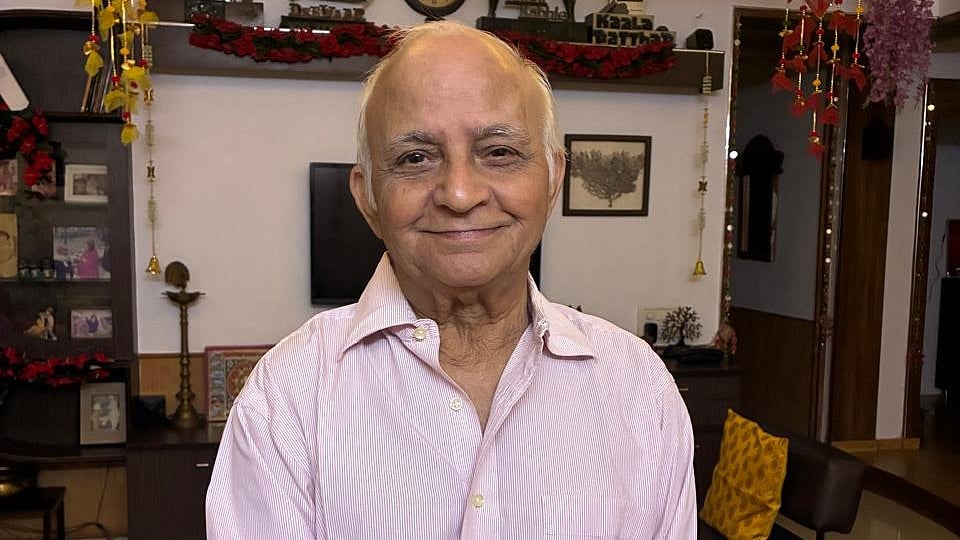
Ramesh Talwar, later the director of films like Doosara Aadmi and Baseraa, was chief assistant on the movie that featured three love triangles in a game engineered by Destiny: Amitabh Bachchan-Raakhee-Shashi Kapoor, Waheeda Rehman-Amitabh Bachchan-Raakhee, and Neetu Singh- Rishi Kapoor-Naseem. Such films happen only Kabhi Kabhie (sometimes), and Talwar goes down memory lane to recall the classic and his association with it.
Exerpts from an interview
How did Kabhi Kabhie happen?
I had taken Yash-ji and his wife Pamela bhabhi and Shashi Kapoor to watch the play, Tanhai, written by my uncle, Sagar Sarhadi, whose real name was Ganga Sagar Talwar. Yash-ji loved the writing and wished to meet him. He had this idea of making a film on a poet, for he absolutely loved poetry and could recite entire poems. Pamela-ji gave the core idea of the film and my uncle worked on it. He just had one condition: that he would like to work on the script wherever he wanted!
Part of the film was thus written in Bangalore. Then Yash-ji took off to London for a holiday and asked my uncle to accompany him to create a relaxed atmosphere for his writing. My uncle would wake up there at 5 a.m., write till 10 a.m. or so and the two would spend the rest of the day strolling around and generally having a great time!
How did Khayyam-saab come in when he was not a top name like Laxmikant-Pyarelal like Daag or R.D. Burman in Joshila and Deewaar among Yash Chopra films?
Sahir-saab suggested that Khayyam-saab do the music as it was the story of a poet. Laxmikant-Pyarelal had been signed for the film on its announcement, when the script was not yet finalized, but graciously agreed later to Khayyam doing this project.
Sagar-saab’s work was quite poetic, and he went on to have a long association with YRF.
My uncle was schooled in Urdu as well and also loved to write poetic lines in prose. Like Amitabh Bachchan’s lines when he meets Raakhee for the first time. She comes to take his autograph after the song, Main pal do pal ka shaayar hoon, and he asks her, “Aapne kabhi apni aankhen dekhi hain (Have you ever noticed something about your eyes)?” And when she asks, “Kyoon (Why do you say that)?” he replies, “Jahaan bhi dekhti hain wahaan rishta kaayam karti hain (Whoever they look at, they form a bond)!”
Speaking of Bachchan, we find his parents in the film as well.
Yes, after the muhurat on September 27, 1974, Yash-ji got the dates of all the cast for the entire month of October. He booked the entire Hotel Oberoi Palace, as it was known then, in Srinagar. In different wings, the entire unit was housed systematically: the workers and technicians, the actors and the central production department.
His credo was “Bring your families, it will be like a family picnic!” There were no classic work shifts. Work would start after breakfast around 9 or 10 a.m. and we would stop whenever unit members got tired!
Amit-ji’s parents Dr. Harivanshrai-ji and Teji-ji were there and Yash-ji told them that he needed their blessings by doing a scene! So they are seen performing Raakhee’s kanyadaan in her wedding sequence with Shashi Kapoor. I do not recollect exactly, but even Neetu-ji’s mother, Rajee-ji is there in the film. She later also did a tiny role in my Doosara Aadmi.
Who else among families was there?
The parents of the child artistes were also there. Yash-ji always cared for his actors and unit members. He knew how to take care of stars. He went to Kashmir for Kabhi Kabhie in all the other seasons: winter, patjhar and more, and whichever stars he needed cooperated every time. After the film was complete, he still wanted some specific shots he had in mind, and took off there for four days from January 1 in 1976.
What about Jennifer Kapoor?
She designed Shashi-ji’s costumes, but from Mumbai.
Shashi Kapoor had the dominant role even if Bachchan was the poet!
Yes! Shashi had told us that though he was older, he had played Amit-ji’s younger brother in Deewaar. He wanted the main role here, but Yash-ji had only Amit-ji in mind. My uncle then told Shashi-ji that he would write such a fabulous role for him that he would never think of turning down the film. And that’s what happened!
There was an interesting sidelight about Shashi-ji. The entire cast was present for the film’s last shot at Mumbai’s Oberoi hotel. It was a Sunday, and when I went to pick him up, he reminded me that he never worked on that day, indoors or outdoors, though I told him that we only needed a couple of close-ups. He said that he would do those the next day!
So he was missing from the last frame.
Yes, no one realized that because at the correct points, we interposed his close-ups as the groom Rishi Kapoor’s father! (Laughs)
Speaking of Rishi, Kabhi Kabhie was his first multi-hero film.
And he was reluctant to come on board as there were so many big stars and Bobby had just done a Golden Jubilee and he had had no release since! I personally assured him that he would be proud of the film. We shot eight scenes with him in four days and I told him I would show him the trial—something that Yash-ji normally never did. And that’s when he became more friendly with me, declaring that he had got a good role even amidst the senior heroes and that his character was for the youth and had songs and drama as well. Rishi later did four of my six films—Doosara Aadmi, Duniya, Zamana and Sahibaan!
What about Naseem, Mumtaz’s cousin, who was never seen again?
She had made it clear to us that she was never interested in a film career and was planning to get married and move abroad. But she accepted Kabhi Kabhie. But at this point, I must say that it was very gracious of Waheeda (Rehman)-ji to accept her role as Naseem’s mother. Comparatively, it was a weaker and difficult role, as Raakhee was shown as her husband Amit-ji’s first love!
Was the film a hit from day one?
The initial reaction was a shade dull. The film was called ‘bookish’ (that was the term used for it!) and not ‘cinematic’. The basic idea was said to be faulty! But Yash-ji was confident. His assistants, including me, would visit theatres in the next few days and report to him. And each day was better than the previous one. The film finally ran for 50 weeks and won many awards. Even in Punjab, where action films rule, it did terrific business.
And after Zanjeer and Deewaar in particular, it worked despite Amitabh Bachchan not doing action.
Yes! Actually, the reaction on opening day could be said to reflect audience dissatisfaction: they expected a Deewaar-like personality from the Yash Chopra-Amitabh Bachchan combination. And here he was—a poet, a lover with a moustache, and then a father, but without any action. Yash-ji was sure that the story would have no villain!
One last point: Mukesh came in for the first time in a Yash Chopra soundtrack.
Did you know that Mukesh-ji considered Yash-ji like his elder brother? They had a great friendship even if he had never sung for his films. And Lata (Mangeshkar)-ji also felt that Mukesh was the perfect voice for a poet.

