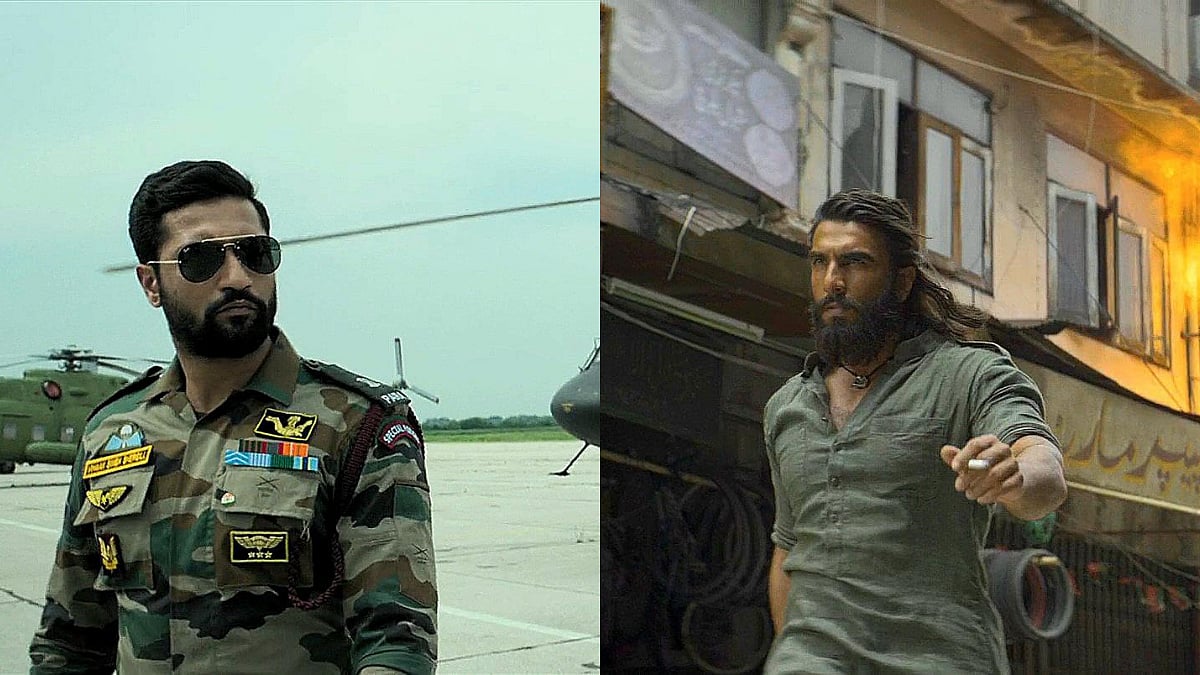
Along with the biopics, we now have a substantial assembly of movies that are based on real happenings and events, not necessarily only the patriotic kind. Some overlap with the biopic genre, as they primarily focus on one lead character, like the Kesari franchise, Maidaan, Haq, Ikkis or Gold.
But most such films, like the recent Dhurandhar and the forthcoming Hum Hindustani (on the first-ever Indian general elections held in 1951), are more about specific happenings, whether within a short while or over a long period (as in the former movie). Films like Border, Superboys of Malegaon, The Kerala Story, Talvar, No One Killed Jessica, Mission Mangal, 83, URI—The Surgical Strike, The Ghazi Attack, Jolly LLb, Special 26 and Maharaj present real-life sagas across genres.
Creation, Research and Dramatization
How do filmmakers conduct the research needed for such projects, that may cover patriotic (war, espionage or unsung heroes), political, sports or social events? Says Vivek Agnihotri, who has directed reality-based sagas like Buddha in a Traffic Jam, The Tashkent Files, The Kashmir Files, The Vaccine War and The Bengal Files, “We have a very good research team and we spend two or three years on it, doing primary, secondary and tertiary levels of research.”
He explains, “Primary is when we meet the people who are or were directly involved. Secondary means authentic documentation, including government documentation and literature available, while tertiary refers to those who were indirectly involved, or newspaper items and all that.”
How then is the script written from all the collected material, keeping a healthy balance between characters and the story? “I try to keep my films as authentic as possible, and nobody in the world can say that the key points are wrong or not real. In fact, in these five films I have made, I challenge anybody to say that what I have shown is not correct or factual!”
But what about the necessary dramatization? “We have to do it as we are not making a documentary. But that should also be done around facts and reality.”
But in the primary research, has it been ever found that someone is not telling the truth, or is exaggerating? “Everything we show has to be collaborated with the literature, history and documentation!” he assures.
Says Rahul Dholakia, who is directing Hum Hindustani, “Research is something that gives authenticity—the knowledge, detailing, the insights come from it as well as the satisfaction of filmmaking. Meeting as many people related to the event you are showcasing is important. For my Lamhaa based on Kashmir, I met militants, the victims, the social workers, the army, the CRPS officers, the activists and journalists. I actually saw how firefighters work for even my fictional Agni. You get a perspective, read books and visit the locations. What you get may be truth or fiction, some aspects you may dramatize or just take one incident.”
Apoorva Lakhia is now helming Battle of Galwan, another real story, and was unavailable at the time of going to press. But I recalled Lakhia, then directing the incident-based movie, Shootout at Lokhandwala (2007), telling me, “When I did more research to widen the canvas of the film and prevent it from being just a docu-drama, I even found connections with the 1980 Khalistan movement and the 1993 Mumbai bomb blasts. I found various rumors that came up and even within the building where it all happened, we heard different versions from different people.”
When such things happen, Agnihotri says, “I find it important to show both sides. In The Kashmir Files, for example, there is a difference in what a professor in JNU told us and what an officer in the government said, so my job was to show both, as both were right in their own ways, and let the audience decide.”
The actors’ point of view
Pratik Gandhi, who essayed Harshad Mehta in the web series, Scam 1992 as well as Jyotiba Phule in Phule, says, “I agree that biopics about a specific person’s life overlap as a genre with a film like Hum Hindustani, as all show key events and are largely similar, though the latter is event-specific. But my approach is that I keep reminding myself not to judge my characters! Events can be seen from multiple angles and we can derive multiple outcomes and conclusions.”
He adds, “With Hum Hindustani, there were so many odds and challenges that free India was facing in 1951 as there were mixed emotions. We had to focus on transporting the audience into that world. The research available only increased my responsibility in all these cases and made me more sensitive. But I feel that actors have only limited power, restricted to create the emotions needed!”

The commercial angle
Obviously, every such movie is not successful or even critically appreciated. The key, says veteran exhibitor and distributor Raj Bansal, is the connect any film makes with the audience. “Earlier, films were primarily about entertainment, but now our hit ratio is lower than 10 percent. Even reality-based films—and more are being made now than ever before—should somehow be more about entertainment and value for money, which Dhurandhar is! A near four-hour movie was so engrossing that one felt it ended too soon!”
Trade analyst Taran Adarsh, however, feels that realistic films across genres need to come out. “But they must be made with the right balancing act between reality and necessary dramatization. We should not add masala so much that we deviate from core events with unwanted sequences,” he says.
Adarsh adds, “Success depends thus on the proper flow, and the right assessment of the story chosen for filming. A lot of such ideas sound interesting on paper, but cannot be translated on screen. Overall, therefore, it is the final product that works or fails. But this genre is important in an era when people are deviating to better cinema and reality-based stories.”
Here, Bansal adds a key point about the selection of subjects, scale and face-value (the cast et al). “Ideally, many such films can be released on OTT, like an Ikkis. If not, the tickets for such movies should be kept at a moderate price. At the end of the day, the audience should feel happy about spending their money and cannot spend big money on every film.”
So, real or reel, the bottom-line will remain audience approval.

