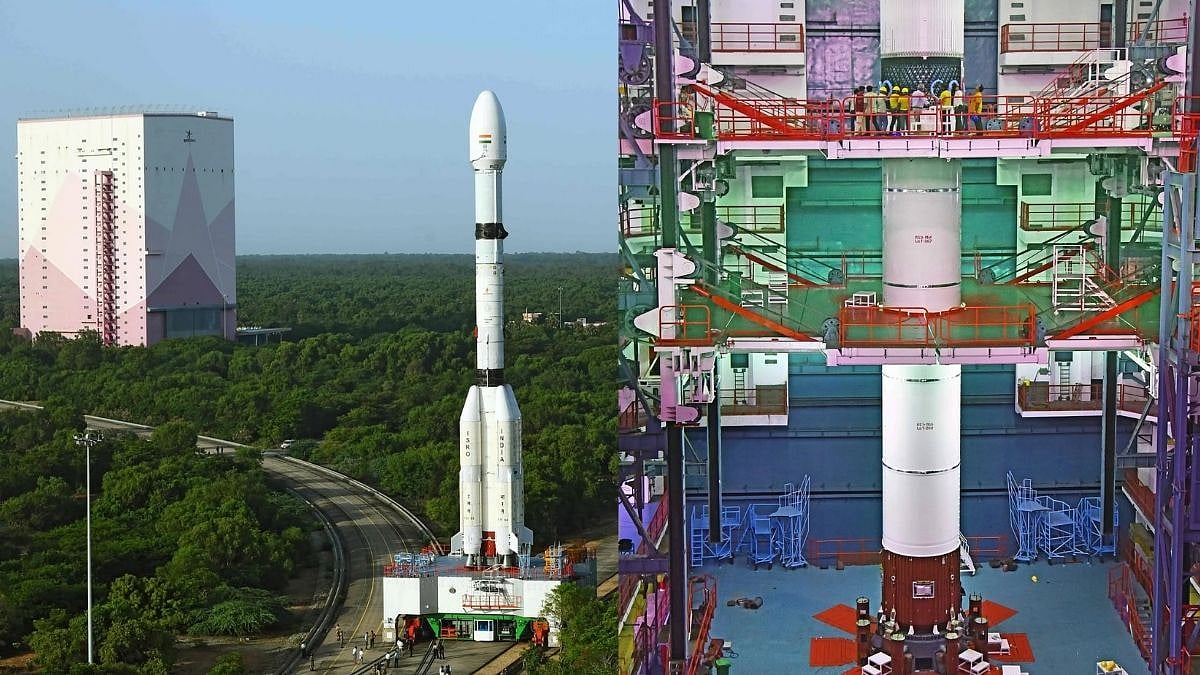
Indian Space Research Organisation (ISRO) is set to launch EOS-05, also known as GISAT-1A, aboard the GSLV-F17 rocket on September 4, 2026. The launch is planned from the Second Launch Pad at Satish Dhawan Space Centre in Sriharikota. EOS-05 is a state-of-the-art Earth observation spacecraft and it is India’s first ever imaging satellite from Geosynchronous orbit. The satellite will be launched from GSLV-F17 launch vehicle, which is the configuration of GSLV-F17. Payload Fairing is 4 m dia Ogive (composite) version. Keep on reading to know about this space mission and its role.
ISRO to launch GISAT-1A on Sep 4
ISRO is set to launch the GSLV-F17/EOS-05 mission on Friday, September 4, 2026, marking another important step in India’s growing space capabilities. The mission will lift off from the Second Launch Pad, Satish Dhawan Space Centre in Sriharikota, Andhra Pradesh, aboard the Geosynchronous Satellite Launch Vehicle (GSLV).
The GSLV-F17 will carry EOS-05. It is an Earth observation satellite designed to strengthen India’s ability to monitor the planet from space. The satellite is designed to observe the Indian subcontinent from a geosynchronous orbit. It is an Earth-centred orbit where a satellite takes 24 hours to complete one full revolution around the Earth, matching the blue planet's rotational speed.
Earth observation satellites play a crucial role in applications such as agriculture, disaster management, environmental monitoring, urban planning and the management of natural resources.
What is EOS-05?
EOS-05, also known as GISAT-1A or GISAT-2, is an advanced Earth observation satellite which is a part of India’s expanding Earth observation satellite programme. Such satellites collect valuable information about the Earth’s surface and atmosphere using advanced imaging and sensing instruments. The data can support government agencies and researchers in tracking changes on the ground and responding to natural and environmental challenges. It will be India's first imaging satellite in a geosynchronous orbit, and will serve as a replacement for the lost GISAT-1 mission.
The satellite’s observations are expected to have applications across several sectors, including agriculture, forestry, water resources and disaster monitoring. Satellite-based imagery can also help authorities assess the impact of floods, cyclones, landslides and other natural disasters.
Why is the GSLV-F17 mission important?
The GSLV is one of ISRO’s most powerful launch vehicles and is designed to place heavier satellites into geosynchronous and geostationary orbits. On Friday, the GSLV-F17 will carry the 2,367-kilogram EOS-05 spacecraft into space. The launch will take place at 2:55 AM IST at Satish Dhawan in Sriharikota.
The rocket uses a combination of solid, liquid and cryogenic propulsion stages. The upcoming launch is significant not only because of the satellite it carries but also because it demonstrates India’s continued focus on developing indigenous launch and Earth observation capabilities.
GISATs will image in multi-spectral and hyper-spectral bands to provide near real-time pictures of large areas of the country, under cloud-free conditions.
What was GISAT-1 mission?
It is not the first time India is sending a Geo Imaging Satellite. Before that, ISRO has sent the EOS-3, also known as GISAT-1. The project was designed to place India's first Earth-imaging satellite into geostationary orbit and it was sent on August 21, 2021. The original launch failed to reach orbit as the cryogenic upper stage of GSLV could not ignite. EOS-3 was supposed to fulfil civilian applications.
When and where to watch the launch Live?
Launch enthusiasts and visitors can witness the mission from the Launch View Gallery at SDSC SHAR by registering online on the official website. The livestream can be watched on Friday on ISRO's YouTube channel.

