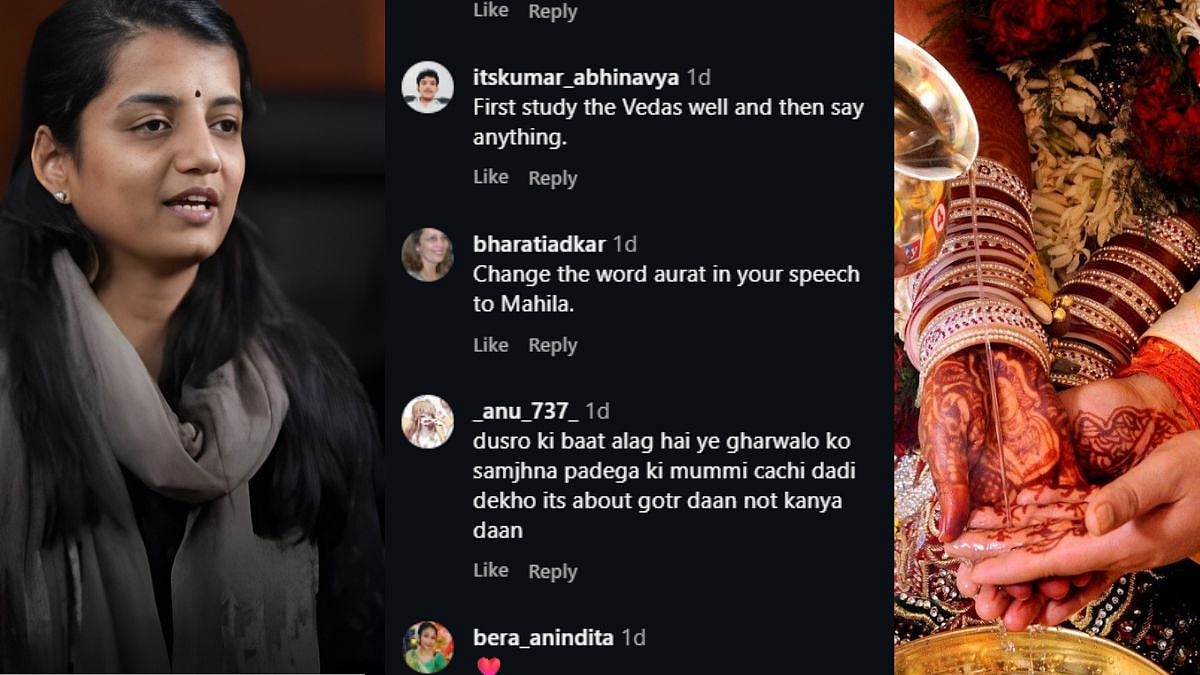
Kanyadaan, a ritual in Hinduism that takes place when the bride's parents hand over their daughter to her husband and exchange vows related to the act of giving. It is believed to be a sacred ritual in Hindu wedding ceremonies that is said to be a symbol of love, sacrifice, and trust. However, the ritual is often questioned, and people often interpret it as meaning that parents have permanently given away their daughter to another family, and after that, the bride or parents have no rights over the bride.
The ritual came into the limelight after a 2021 Manyavar Mohey advertisement where Alia Bhatt sparked controversy by questioning the Kanyadaan ritual and proposed 'Kanyamaan' instead. However, a recent viral video of a social media influencer about the Kanyadaan ritual has sparked the debate again and left the internet divided. A social media influencer named Soumya Aggarwal said in a video that Kanyadaan in Hindu marriages is misunderstood.
'Kanyadaan is misunderstood': Viral video
A viral video by a social media influencer named Soumya Aggarwaal has sparked a fresh debate around the traditional Hindu wedding ritual of ‘Kanya Daan’, with many questioning its relevance in modern times. In the video, the influencer argues that the term itself, and says, "If you think the concept of "Kanyadaan" defines the Vedic view of marriage, you are misreading the source code. The word "Kanyadaan" does not exist in the Rigveda, Yajurveda, or Samaveda. These texts use the term "Paani-Grahan"—a ritual of mutual acceptance, not a transaction of property."
She further says, "The idea that a daughter is a commodity to be "donated" is a later social distortion, not a spiritual directive. In the original Vedic framework, the feminine was always a source of "Maan" (respect), never an object for "Daan." Stop defending a mistranslation and start reclaiming the actual precision of our scriptures."
Netizen reactions
According to her, Kanyadaan was never about donating a daughter like property; it symbolised entrusting a sacred responsibility. The viral video sparked the debate about the Kanyadaan ritual, while some support her arguments and others call it misleading information.
One of the Instagram users named adv.priti_tikhe wrote, "Putra daan ka vidhi shuru karo."
While another user wrote in the comment section, "Stop fooling women, naye naye labels laga kr, there are a ton of rules only imposed on women, stop this, own that you're a patriarch!!"
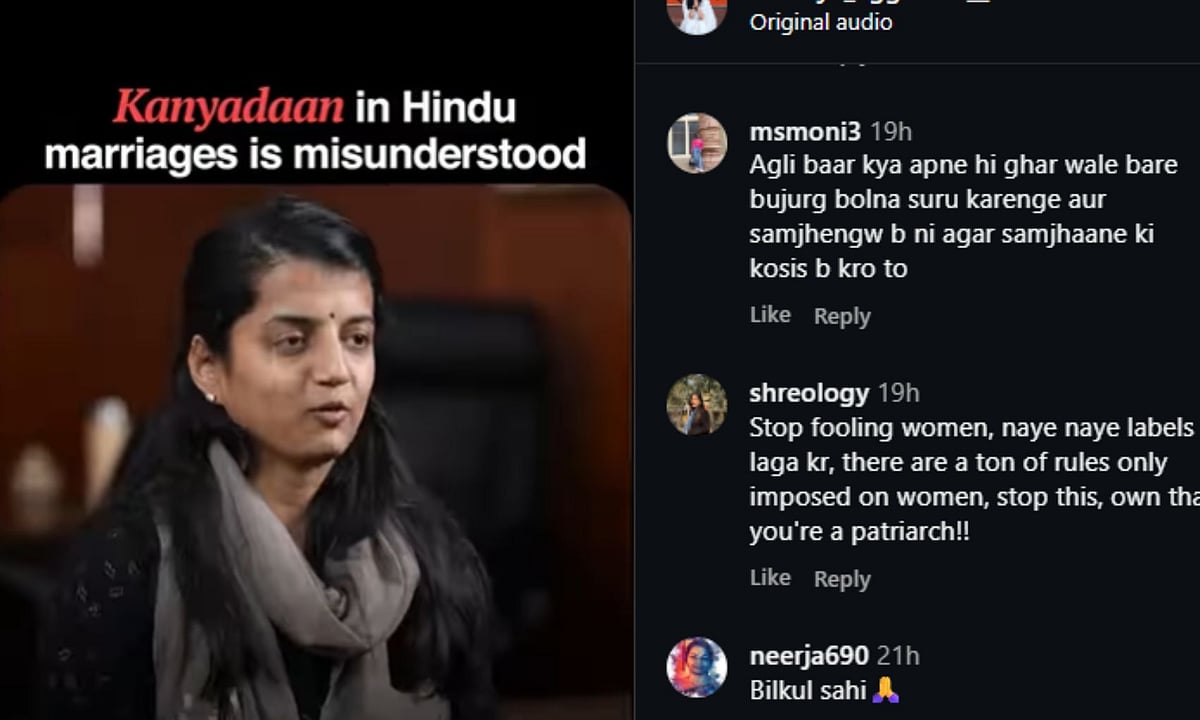
rathore_ankit_feb22 wrote, "Obviously mam Shiv ne maa Shakti ka Panigrahan hi kiya tha aur hum bhi Panigrahan hi karenge, nari vamangi hoti hai purush ka vam ang jiske bina purush poora nahi hai, waise hi jaise nari purush tatva ke bina."
Another commented, "Bro, Kanyadaan ka matlab kanya par se mata-pita ka jo apna haq hota hai bache par usse free karna hota hai… har kuch mat padha karo tum log camera samne dekh kar."
Kanyadaan: Tradition or misconception?
People consider Kanyadaan an essential part of marriage; however, according to experts, there is no mention of Kanyadaan in any of the four Vedas. Instead, it is mentioned in Manusmriti. Kanyadaan is not part of the core Vedic marriage ceremony, which centres around Paanigrahan (mutual acceptance). Kanyadaan is not even mentioned in the Hindu Marriage Act, 1955. On March 22, 2024, The Allahabad High Court has ruled that Saptapadi (taking seven steps around the sacred fire) is the only essential ceremony required for a valid marriage, and a Hindu marriage without Kanyadaan is still valid.
The interpretation of Subhadra's marriage
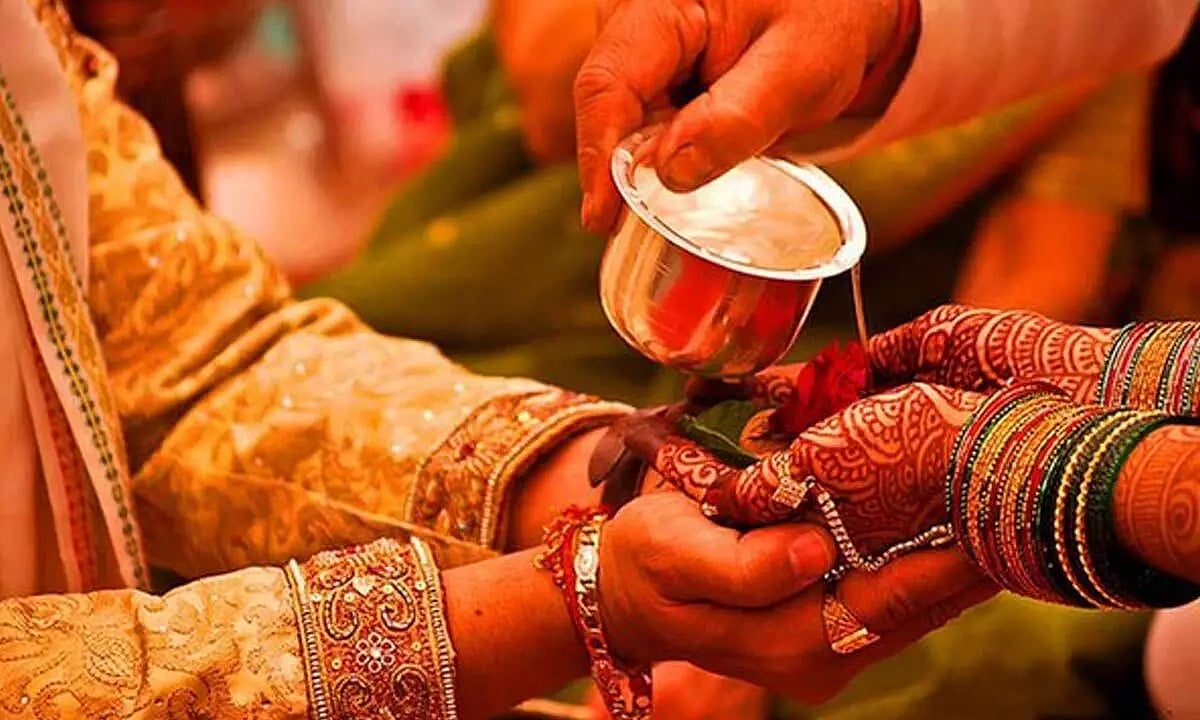
According to Hindu Purana, when Lord Krishna arranged the marriage of his sister Subhadra with Arjuna, it was a Gandharva marriage (a marriage based on mutual love or consent) rather than traditional marriage rituals, including Kanyadaan. Seeing this, Balarama raised concerns about the lack of Kanyadaan, and then Lord Krishna explains that a daughter is not an animal to be donated but rather an offering of energy in the form of a blessing, which represents a mutual sharing of responsibility rather than ownership, and neither to give her away. A donation is made of something you have earned, but you cannot consider a daughter property; rather, she is the priceless gift of God, and that is why she cannot be donated.
Origin of Kanyadaan
The ritual of Kanyadaan originated in the post-Vedic period, between the Vedic and Mahabharata eras, and gained prominence in Manusmriti (a moral codebook for Hindus). According to mythology, Kanyadaan was initiated by Daksha, who had 27 daughters, whom he married to Chandradev. He performed Kanyadaan by handing over his 27 daughters.
