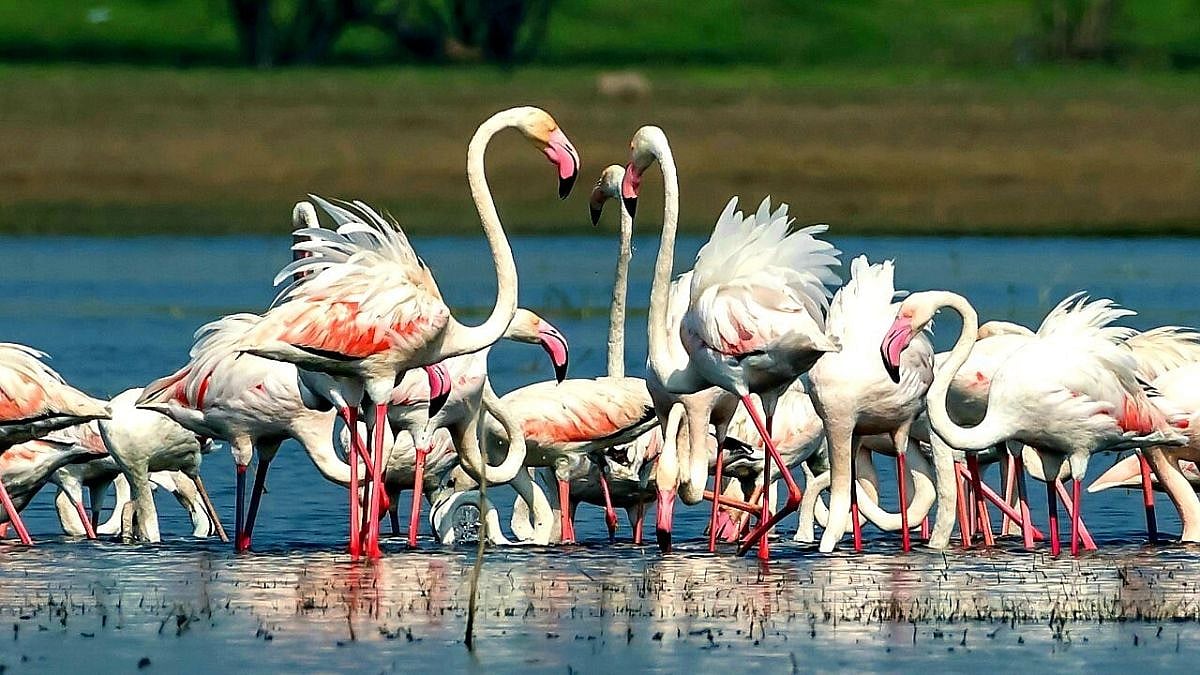
Maharashtra is set to establish India's first AI-based bird sanctuary in Thane, marking a significant step in the use of technology for wildlife conservation. The initiative aims to combine artificial intelligence (AI) with environmental monitoring to better protect bird species, track their movements, and improve habitat management. In a bid to attract birds, the state government has approved a ₹45-crore Eco-Nature Park at the Thane Creek Flamingo Sanctuary (TCFS).
About the AI-powered sanctuary
The AI-powered sanctuary will use smart technologies such as AI-enabled cameras, acoustic sensors, and data analytics to monitor bird populations in real time. These systems can identify different bird species through images and sounds, helping researchers collect accurate data without disturbing the birds in their natural habitat. Thane Creek Flamingo Sanctuary is located along the eastern edge of Mumbai and Navi Mumbai. The park is renowned for hosting thousands of pink flamingos and more than 200 species of birds every year.
Significance
One of the key objectives of the project is to strengthen conservation efforts by detecting changes in bird behaviour, migration patterns, and nesting activities. The AI system can also alert authorities to potential threats such as habitat destruction, illegal activities, or unusual environmental changes, allowing for quicker intervention.
Experts believe the project will benefit both biodiversity conservation and scientific research. The data collected through AI tools can help forest officials and researchers make informed decisions about habitat restoration, species protection, and ecosystem management. It may also support long-term studies on the impact of climate change on bird populations.

India is home to 1,300 bird species
India is home to more than 1,300 bird species, including several migratory and endangered birds. However, many species face threats from urbanisation, deforestation, pollution, and climate change. Conservationists say technology-driven initiatives such as AI-based monitoring can complement traditional conservation methods and improve the effectiveness of wildlife protection programmes.

