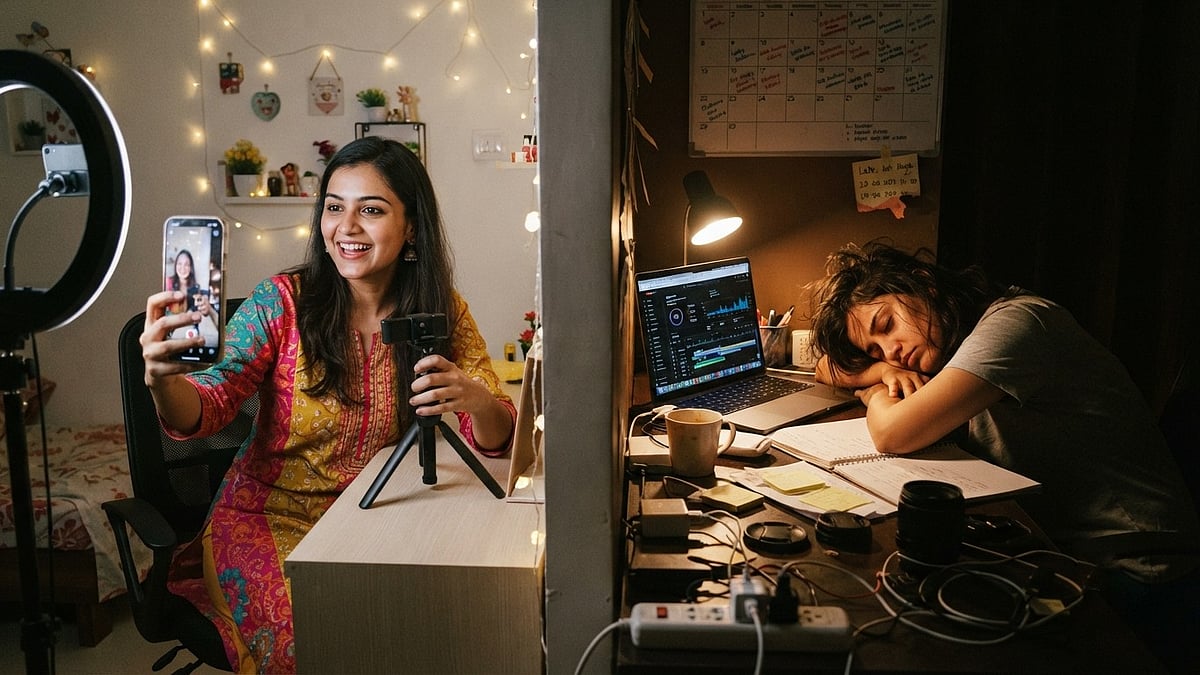
There was a phase when every waking moment felt like a potential Reel. I wasn't living experiences anymore; I was mentally scripting them, imagining thumbnails, drafting captions, wondering whether an ordinary conversation could become content. I had entered content creation because I loved storytelling, yet the process that once energised me began stealing my sleep. I refreshed analytics obsessively and felt guilty whenever I wasn't posting, until a conscious decision to step back helped me rediscover why I had started.
That experience, I later realised, wasn't unique.
Cost of constant visibility
The creator economy is one of the fastest-growing digital industries in the world, with estimates suggesting it could be worth nearly $480 billion by 2027. Yet beneath the booming ecosystem of followers, brand deals and viral moments lies a quieter crisis: emotional exhaustion.
Surveys increasingly find burnout common among creators, driven by the pressure to remain visible, post consistently and keep pace with changing algorithms — constant effort for unpredictable rewards. Unlike traditional media, where teams share the load, independent creators perform every role themselves: ideating, negotiating with brands, scripting, shooting, editing, managing communities and analysing metrics.
For Kaushiki Gupta, founder of Foodwalk_with_kaushiki, even a short food reel is anything but effortless. "I shoot from different angles, try the food, edit, record voice-overs, select music and write captions myself. Sometimes a 30–40 second reel takes an entire day. People see only the final video, not the planning and retakes behind it."
An accountant by profession, Gupta balances a full-time job with weekend creation. After getting married, she could not post for nearly six months — a break that cost her around 1,500 followers. "I even deactivated my Instagram account because I felt like giving up. My husband Amit encouraged me to continue and reminded me why I had started. I'm really glad I didn't quit."
Emotional labour
Burnout among creators rarely announces itself dramatically. More often, it appears quietly — as creative fatigue and the inability to enjoy something that once brought fulfilment.
Avani Dalal, content creator, PR professional and founder of multiple creator communities, hears these conversations almost daily. "Creators don't often run out of ideas; they run out of energy," she says. "Burnout isn't a sign of losing creativity. It is a sign of creating without enough time for recovery."
Some creators are consciously choosing a different relationship with social media. Lifestyle creator Vinny Jain Verdia refuses to document everything for the algorithm. "Even if I'm making one post a week, that is completely fine with me. I want to enjoy content creation, not carry it as a burden where I constantly feel I have to show up."
Lifestyle creator Astha Srivastava agrees. "Not every personal moment needs to become content. Keeping parts of my life private is what keeps me grounded. Algorithms will always fluctuate, but I refuse to let numbers define my self-worth."
Mental health impact
The World Health Organization describes burnout as a syndrome resulting from unmanaged chronic workplace stress — exhaustion, mental distance from work and reduced effectiveness. Full-time creation increasingly mirrors these conditions: public feedback, unpredictable algorithms, no fixed hours and perpetual availability.
According to Dr. Sujit Paul, certified mental health expert and life coach, more creators are seeking professional support than ever. "Many don't initially recognise burnout. They come because they cannot sleep, feel constantly exhausted or lose motivation. During counselling, it becomes clear that the continuous pressure to remain visible has taken a toll."
The invisible workload, he explains, extends far beyond filming — perfectionism, fear of criticism, decision fatigue and constant performance monitoring. One concern surfaces repeatedly: "Many creators begin measuring their identity through likes and follower counts. Purpose and popularity are not the same thing. Separating self-worth from algorithms is one of the most important psychological shifts creators need to make." He recommends fewer compulsive analytics checks, regular digital breaks, prioritising sleep and building relationships outside social media.
More than speaking into a camera
For Divya Jain, founder of Safeducate and host of The Divya Jain Podcast, meaningful content begins long before the camera rolls. "Every podcast begins with extensive research. Recording is only one part. You constantly wonder whether you've done justice to someone's story." Her most valuable feedback has come not from metrics but from listeners whose perspectives changed. "Those moments remind me why I started."
Creator Shabbar Fazal Ahmed Madhia, eight years into building his digital presence, says audiences underestimate the profession's demands. "People think content creation is easy money or overnight fame, but our work demands creativity almost twenty-four hours a day. Behind every glamorous post is someone dealing with deadlines, uncertainty and enormous creative pressure."
Redefining success
The biggest shift emerging from these conversations is that creators are redefining success: virality is no longer the only aspiration; longevity is. Many are posting less frequently, setting healthier boundaries, disconnecting from analytics and protecting their private lives.
Looking back, my sleepless nights were never really about content. They came from believing creativity had to be constant. Every creator and expert I spoke to arrived at the same conclusion: the healthiest creators are not the ones who post every day, but the ones who understand that recovery is not the opposite of creativity — it is part of it.
Behind every perfectly edited Reel and every viral carousel is a person carrying invisible deadlines, self-doubt and hope. What looks effortless on our screens is often hours of unseen work — and someone quietly balancing ambition with well-being.

