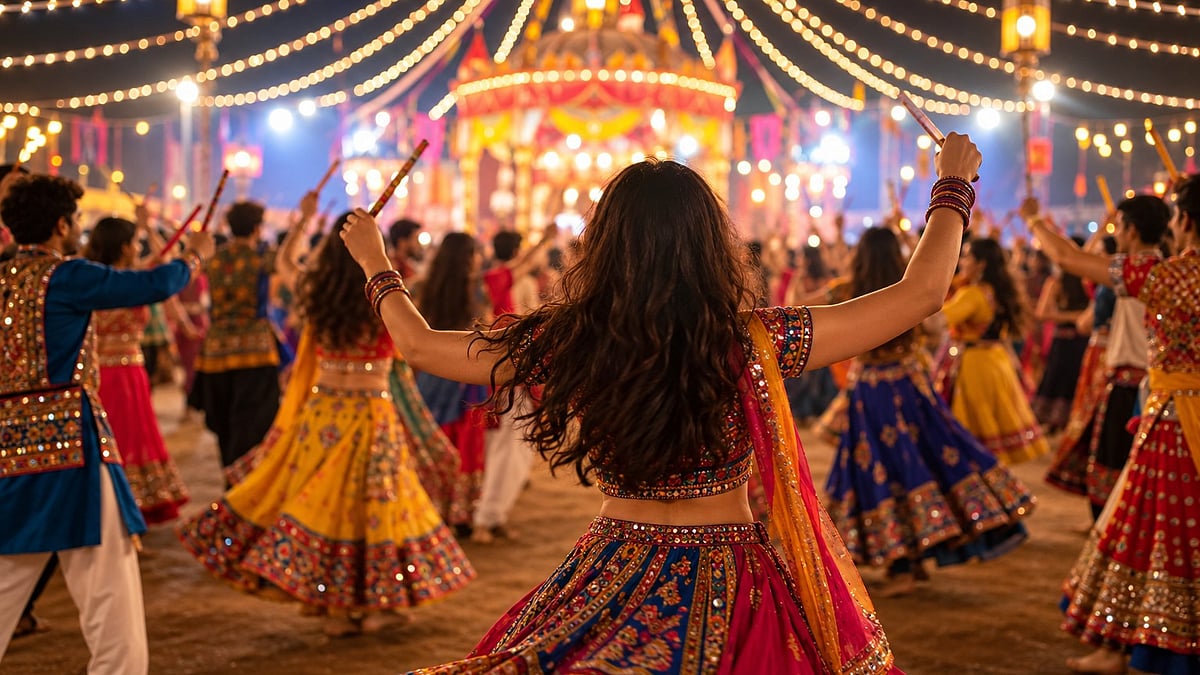
Rent-a-partner ads, couple passes and a Saturday with dozens of ticketed nights: this Navratri has made the solo dancer a market. Mumbai's grounds, those who play say, still have room.
Weeks before the first dhol sounded, an Instagram post began circulating ahead of Navratri. It advertised a ₹1,000 “Silver” package: two hours with a garba partner, matching outfits, basic dance guidance and selfies. Other ads quoted prices up to ₹6,500. Police and political leaders in Maharashtra and elsewhere cautioned people against responding, citing fraud and safety risks. Mumbai organisers asked how a venue could tell a paid companion from a friend. Several of the ads also appeared fake or satirical.
Joke, hustle or both, the ads found an audience because they touched a nerve. “Even if you really want to enjoy the festival, you might hesitate to go alone because you don't want to feel left out,” says Riddhi Patel, 21, a recent graduate.
Night for every budget
Navratri ends on October 19. One city listing counts 43 ticketed garba and dandiya nights in Mumbai, with Weekend being the busiest.
Ticket prices range widely, from ₹99 for select listed events to ₹2,400 onwards for Falguni Pathak's Navratri Utsav at BKC's Jio World Convention Centre. Kora Kendra in Borivali lists passes from ₹810, Rangilo Re at NESCO, Goregaon, from ₹1,099, Navrang Garba at Le Méridien, Navi Mumbai, from ₹472, and Dome Dandiya Nites at Worli's SVP Stadium from ₹499. Prices vary by event date, ticket category and availability.
For Aryan Singh, 18, a music student and composer, the pricing reveals the plan. “Garba is now a profit-making business for organisers, but its root was to dance, celebrate and enjoy the festival,” he says. “Organisers know the youth craves attention and will pay a lot regardless.”
Rhea Shah, 30, an entrepreneur at Cheriks Innovative Ventures, thinks the message reaches the person at the gate. “Couple passes and exclusive zones quietly tell solo attendees they're not the audience.”
Camera on the ground
Look at what the rent-a-partner packages promised: matching outfits and selfies. The steps came last. The ads sold the photograph, and many dancers say the photograph now shapes the night.
“The festival is no longer purely about the circle and the music, it's also about being seen,” says Rhea. She remembers a different era. “In my college years, you'd walk into a ground or society garba and find a circle. Nobody asked who you came with. Garba was the great equaliser.”
She says social media made an old pressure constant. “The pressure to pair up is old, social media just made it constant. Earlier, only relatives noticed. Now everyone you've met does.” Friends have been affected too: “Friends always made garba better but now a group feels like a requirement, not a bonus.”
Aryan worries about what this does to relationships. “These events push relationships as a necessity rather than a genuine bond built over time and trust. That's why keeping singles out goes against its spirit.”
Riddhi points to the feed. “Seeing these posts can create FOMO and make people feel like they're missing out on the experience.”
Case for the glamour
Not everyone sees decline. Manav Shah, 22, a business development manager, is happy to defend the polish. A friend of his starts planning her Navratri looks in August. “Is it glamorous? Yes. Is that a crime? I don't think so,” he says. “Our grandmothers wore their finest too; they just didn't have a camera roll.”
He argues the ticket buys real things. “It also buys security, clean washrooms, medical help, parking and a sound system that reaches the last row. Someone has to pay for that, and I'd rather it be organised than chaotic.” On exclusion he is clear: “Couple passes and VIP zones are options, not walls. The general circle is still there, and once the dhol begins, nobody checks your pass.”
The listings back him up in one respect. The same city guide counts three free-entry garbas among its 43, and Rhea says community garba “still thrives in societies and neighbourhood grounds.” She adds that at the big-ticket events, “you have to work harder to find” the spontaneity.
Room for everyone
Even Manav ends on common ground. “Commercialisation hasn't ended garba, it has made it bigger and safer. Maybe the answer is more variety, singles included.”
The others have specific asks. Rhea would like “single's passes and ‘come as you are’ sections since that is the real market.” Riddhi wants organisers to create “groups for people attending alone, giving them a chance to meet new people and dance together.”
If organisers don't move first, the dancers can. “So go solo at least once,” says Rhea. “You'll be surprised how quickly you find a circle.” Aryan offers the same advice: “You don't need a partner or group. Just step onto the floor and join in, and you'll find your group khud hi.”
Last round
Rhea's reminder is that “the feed is curated, the best nights go unposted.” Aryan believes the festival “should never be about oneself, but about the celebration, not the lights, vibes and glamour.”
Riddhi gets the last word. “At the end of the day, nobody should feel that they need a partner or a big friend circle to enjoy Navratri. Garba is about coming together, celebrating our culture, and creating happy memories, and everyone deserves to experience that feeling of belonging.”
Tomorrow night, 35 Mumbai grounds will open their gates. Somewhere at the edge of one, someone will be standing with hands in pockets, and the circle will be moving.

