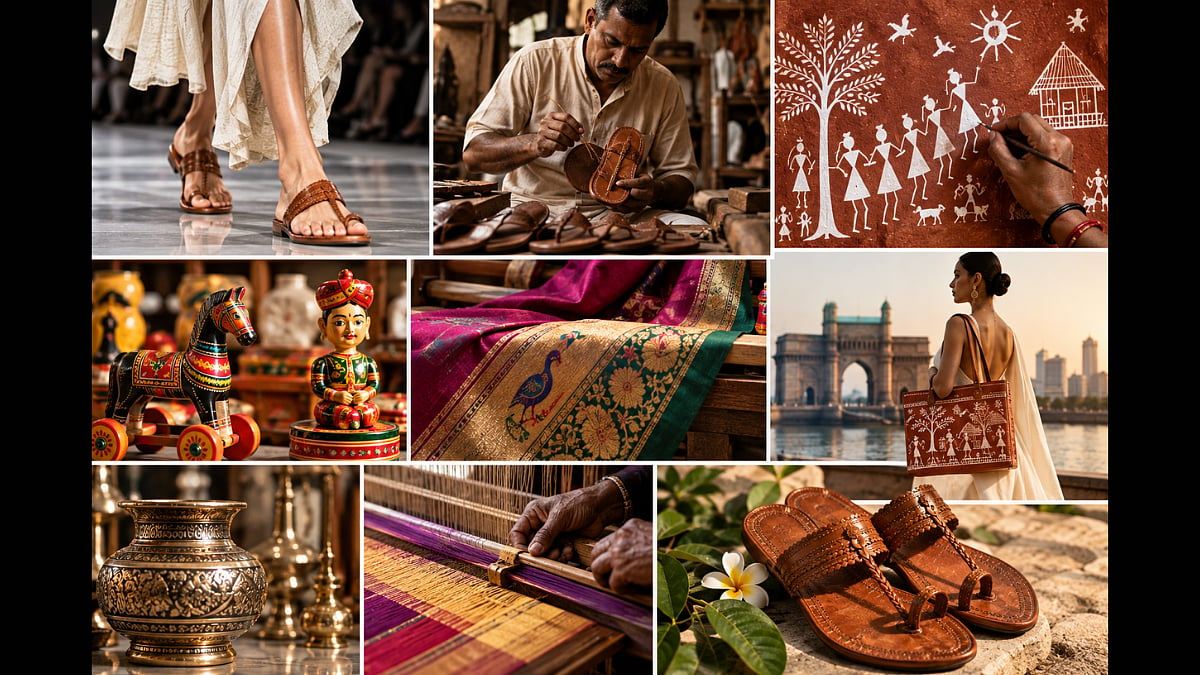
Luxury often borrows from history, but sometimes it forgets to acknowledge where that history begins.
When a pair of sandals resembling Maharashtra's iconic Kolhapuri chappals appeared on Prada's Spring/Summer 2026 runway in Milan, they triggered a debate that travelled far beyond the fashion world. What started as a conversation around design inspiration quickly evolved into a larger discussion on cultural attribution, intellectual property and the recognition of India's artisan communities. Prada later acknowledged the inspiration, but the moment had already shifted the spotlight onto a much bigger question: why do traditional crafts often gain global admiration before receiving equal value at home?
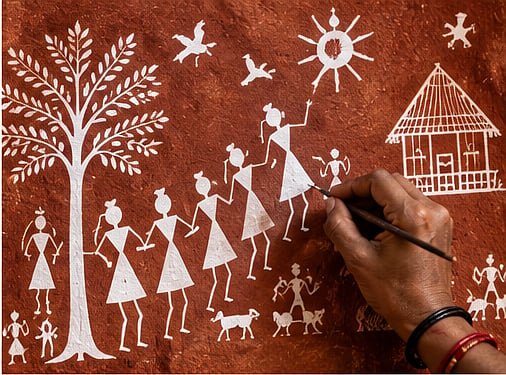
For Maharashtra, the controversy became more than a fashion headline. It offered an opportunity to reimagine the future of its rich handicraft heritage from Kolhapuri chappals and Warli art to Sawantwadi wooden toys and Ganjifa paintings. At a time when consumers across the world are embracing authenticity, sustainability and handcrafted products, could these centuries-old crafts evolve from cultural treasures into globally recognised luxury brands? More importantly, can this journey ensure the artisans behind them receive fair recognition, better livelihoods and a rightful place in the luxury value chain?
Behind the craft
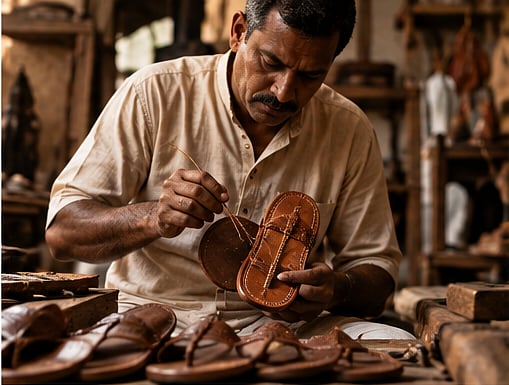
Yet admiration alone cannot sustain a craft.
Kolhapuri chappals may have received a Geographical Indication (GI) tag in 2019, but legal recognition does not automatically translate into economic security. Across Maharashtra, many artisan communities continue to battle machine-made imitations, shrinking incomes and limited access to national and international markets. Recognition without opportunity risks turning heritage into nostalgia instead of livelihood.
Jewellyn Alvares, Head of Department, School of Fashion & Costume Design, Whistling Woods International mentions that the future of Maharashtra's crafts depends on ensuring that artisans remain at the centre of the conversation.
He shares, “Maharashtra's traditional handicrafts have immense potential to become globally recognized luxury products, but authenticity can only be preserved if the artisans themselves thrive. Global recognition must be accompanied by fair wages, ethical collaborations, supportive policies, and strong legal protection through GI tags, registrations, and intellectual property rights.”
He believes design education also has a crucial role to play. Students in this institute regularly work with artisan communities through craft documentation projects, learning traditional techniques before reinterpreting them for contemporary audiences. For Maharashtra, preserving its craft heritage will require more than celebrating it. It will mean investing in the people who continue to keep these traditions alive.
From inspiration to industry
For years, Maharashtra's handicrafts have inspired designers, artists and fashion houses across the world. Yet inspiration has rarely translated into sustained opportunities for the people behind these creations. A craft may find its way onto an international runway, but the artisan who spent decades mastering it often remains unknown.
That is beginning to change. Consumers today are no longer buying products based only on brand names, they are buying stories. They want to know who made a product, how it was crafted and whether their purchase supports ethical practices. For Maharashtra's artisan communities, this shift presents an opportunity to move beyond being suppliers of inspiration to becoming creators of globally recognised products.
Nelson Jaffery, Head of Design at Liva, believes this growing appreciation for handcrafted products has been driven by greater awareness and access to information.
“Demand for quality handcrafted and sustainable products has always been prevalent. With rising consumer awareness of environmental consequences and greater transparency through digital technologies, consumers today are more curious than ever. Social media has certainly led to a rise in curiosity among customers. People are eager to learn about the origins of products, the manufacturing process, and its ethical aspects. Handmade items allow consumers to express their personality by owning something truly unique,” he says.
His observations mirror a broader global trend. Across the global fashion industry, consumers are increasingly valuing authenticity, craftsmanship, transparency and sustainability, prompting luxury brands to invest more heavily in heritage, artisanal skills and responsible sourcing
"Craftsmanship gives a product personality, sustainability gives it meaning, and storytelling creates an emotional connection. Today, luxury is no longer defined only by exclusivity or cost. It is increasingly about quality, durability, thoughtful design and craftsmanship," Nelson adds.
Those are values Maharashtra's artisan communities have practised for generations, long before sustainability became a global buzzword.
Beyond seasonal collabs
However, experts agree that appreciation alone will not build a sustainable craft economy. Many collaborations between luxury brands and artisans remain limited to capsule collections or seasonal campaigns. While they generate visibility, they rarely create long-term financial security for artisan communities.
Jaffery believes the relationship needs to evolve. He narrates, "The collaborations that create the greatest impact come through continuity, not seasonality. Brands must commit to long-term partnerships, fair pay, training, co-design and market access. When artisans are treated as partners rather than suppliers, it is not only possible to preserve traditional crafts but create sustainable jobs as well.”
Fashion designer Ranjit Rodricks shares a similar view. For him, Maharashtra's handicrafts already possess everything required to compete in the luxury market. "Anything handmade or handcrafted is luxury, especially when the process carries a rare history passed down through generations of craftsmen," he says.
The challenge, he believes, lies in changing consumer perception. "There is no need to strike a balance between tradition and modernity. Just like we treasure our grandmother's crockery because of the sentimental value attached to it, handmade handicrafts should hold the same emotional value. Wear your Kolhapuri chappals every day, not just during Ganesh Chaturthi or Diwali."
Rodricks also believes designers have a responsibility that extends beyond creating trends. He shares, "Designers are the bridge between artisans and consumers. If a collection celebrates a region like Solapur, local artisans should be involved in creating it. Most importantly, they must receive fair payment, proper recognition and dignified working conditions."
Crafting next growth story
For Maharashtra, the conversation sparked by Prada is about much more than one fashion collection. It is an opportunity to rethink how the state's traditional handicrafts are positioned, not as relics of the past, but as part of its future economy.
With stronger GI protection, better digital access, design collaborations, tourism, export support and sustained investment in artisan communities, traditional crafts can generate livelihoods while preserving centuries of cultural knowledge. Every handcrafted Kolhapuri chappal, Warli painting or Sawantwadi toy represents not just a product, but a skill passed down through generations.
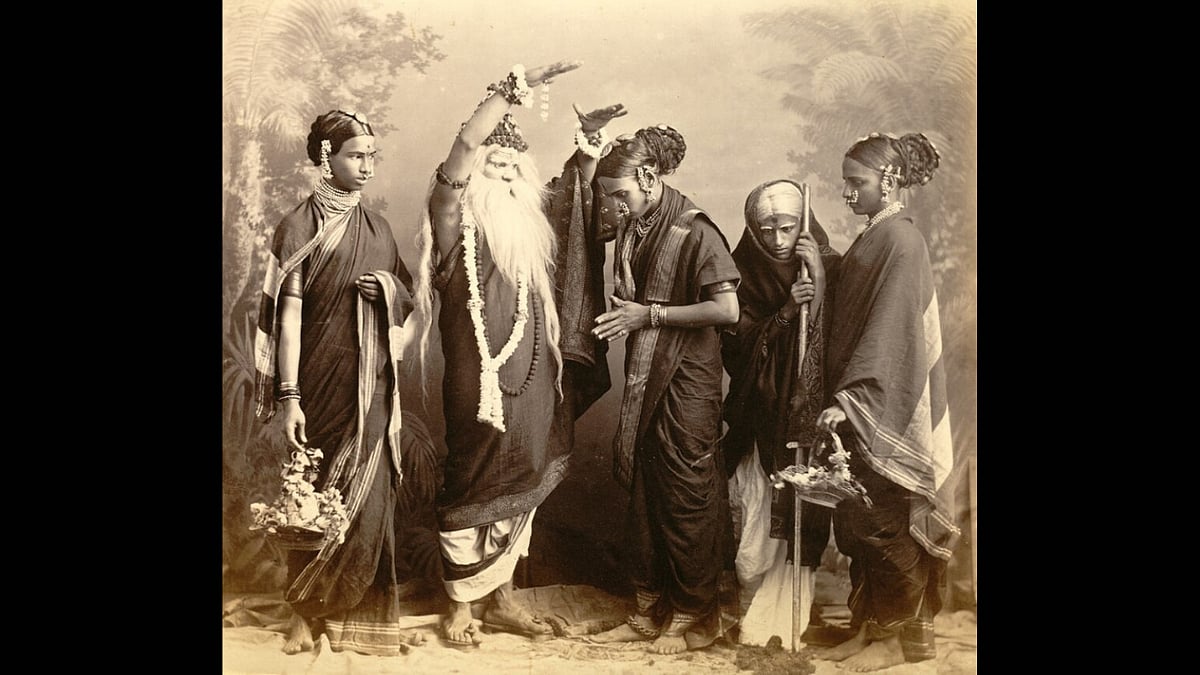
That is where the state's vision of inclusive development finds a powerful expression. When artisans receive fair recognition alongside global visibility, heritage becomes more than something to preserve it becomes an engine of economic opportunity.
And that shift is already underway. By April 2026, the controversy had come full circle: Prada launched its limited-edition 'Made in India' collection, 2,000 pairs of Kolhapuri-inspired sandals handcrafted by artisans in Maharashtra and Karnataka in collaboration with state-backed bodies LIDCOM and LIDKAR, sold across 40 stores worldwide. Alongside it came a training programme for 180 artisans from the craft's 8 GI districts, funded partly by proceeds from the sandals themselves. What began as borrowing without credit has become, under pressure and dialogue, an early template for what inspiration owes its source.
The Prada episode will eventually fade from headlines. But whether it becomes a one-off gesture or the beginning of a genuine shift depends on what Maharashtra does next. If the state can extend this template, long-term partnerships, artisan training, fair value across its wider craft heritage, its traditional handicrafts can become more than symbols of culture. They can emerge as globally respected luxury products that celebrate craftsmanship, sustain communities and carry Maharashtra's creative legacy to the world. Because the future of luxury may not lie in producing more. It may lie in recognising the extraordinary value of what has always been crafted by hand.

