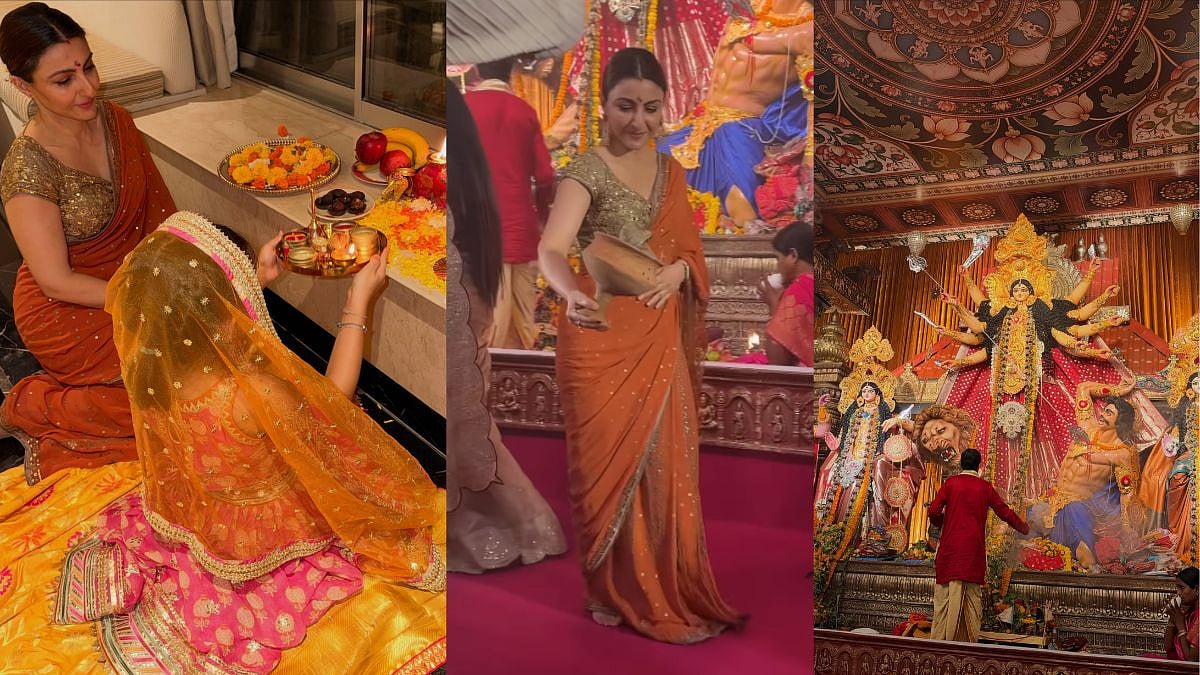
As the country celebrated the Durga Puja festival with goddess worship, decorating homes, visiting pandals to offer prayers, actress Soha Ali Khan offered a glimpse into her festive celebrations, sharing moments from the vibrant traditions of Durga Puja and Navratri. From the energetic Dhunuchi Naach to the traditional ritual of Kanya Pujan, the actress gave fans a peek into how she marked the auspicious occasion with devotion and festive cheer.
The actress took to social media to share glimpses of the celebrations, highlighting the cultural traditions and rituals associated with the festive season. Her celebrations reflected the spirit of togetherness, faith and gratitude that defines this time of the year.
Soha Ali Khan celebrates the festive spirit
Actress, author and podcast host Soha Ali Khan marked Durga Puja, Navratri and Dussehra with a mix of public festivities and quiet ritual at home. The actress also performed the puja ritual at her home, including Kanya Pujan with her daughter. She shared on social media a colourful glimpse of her festive weekend, featuring a trip to Mumbai's most famous celebrity Durga Puja pandal and rituals at her home. The actress captioned, "For the beats of the dhaak, the dhunuchi dance, the mishti, the sarees and sindoor, and that unmistakable feeling of coming home... happy Durga Pujo!!"
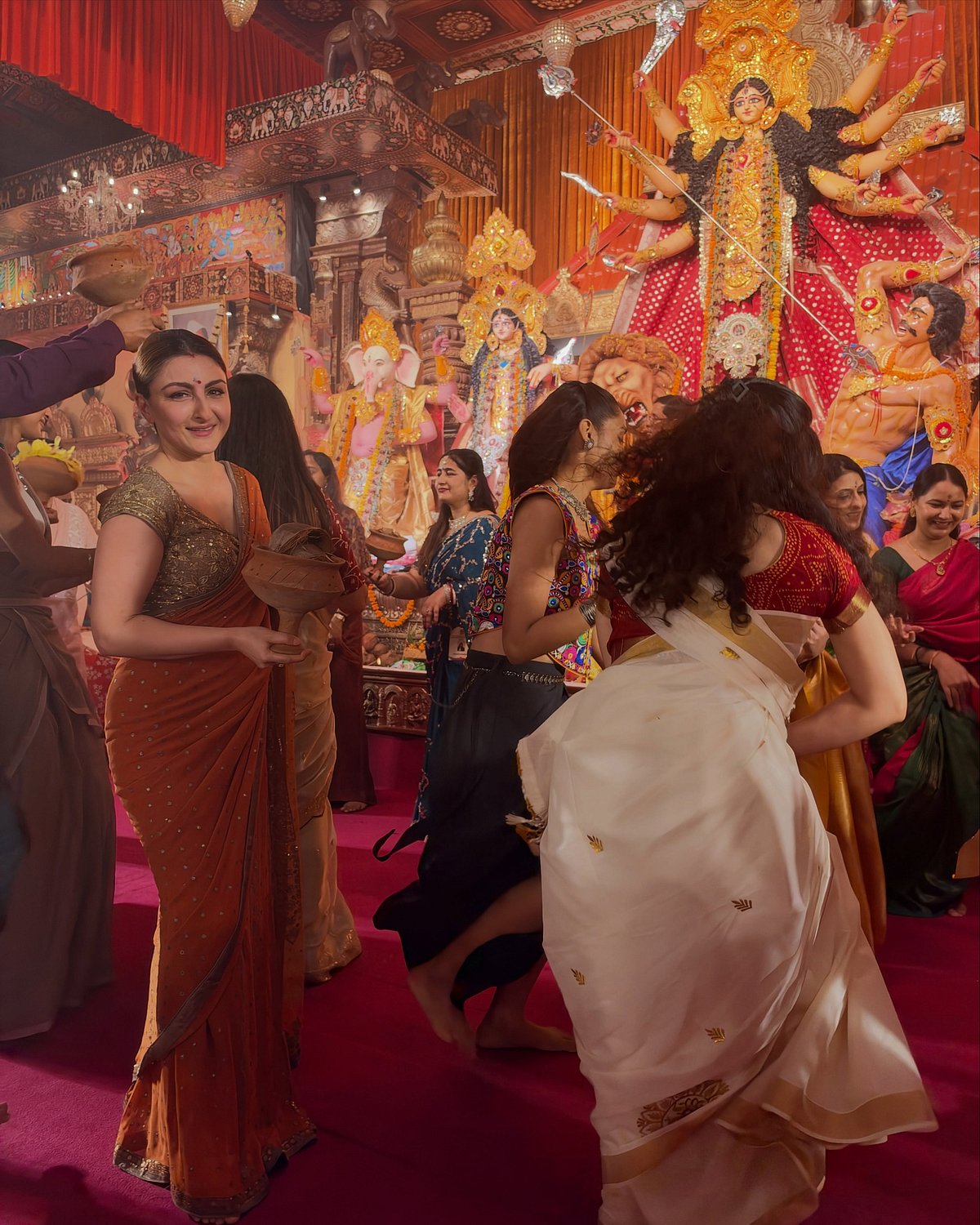
Soha visits North Bombay Sarbojanin pandal
Soha Ali Khan visited the North Bombay Sarbojanin Durga Puja pandal in Juhu to celebrate the festival. She was seen in an ethnic orange-coloured saree, pairing it with a shimmering golden blouse and golden earpiece. The actress performed Dhunuchi dance to the rhythmic beats of the dhaak.
Dhunuchi Naach and its cultural significance
Dhunuchi Naach, a traditional Bengali dance performed during Durga Puja, is known for its vibrant movements and spiritual significance. Devotees perform the dance while holding dhunuchis, traditional incense burners filled with burning coconut husk and incense, creating a smoky atmosphere accompanied by the rhythmic beats of the dhak. The dance is often performed during the festival's evening rituals and is an important part of Bengali cultural celebrations.

