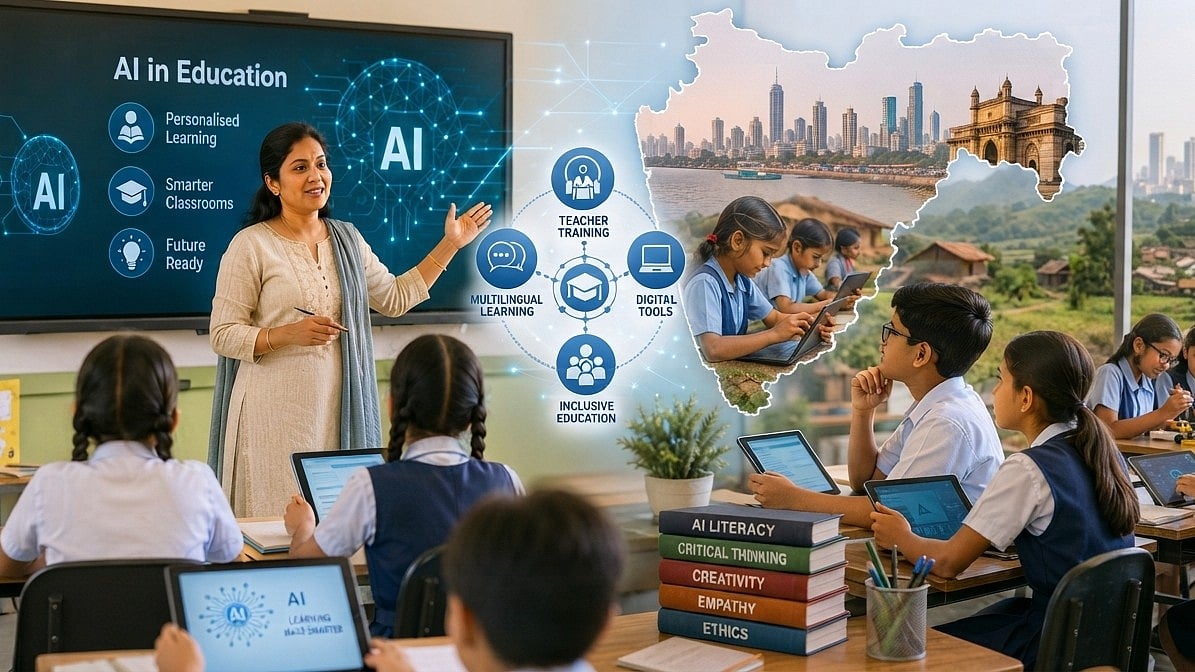
In classrooms across Maharashtra, a new lesson is about to begin, not for students, but for teachers.
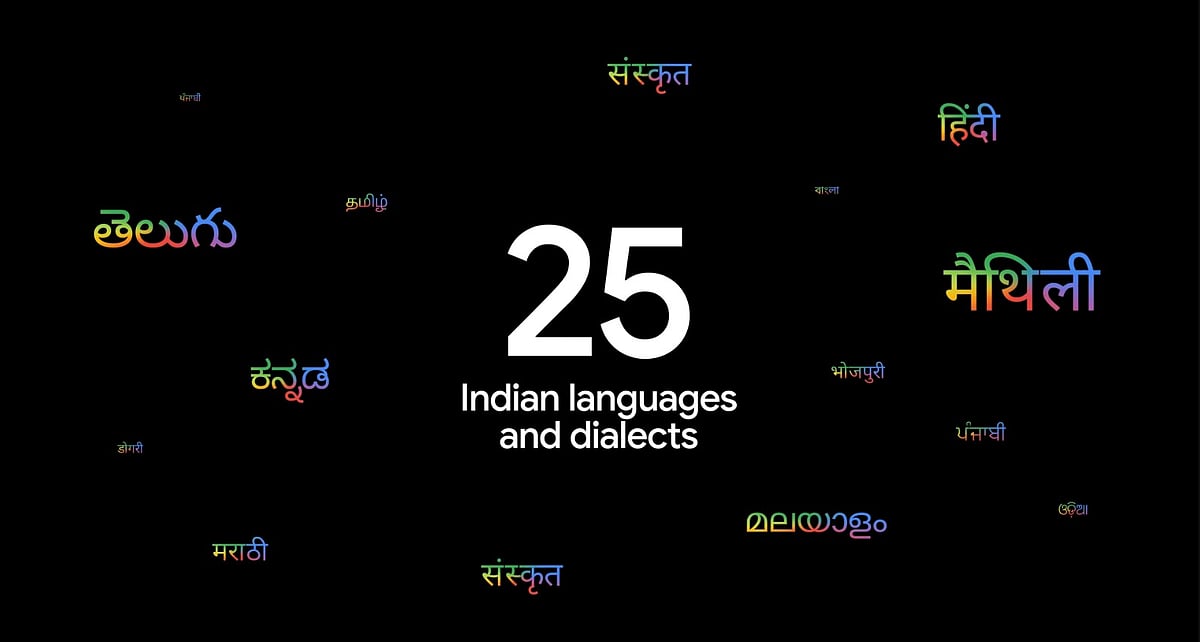
Over the next 18 months, more than four lakh teachers across the state will undergo training in artificial intelligence and digital technologies under a landmark partnership between the Maharashtra government and Google for Education. The initiative, one of the largest AI-focused teacher training programmes in the country, aims to equip educators in government and aided schools with AI-enabled teaching practices and multilingual digital learning tools in Marathi, Hindi and English.
The initiative signals Maharashtra's ambition to build a future-ready education system. As one of India's largest education hubs, the state is preparing classrooms for a future where artificial intelligence will become part of everyday learning.
Yet the conversation goes far beyond introducing AI into classrooms. Can technology help narrow the learning divide between a classroom in Mumbai and one in Gadchiroli? Can it personalise learning without widening existing inequalities? And as employers increasingly embrace AI, will these initiatives make Maharashtra's students more employable while ensuring they continue to develop the human qualities that machines cannot replicate? These questions have become central to the state's education journey.
Teaching teachers
For years, discussions around AI in education have centred on students, whether they should use ChatGPT for assignments or rely on AI-powered learning tools. Maharashtra's latest initiative takes a different approach by recognising that meaningful change begins with teachers.
Mrs. Mahek Sukhani, Assistant Professor, Department of BAMMC at Don Bosco College, Mumbai, believes AI can become a powerful educational tool, provided it reflects the realities of Maharashtra's diverse classrooms.
"A classroom in Mumbai is very different from one in a tribal district or a rural village. Students come from different economic backgrounds, speak different languages, and learn at different speeds. AI has the potential to make education more inclusive, but technology alone cannot solve the problem," she says.
Her observation highlights Maharashtra's digital divide. While many urban schools have embraced technology, several rural and tribal institutions still struggle with internet access, devices and basic digital infrastructure. Unless these gaps are addressed, AI could widen rather than reduce educational inequalities.
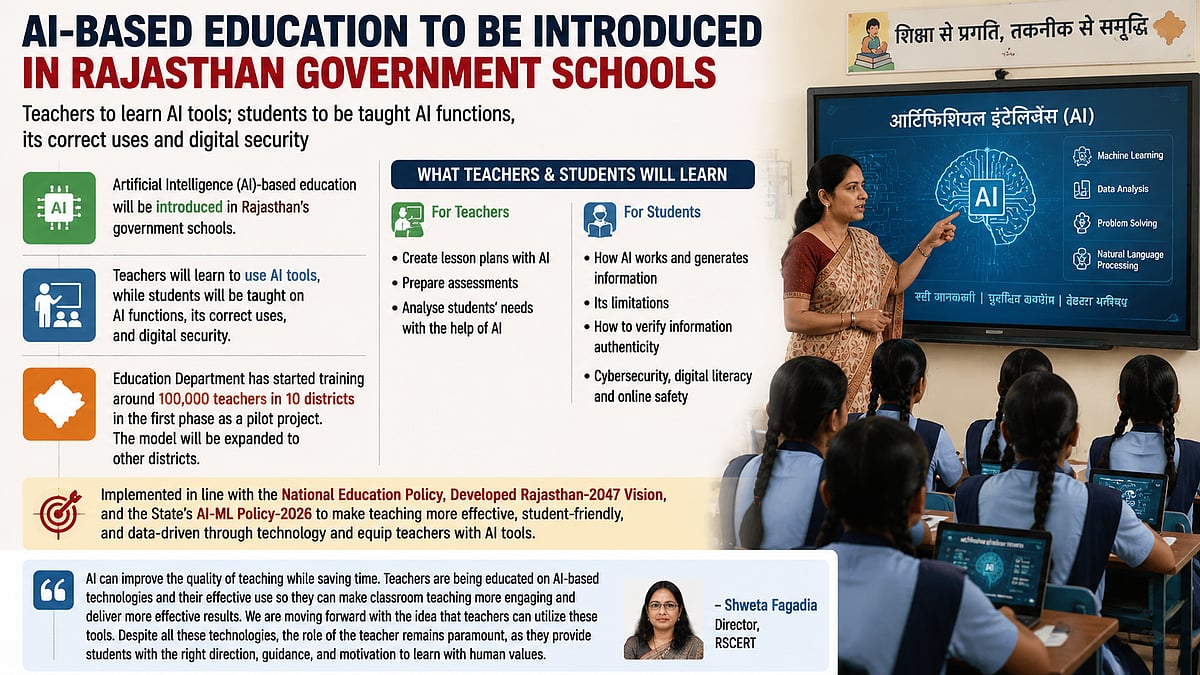
For Mahek, however, the answer is not to slow down technological adoption but to define its role more clearly. "Technology can explain concepts and generate practice exercises, but it cannot replace the encouragement, empathy and understanding that teachers bring into a classroom. Education is about people first, and technology should support that not replace it,” she points out.
That philosophy is reflected in Maharashtra's strategy itself. Rather than positioning AI as a replacement for teachers, the initiative aims to reduce repetitive administrative work, improve lesson planning and enable educators to devote more time to mentoring students. It recognises that while technology can make classrooms smarter, meaningful learning still depends on the people who lead them.
AI, education, & inclusivity
One of AI's greatest promises is something classrooms have struggled to deliver for decades, personalised learning. In a state as diverse as Maharashtra, where students come from different linguistic, economic and educational backgrounds, technology has the potential to adapt learning to individual needs rather than expecting every learner to fit into the same mould.
Dr. Rajat Bandopadhyay, Assistant Professor at the Symbiosis Centre for Media and Communication (SCMC), believes this is where AI can make the biggest difference. He shares,”2 learners in the same classroom are never alike. AI can adjust language, simplify complex concepts and even work as a 24/7 help desk for learners, which a human teacher may be unable to do. It can personalise learning while helping educators identify learning gaps and provide meaningful support. But AI and teachers should co-exist.”
His observation reflects a growing body of global research. Research from the Harvard Graduate School of Education suggests AI can support personalised learning and reduce teachers' administrative workload. Researchers, however, emphasise that it should enhance not replace critical thinking and meaningful classroom interaction.
Yet, the opportunities come with equally important cautions. "Trust, joy, encouragement, motivation, listening ability, debate and genuine classroom conversations cannot be fully replaced by AI. Technology should remain a brainstorming partner, not the executioner," Dr. Rajat adds.
The concern is clear, if students begin relying on AI to think, write and solve every problem, they risk losing the habit of questioning, analysing and creating independently. Maharashtra's challenge is ensuring AI strengthens learning without replacing the human experiences that shape it.
Readying for modern workplace
While schools are learning how to teach with AI, employers are also rewriting the definition of what it means to be job-ready. According to HRBP professional Shreeya Vaidya, AI literacy has quickly become valuable, but it is no longer enough on its own.
She says, “Fresh graduates also need clear thinking, communication, adaptability, empathy and ethical judgement. These are qualities AI cannot replace.” She has noticed candidates increasingly using AI tools during recruitment, but believes they stand out only when they use them thoughtfully rather than blindly. “Colleges are laying the foundation, but employers expect graduates to bridge the gap through internships, certifications and self-learning,” she narrates.
Campaign strategist and emotional intelligence trainer Yash Rané agrees that AI has already become part of the hiring ecosystem. "Making resumes ATS-friendly using AI is common now, but a candidate's smartness is always double-checked during the HR round," he says. AI should be treated as a skill that evolves continuously rather than as a fixed academic subject.
For students, AI is already part of everyday learning. Yash Jain, a recent graduate, regularly uses AI to create revision notes and simplify difficult concepts before examinations.
"It has reduced my stress by making studies easier to understand. Learning AI is becoming an important skill because it helps us gain knowledge and become more independent," he says.
Lesson beyond technology
Maharashtra's AI initiative is ultimately not just about introducing another digital tool into classrooms. It is about reimagining education for a future where technology and human potential must grow together.
AI can personalise lessons and make learning more accessible, but it cannot build curiosity, empathy, creativity or confidence. Those qualities are nurtured through teachers, conversations and real-world experiences, things no algorithm can replace.
The state's biggest challenge, therefore, is not adopting AI but ensuring it reaches every classroom equitably, supports teachers rather than replacing them, and prepares students with both technological fluency and human judgement.
If Maharashtra succeeds in striking that balance, its achievement will extend far beyond AI-enabled classrooms. It will demonstrate how innovation can drive inclusive development, bridging educational gaps, improving employability and creating opportunities for students across urban and rural communities alike. In doing so, Maharashtra won't just be preparing its students for an AI-first future; it could offer the rest of the country a blueprint for an education system where technology serves learning, and learning continues to serve people.

