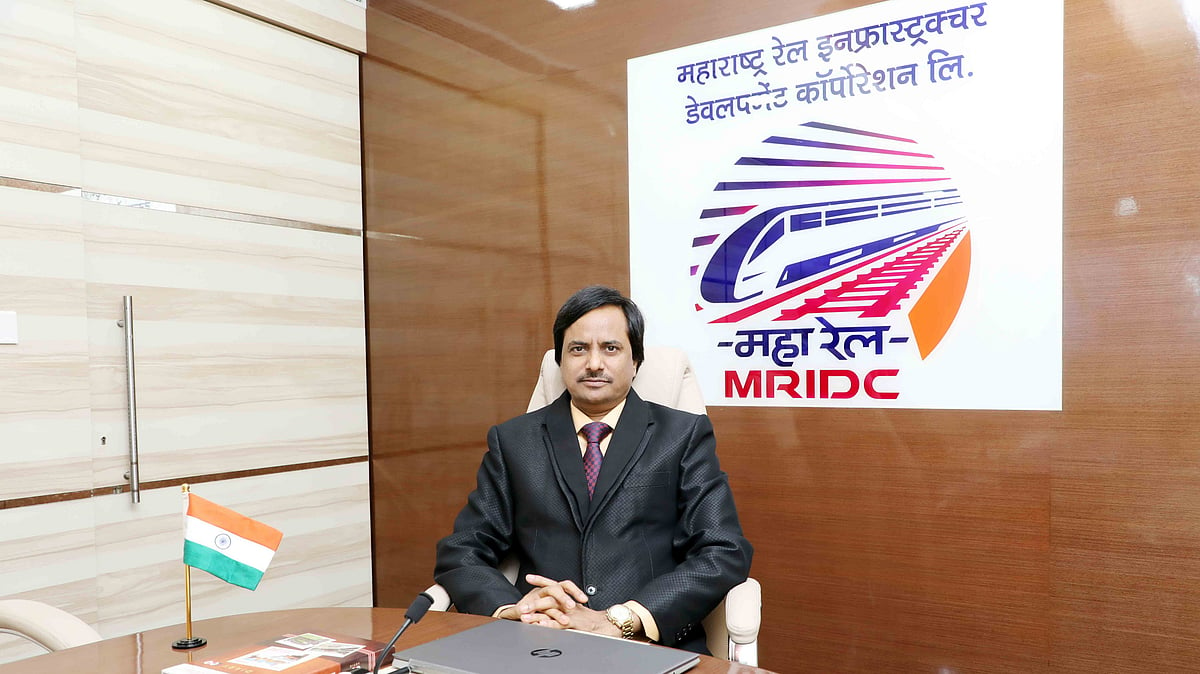
Rajesh Kumar Jaiswal believes in leading by example. He is aware of every detail of every project that MahaRail is involved in. All figures are at his fingertips. After completing several projects in record time, he is now focusing on making Maharashtra an accident-free state by eliminating railway crossing gates and replacing them with Road Over Bridges, Road Under Bridges, and subways. Jaiswal shared his thoughts and plans with The Free Press Journal during an interaction.
Excerpts from an interview:
What challenges have been encountered so far during the construction of the Byculla Cable-Stayed Bridge, and what measures are being taken to overcome them?
The Byculla Cable-Stayed Bridge is being constructed adjacent to the existing century-old Byculla ROB, which has outlived its service life. By building the new structure first, MahaRail is ensuring that the heavy traffic flow on the Eastern Express Highway remains uninterrupted. Once the new bridge is operational, the old structure will be dismantled and another new bridge will be made. This iconic structure will provide a vital, weather-resilient link between East and West Byculla, ensuring a seamless commute for Mumbaikars. During the construction of the Bridge, the main challenge was the launching of 1500 MT of steel over the Central Vegetable Market, which could not be shifted. The challenge was overcome by carrying out all erection works without any road traffic blockage in the market by using a Deck Erection Crane over the densely populated market area with the highest order of safe working.
What is the current state of Elphinstone double-decker bridge and how difficult is it to incorporate the new double-decker structure giving the old engineering of the earlier bridge?
Currently, the dismantling of the old Elphinstone ROB has been completed, and the foundation work for the new Elphinstone ROB is in progress. Additionally, all fabrication work for the double-decker structure has been completed. The most challenging aspect of the project is incorporating the new double-decker structure in place of the existing bridge, owing to severe space constraints for the assembly and launching of approximately 4,000 MT of structural steel. The work also involves crossing both the Central Railway (CR) and Western Railway (WR) lines simultaneously within a limited time frame, making it a highly complex engineering task.
The new ROB at Virar was completed in record time. What engineering techniques did you use to ensure timely completion?
A major highlight of the LC-41 ROB project is the successful execution of two Bow String Girder spans (LHS & RHS), designed in accordance with RDSO standards, within a record timeframe through meticulous planning and close coordination with Railway authorities.
The approximately 430-ton steel girders were launched over running railway lines with OHE (Overhead electrical) using advanced Push-Pull launching technology during approved traffic and power blocks under Railway supervision. Coordination with Western Railway ensured the timely availability of blocks and the smooth execution of these critical activities.
Another notable achievement was the completion of deck slab concreting for the entire 58 metre railway span in a single continuous pour within a record timeframe, without disrupting rail traffic, thereby ensuring superior structural integrity and durability. Waterproofing of the deck was carried out prior to laying the wearing course to provide long-term protection.
The ROB incorporates RDSO-compliant safety features, including crash barriers, anti-climbing screens, protective fencing, proper drainage arrangements, road signage, and illumination systems.
Constructed using high-quality materials and modern engineering practices, the ROB has improved connectivity, reduced traffic congestion, enhanced commuter safety, and facilitated the closure of Railway Level Crossing No. 41.
The work of Koradi Thermal Power Plant is a humungous task and a great opportunity at the same time. What is the plan of action with challenges like CW pipeline, pump houses etc. being the main tasks among other challenging things?
The Koradi Thermal Power Plant is a prestigious and strategically important project that will strengthen Maharashtra’s energy infrastructure. We take pride in contributing to this landmark development.
The project includes critical components such as the CW Pipeline, CW Pump Houses, deep foundations, underground utilities, and other major civil works, requiring advanced engineering expertise and meticulous planning. To ensure timely and quality execution, we have deployed experienced teams, robust project management systems, and continuous monitoring mechanisms. With our proven track record in delivering complex infrastructure projects, we are confident of executing the Koradi Thermal Power Plant Project to the highest standards of quality, safety, and efficiency, creating a benchmark in engineering excellence.
Could you explain the details and challenges involved in gauge conversion of any railway line?
Gauge conversion involves changing the distance between railway tracks (e.g., from Metre Gauge to Broad Gauge). However, it is far more complex than simply replacing tracks, as it requires comprehensive upgrades to the entire railway infrastructure. Key challenges include modifying track alignment, strengthening or reconstructing bridges and other structures, redesigning stations and yards, upgrading signalling and telecommunication systems, adjusting electrification infrastructure, and aligning rolling stock and maintenance facilities with the new gauge for a speed of 160 kmph. The complexity of gauge conversion lies in maintaining rail connectivity during construction, acquiring land for alignment improvements, upgrading aging infrastructure, managing significant project costs, and ensuring safety through extensive testing and CRS certification before commissioning.
What are the projects planned across Maharashtra in the coming years, and how is MahaRail driving its vision of making it a railway fatak-free state?
MahaRail is advancing Maharashtra’s vision of becoming a “Railway Fatak Free” state by replacing railway level crossings with Road Over Bridges (ROBs), Road Under Bridges (RUBs), and subways.
MahaRail had been entrusted with the execution of 145 ROBs, RUBs, and FOBs across Maharashtra’s railway network. The MahaRail has maintained a strong pace of infrastructure delivery, successfully completing and commissioning 47 major projects across multiple districts, including Nagpur, Chandrapur, Jalgaon, Amravati, Dhule, Wardha, Nashik, Mumbai, Thane, Satara, Sangli, Kolhapur, Hingoli, and Gondia. Several additional projects are lined up for inauguration soon. These completed projects have already contributed to significant improvements in road safety, reduced travel times, and enhanced mobility for both citizens and freight movement along key transport corridors. As part of its long-term vision, MahaRail has identified 131 railway level crossings across Maharashtra with Train Vehicle Units (TVU) exceeding 10,000 for phased elimination through the construction of ROBs, RUBs, and subways. Of these, MahaRail has received approval for 65 ROB, RUB, and subway projects in the first phase of its ambitious mission to make Maharashtra a “Railway Fatak Free” state. This approval represents a major acceleration in implementation and underscores the Maharashtra Government's commitment to enhancing road safety, reducing traffic congestion, and ensuring the seamless movement of passengers and goods across the state’s growing transport network.
During a comprehensive statewide survey conducted in six months, MahaRail identified 80 locations across Maharashtra where there are no railway level crossings, but where the construction of ROBs, RUBs, and FOBs are necessary to improve road connectivity and decongest existing traffic corridors. These proposed interventions will help bridge gaps in the road network, facilitate smoother movement across railway lines, generate fuel savings, and enhance overall mobility for commuters and freight traffic.

